Loading Table of Contents...
What Is an External Link? Its Role and SEO Best Practices
Quick Summary
Collapse
What is an external link? Learn about its purpose, advantages, limitations, types, SEO best practices, and trustworthy sources to reference.
An external link takes visitors from one website to a page on another website. These links help readers consult reference materials, verify facts, and explore topics in more depth. In SEO, external links provide supporting evidence and connect articles to useful resources across the web. How do they affect SEO, how should they be used, and which sources are trustworthy? This guide explains the fundamentals, benefits, limitations, types, and practical best practices
What Is an External Link?

An external link is a hyperlink that directs users from a page on the current website to a page on another website. Clicking the link opens the destination, where readers can find information, use a tool, or explore relevant materials.
In SEO, an external link pointing away from a website is also called an outbound link or outgoing link. It connects the site's content with resources hosted elsewhere, unlike links between pages on the same site.
For example, if an article introducing Google Analytics links to Google's official setup guide, that hyperlink is an external link for the website publishing the article.
External links commonly appear in the following places:
- Article content: Links to more detailed explanations or documentation.
- Citations: Sources for statistics, studies, and professional claims.
- References: Reports, legal documents, or academic papers.
- Tools: Direct links to platforms mentioned in the article.
Not all external links provide equal value. A useful link needs a relevant destination, a trustworthy source, and a clear purpose.
Example of an External Link on a Website
Consider an SEO article on Connect Tech that links to Google Search Central documentation. Connect Tech is the referring website and Google Search Central is the destination. Readers can click the link to consult Google's official SEO guidance.
The link may be written in HTML as follows:
Google Search Central
External Links vs. Internal Links vs. Backlinks
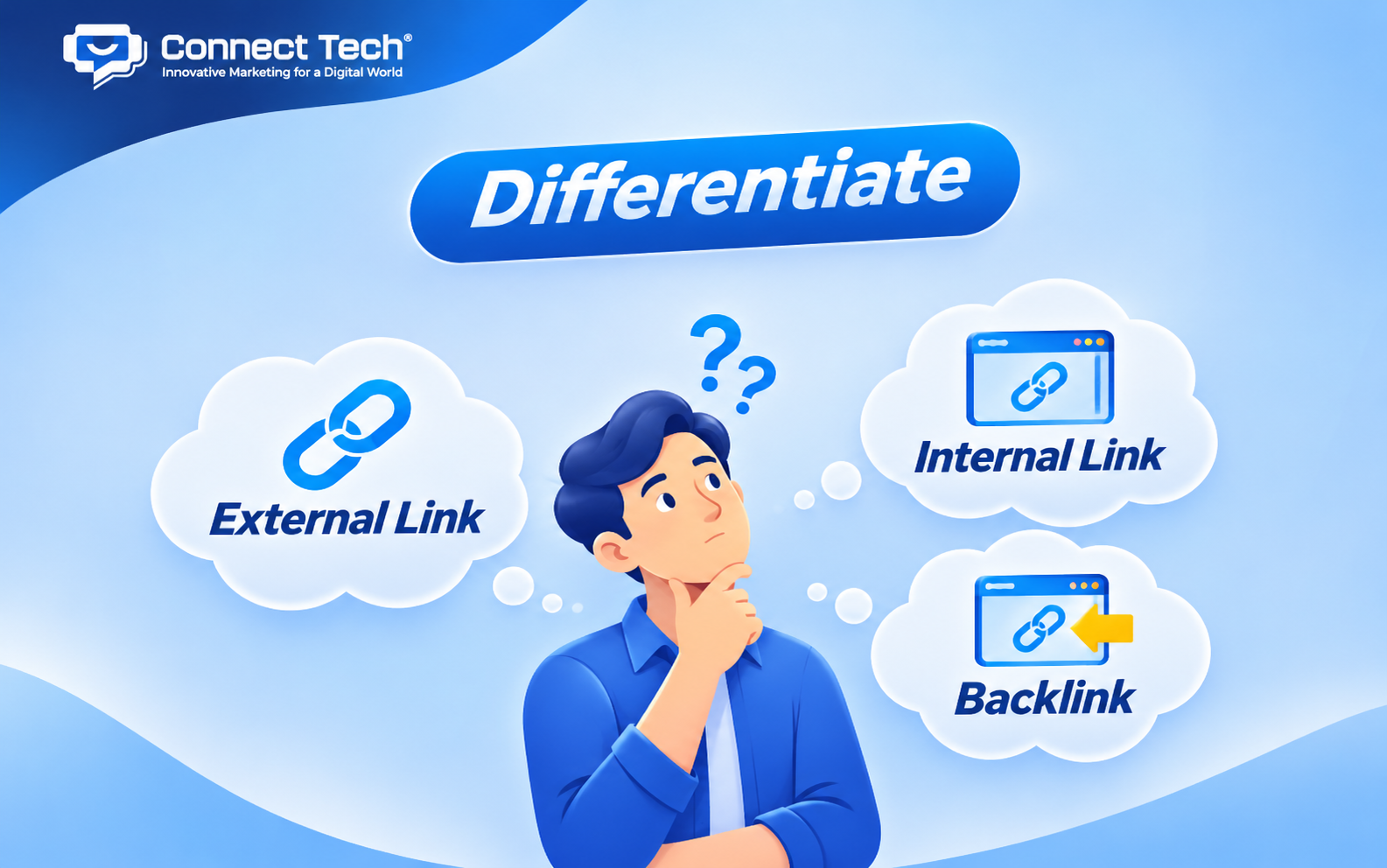
External links, internal links, and backlinks differ mainly in link direction and the website used as the reference point. All three are important in SEO but serve different purposes.
External links lead from the current website to another. Internal links connect pages within the same website. Backlinks are links that a website receives from other sites.
|
|
|
|
|
|
|
|
|
|
|
|
|
|
|
|
|
|
|
|
|
|
|
|
|
The same link can be an external link for one website and a backlink for another. If website A links to website B, it is an outbound external link for A and an incoming backlink for B. The distinction depends on perspective rather than different HTML code.
Use all three types with clear goals: internal links help visitors explore your content, external links provide supporting references, and backlinks are relevant to off-page SEO.
What Role Do External Links Play in SEO?
External links give readers supporting sources, let them verify information, and connect articles with related documentation. When used thoughtfully, they help content satisfy search intent, but they do not automatically improve Google rankings.
Providing Reference Sources for Readers

External links let readers visit the original sources behind statements in an article. This matters when discussing statistics or professional claims because readers may need to check who published the data, when, and using which method.
For instance, an article about search engine market share can link to Statcounter GlobalStats so readers can explore figures by country, device, and time period. Likewise, a discussion of data protection rules may cite legislation published on an official government website.
External links therefore go beyond offering explanations: they let readers confirm information independently and investigate it in greater detail.
Increasing Content Credibility and Value
External links help readers evaluate the basis for an article's claims. For example, a discussion of Core Web Vitals is more useful when it links to Google's Core Web Vitals documentation instead of merely stating that website speed matters.
This is especially valuable for subjects involving health, finance, law, technology, and other areas where mistakes can be consequential.
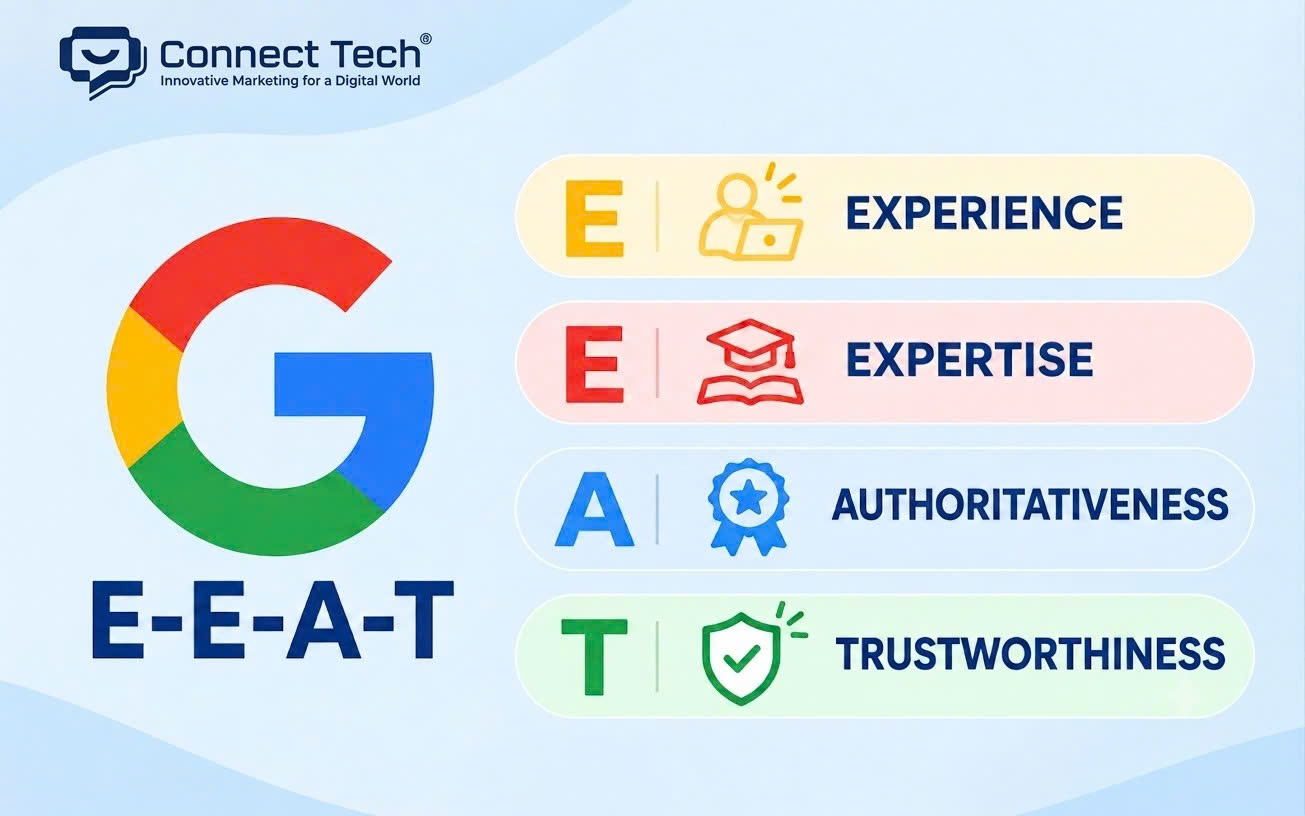
However, increasing readers' trust is different from improving Google rankings. Google discusses E-E-A-T—experience, expertise, authoritativeness, and trustworthiness—in its quality guidance. Relevant citations can make content more transparent, but external links alone do not prove that a page meets E-E-A-T principles.
A reference must actually support the statement being made. An unrelated or irrelevant destination does not make an article more credible.
Improving User Experience
External links can improve the user experience by supplying additional resources exactly when readers need them. A single article cannot explain every detail, so linking to specialized documentation can be more useful than extending the article with unnecessary tangents.
For example, an introductory Google Analytics tutorial may explain the initial setup and direct readers to official support documentation for advanced features. Readers save time and avoid repeating the same search.
The benefit depends on context. Excessive or unrelated links distract readers and make the main article harder to follow.
Do External Links Improve Google Rankings?
External links do not directly raise a website's rankings simply because they point to reputable sites. That is a common SEO misconception.
Google Search Central notes that links to other websites can help establish trust, for example by citing sources. It encourages links that are relevant and clearly explained to readers. However, Google does not promise better rankings merely because an article links to a famous or authoritative domain.
Ahrefs and Semrush likewise recommend outbound links for providing evidence and useful resources, not as a shortcut to higher search rankings.
Add links when they verify a statement, lead to an original document, or help visitors complete their search journey. Their value comes from usefulness and relevance rather than the number of recognizable websites mentioned.
Advantages and Limitations of External Links

External links offer benefits for content quality, but they also carry limitations that should be considered. Understanding both sides helps website owners use them selectively.
|
|
|
|
|
|
|
|
|
|
|
|
|
|
|
|
|
|
The benefits are greatest when links fit the surrounding context and point to reliable sources. Prioritize quality and relevance, and review links regularly to reduce avoidable risks.
Common Types of External Links
External links can be distinguished by the HTML rel attribute, which helps Google interpret the relationship between a referring website and its destination, particularly for advertising, user-generated content, and links a site does not wish to endorse.
Dofollow Links

Dofollow is the commonly used name for a normal hyperlink that is not marked with nofollow or similar qualifying attributes. Google may use such links to discover pages and assess link-related signals.
Example:
Google Search Central
The link uses the tag and href attribute without nofollow. You do not need rel="dofollow" because that attribute is not required for a standard hyperlink.
Regular links are appropriate for editorially chosen references, such as official documentation, research, and trustworthy professional guides.
Nofollow Links
A nofollow link has rel="nofollow", which indicates that the website does not want to endorse the destination in the usual way.
Example:
Website mentioned in the article
Use nofollow when you need to mention a site without endorsing it. For instance, an article discussing questionable SEO tactics might link to a problematic example for illustration.
Google treats nofollow as a hint when processing links, not an absolute instruction preventing crawling or indexing. It is therefore unnecessary to add nofollow to every external link. Regular editorial links to relevant and reliable resources can remain unqualified.
Sponsored Links and UGC Links
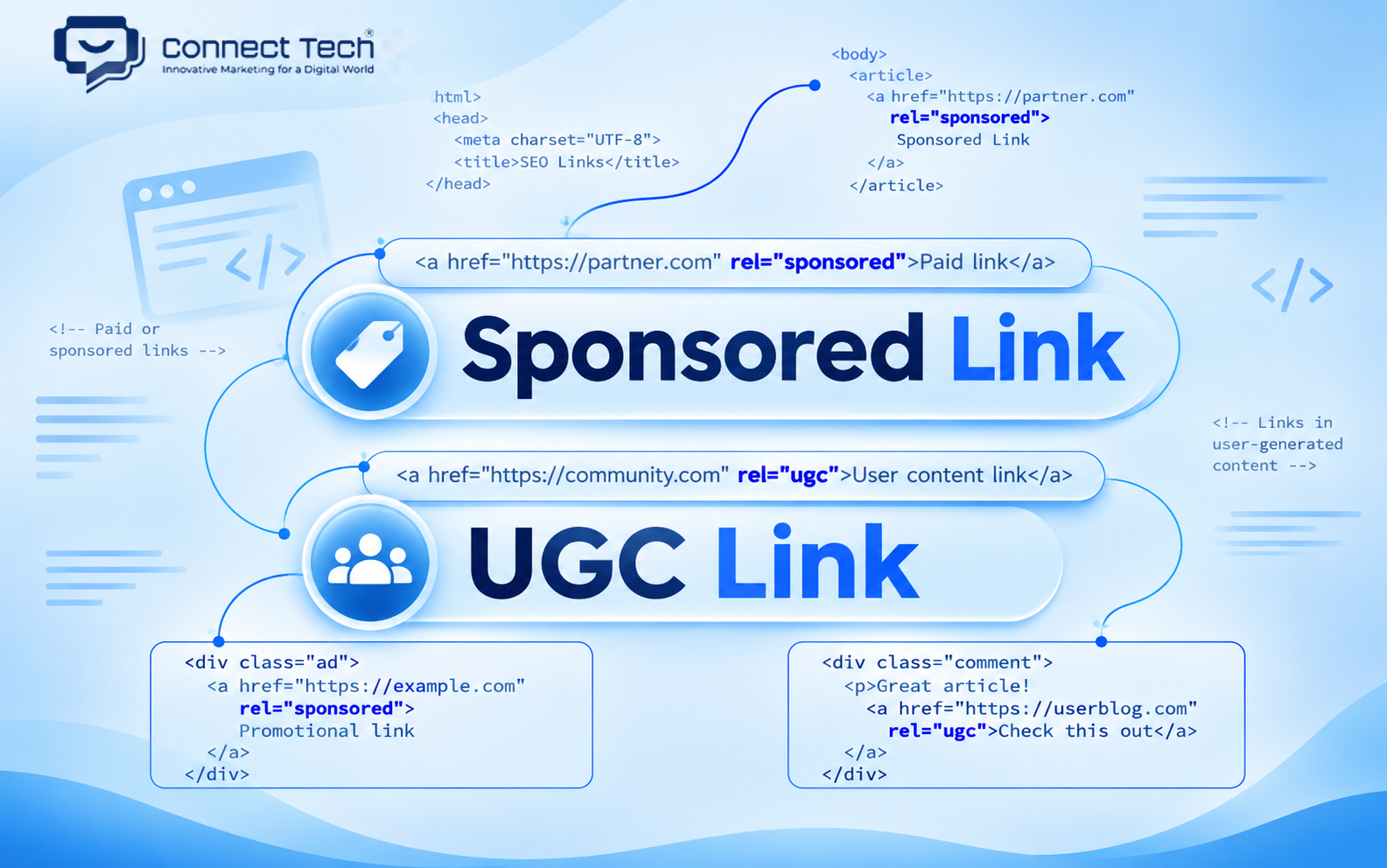
Sponsored and UGC links describe particular relationships involving the link.
|
|
|
|
|
|
|
|
|
|
|
|
For example, a sponsored product article may contain:
View product
A website that permits user links in comments may instead mark them with rel="ugc".
Google Search Central recommends sponsored for paid links and ugc for user-generated links. Multiple rel values can be combined when appropriate. Correct labeling clarifies the relationship and helps avoid link-spam issues.
How to Use External Links Effectively for SEO
Effective external linking involves choosing relevant sources, placing links in the right context, applying suitable attributes, and maintaining link quality over time.
Choose Trustworthy Websites Relevant to Your Content
A good external source contains reliable information that directly supports the point you are making. Check five factors before inserting a link.
1. Topic relevance
The destination must discuss the subject in question. When explaining Google Search Console, official product documentation is more relevant than a broad digital marketing article.
2. Source expertise
Prefer qualified specialists and organizations in the appropriate field. Medical claims should be supported by suitable medical studies, and legal requirements should be checked against official laws or regulations.
3. Verifiability
The source should include adequate data, methods, or evidence. With statistics, check where the numbers originated, the period they cover, and the group or market they describe.
4. Publication and update dates
SEO, technology, law, and markets change. Check whether the material remains accurate at the time of publication. Older documents may still be valuable if their context is appropriate.
5. Overall reliability
Do not choose a website solely for its Domain Authority (DA) or Domain Rating (DR). These are third-party SEO metrics, not official Google quality scores. A highly rated domain can still contain irrelevant or inaccurate articles.
Choose a specific page with relevant information rather than relying on domain popularity.
Place Links in Context and Use Descriptive Anchor Text
Anchor text is the clickable text of a link. It tells readers and search engines what to expect from the destination page.
Google recommends concise, descriptive anchor text that fits its surrounding context.
For example:
- Less helpful: “For more information, click here.”
- Better: “Read Google Search Central's linking guidance to understand how Google processes anchor text.”
The second example gives readers a clearer expectation.
Place links close to the claims they support. If a paragraph provides search engine market-share data, link to the relevant report alongside those numbers rather than adding an unexplained URL at the end.
Avoid keyword stuffing and misleading anchor text.
Use a Reasonable Number of External Links
Google does not specify how many external links an article must have to be SEO-friendly. The appropriate number depends on the topic, available evidence, and readers' needs.
A simple explanatory article may require only a few sources. A detailed market analysis or research overview may need many citations.
Before adding a link, ask:
1. Does the claim need a source readers can verify?
2. Does the destination provide useful knowledge or help readers perform a task?
3. Is the link relevant to the surrounding passage?
If the answer is no, the link may not be necessary. Avoid repeatedly linking to the same resource within a short passage unless there is a good reason.
Configure Link Attributes Appropriately
Link attributes should reflect the purpose of the link and the relationship between the websites.
For an independent, trustworthy editorial reference, you usually need no special rel attribute. Use sponsored for paid or advertising links, ugc for user-generated links, and nofollow where you do not wish to endorse the destination.
Two other common technical attributes are:
- target="_blank": Opens the destination in a new browser tab.
- rel="noopener": Prevents the destination from accessing the source window through window.opener, reducing certain security risks.
Example:
target="_blank"
rel="noopener">
Reference document
Opening a new tab is not a requirement for SEO. Choose it based on user experience; too many new tabs can also be inconvenient.
Check and Update External Links Regularly
Regular reviews identify broken links and destination pages whose content has changed. Small sites can check manually, while larger sites benefit from crawling tools.
Step 1: Collect external links
Use Screaming Frog SEO Spider or a similar crawler to find external URLs across your site.
Step 2: Check HTTP status codes
Look for 4xx and 5xx responses or URLs that fail to respond. A 404 usually means the resource is not found, but verify failures because some websites block automated crawlers.
Step 3: Review destination content
A working link may still lead to outdated or irrelevant content. Check whether the page has changed or redirects elsewhere.
Step 4: Update or replace links
Find the new URL for the same resource or a trustworthy alternative. If none exists, revise the statement or remove the link.
Screaming Frog, Ahrefs, and Semrush offer tools for checking links and auditing websites. Review links during content updates and periodic SEO audits.
Top Trustworthy Sources for External Links
A trustworthy source provides accurate information, relevant expertise, and content that directly supports the surrounding article. Different industries require different types of references.
Government Websites and Public Agencies
Official government and public agency websites are suitable for laws, public policies, regulations, statistics, and official announcements.
Examples include:
- Government Portal of Vietnam: Policies, government activities, and official documents.
- National Statistics Office of Vietnam: Economic, population, and social statistics.
- Ministry of Industry and Trade: Industry, trade, and related regulations.
For an article about Vietnam's e-commerce market, refer to reports published by the relevant authorities. Link to the specific report or regulation rather than only the agency homepage.
Universities and Research Institutions
Universities and research institutions are relevant sources for academic, scientific, educational, and technological information.
Examples include Harvard University, Massachusetts Institute of Technology (MIT), and Stanford University. Their websites may publish research papers, expert reports, technical materials, and survey findings.
However, not everything hosted on a university website is peer-reviewed research. Examine the author, publisher, methodology, and document type. When citing scientific evidence, a link to the actual study is generally more useful than a university homepage.
International Organizations and Professional Associations
International organizations publish research and information on subjects such as the economy, healthcare, education, and sustainable development.
|
|
|
|
|
|
|
|
|
|
|
|
|
|
|
|
|
|
|
|
For example, an article analyzing economic growth can cite World Bank Data for figures by country and year.
Check the scope and methodology of specialized reports, as well as whether their data applies to the geography or population being discussed.
Official Documentation from Technology Platforms
Official technology documentation is helpful for articles about software products, technical features, development, and workflows.
Common sources include:
- Google Search Central: Guidance on optimizing websites for Google Search.
- Google Developers: APIs, programming, and Google's technologies.
- Microsoft Learn: Microsoft product and technical documentation.
- MDN Web Docs: HTML, CSS, JavaScript, and web standards.
For example, MDN is useful for explaining how the HTML rel attribute works, while Google Search Central is better suited to how Google interprets link attributes for SEO. Match the source to the specific claim.
Reliable News and Journalism Websites
Reliable news organizations can support reporting on events, market developments, public statements, and new developments.
Examples include Reuters, Associated Press (AP), BBC, VnExpress, and VietnamPlus.
Check publication dates and original sources. A news story may quote a report or statistic from several years earlier. Where precise data matters, consult the original study for its methodology and scope. Verify time-sensitive claims against current reporting before publishing.
Industry Websites and Statistical Data Sources
Specialized sources offer professional knowledge, reports, tools, and statistics on subjects including SEO, marketing, and market analysis.
|
|
|
|
|
|
|
|
|
|
|
|
|
|
|
|
|
|
For example, Google Trends can show relative search interest in a subject over time.
Understand the meaning of each dataset. Google Trends presents normalized search interest, not the absolute number of searches. Estimated traffic and search volume from SEO tools are estimates, not exact measurements.
Regardless of the source, choose a document that directly supports the information being cited rather than relying on famous names or high SEO metrics.
Common Mistakes to Avoid When Adding External Links
Poorly placed external links can make articles less accurate, reduce their usefulness, or inconvenience readers. Some manipulative practices can also violate Google's spam policies.
|
|
|
|
|
|
|
|
|
|
|
|
|
|
|
|
|
|
|
|
|
|
|
|
|
|
|
|
|
|
|
|
|
|
|
|
Buying, selling, and excessively exchanging links for the purpose of manipulating rankings deserves particular attention.
Google's spam policies identify practices such as buying links that pass ranking signals, excessive link exchanges, and automatically generated link schemes as potential link spam.
Advertising and sponsorships are not inherently prohibited. Paid links should be qualified appropriately, for example with rel="sponsored" or rel="nofollow", according to Google's guidelines.
Do not remove all external links out of fear that they weaken SEO. Relevant citations are a normal part of publishing useful web content.
Before publishing, check that each destination works, its information remains appropriate, and the anchor text accurately describes what readers will find.
External links connect website content with resources from across the web. When used correctly, they help readers verify information, access specialist documentation, and understand topics in greater depth.
To get the most value from external links, choose reliable sources, place them in context, use appropriate attributes, and review them regularly. At Connect Tech, our SEO approach goes beyond keywords to emphasize clear content structure, purposeful linking, and user experience that supports sustainable website growth.

Table of Contents