Loading Table of Contents...
What Is SEO-Friendly Content? Key Criteria and How to Write It Effectively
Quick Summary
Collapse
What is SEO-friendly content? Explore the essential criteria, step-by-step writing process, content optimization techniques, and common mistakes to avoid.
SEO-friendly content is content created to meet users’ search needs while being optimized so search engines such as Google can understand it and assess its relevance. An SEO-friendly article needs more than keywords: it should also provide useful, accurate, and easy-to-read information. In this article, Connect Tech explains the key criteria, the process of writing SEO-friendly content, and how to review an article before publishing.
What Is SEO-Friendly Content?

SEO-friendly content is content that is researched, created, and optimized around users’ search needs and search engine optimization (SEO) principles. Its goal is to help readers find the information they need while making it easier for search engines to understand the topic of the article.
Rather than simply inserting keywords, writing SEO-friendly content requires understanding what readers care about, what kind of answers they expect, and which information will genuinely benefit them.
For example, someone searching for “what is SEO-friendly content” is usually looking for a definition, evaluation criteria, and guidance on how to write an SEO-friendly article. A page that only promotes SEO services is unlikely to fully meet this informational need.
SEO-friendly content also does not guarantee a top position on Google. Optimization can improve how readily content is discovered and understood, but search rankings depend on many other factors.
How Is SEO-Friendly Content Different from Regular Content?
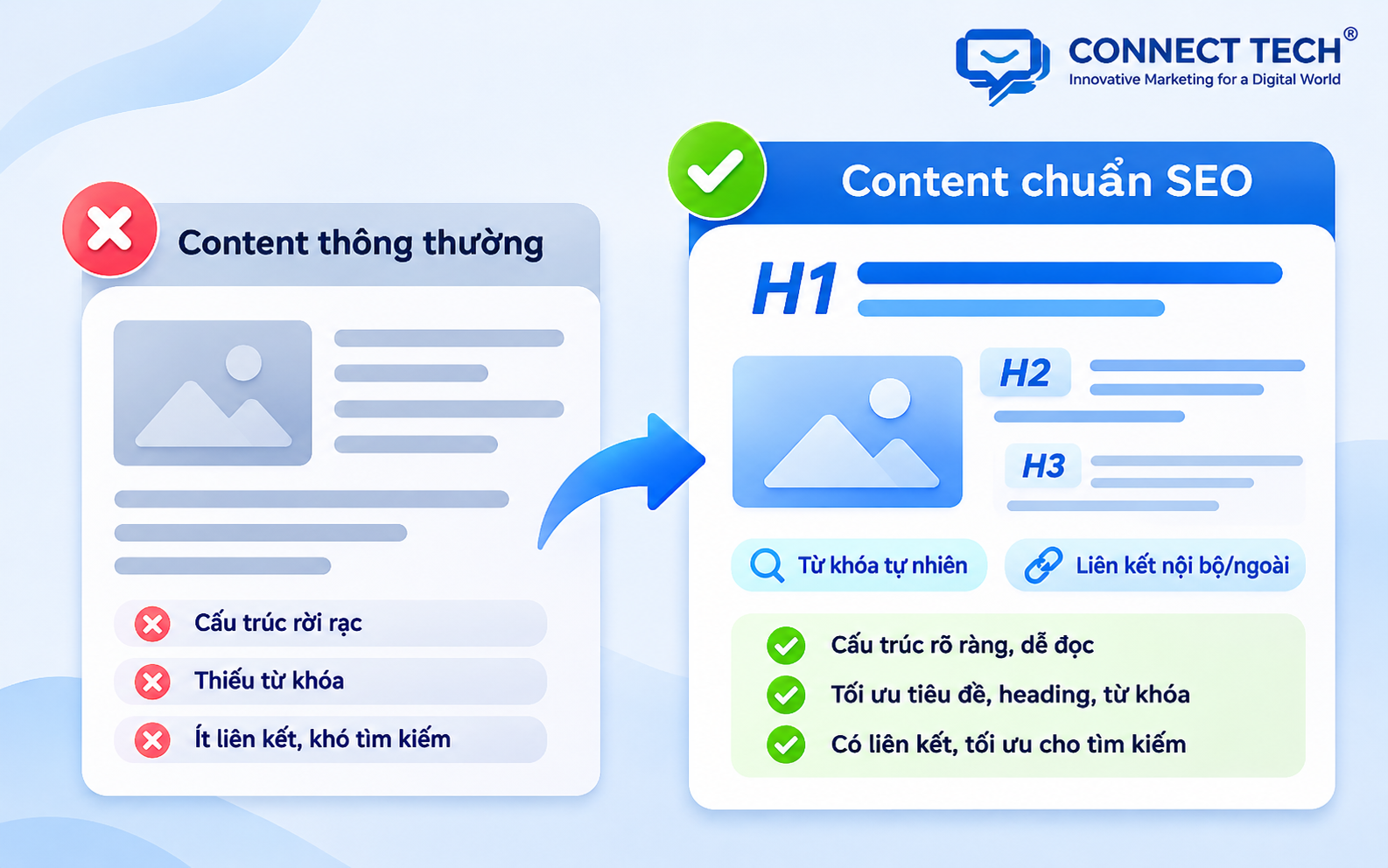
The main difference between SEO-friendly content and regular content lies in the purpose of the content and how it reaches readers. Regular content can inform, entertain, or build brand awareness. SEO-friendly content is also researched and optimized around people’s search behavior on Google.
|
|
|
|
|
|
|
|
|
|
|
|
|
|
|
|
|
|
|
|
|
|
|
|
However, the two categories are not completely separate. Regular content may also perform well in search if it offers valuable information, matches a query, and is clearly presented.
Why Do Websites Need SEO-Friendly Content?

SEO-friendly content gives websites more opportunities to reach people actively looking for information related to a business’s products, services, or industry.
Key benefits include:
- Greater visibility in search: Optimized content helps Google understand the topic and assess its relevance to search queries.
- Reaching potential customers: A website can attract people researching topics related to its products or services.
- A better reading experience: A clear structure helps readers find the information they need quickly.
- Greater credibility: Accurate, in-depth, and useful content helps demonstrate a website’s expertise.
- Support for long-term SEO: Related articles can be connected through internal links.
For example, a website design company can publish articles about SEO, UI/UX, page speed, and website security. These articles educate readers while helping them understand important considerations when building a website.
Key Criteria for SEO-Friendly Content
SEO-friendly content should combine information quality, relevance to search needs, and on-page SEO optimization. No fixed formula guarantees Google rankings, but the following criteria can help you assess and improve an article.

Content That Matches Search Intent
Search intent is the underlying purpose behind a query entered into a search engine. Understanding it helps writers choose relevant information and the right presentation instead of focusing only on keywords.
|
|
|
|
|
|
|
|
|
|
|
|
|
|
|
|
|
|
|
|
When people search for “how to write SEO-friendly content,” they generally expect practical instructions. A step-by-step guide with examples and a review checklist will be more appropriate than an article that only explains the benefits of SEO.
Before writing, identify what readers want to know and what outcome they expect after reading.
Useful, Accurate, and Trustworthy Information
Useful content helps readers understand or solve the problem they are researching. Instead of adding words simply to make an article longer, each section should offer information that readers actually need.
According to Google Search Central Google encourages helpful, reliable, people-first content.
When writing, you should:
- Check the accuracy of information before publication.
- Use trustworthy references for statistics or specialized claims.
- Add practical examples that make ideas easier to understand.
- Cover the topic thoroughly without unnecessary padding.
- Update the article when important information changes.
Writers should also understand E-E-A-T: Experience, Expertise, Authoritativeness, and Trustworthiness.
E-E-A-T is a framework for considering content quality and trustworthiness, not an independent ranking factor with a specific numerical score.

Natural, Contextually Appropriate Keyword Use
Keywords help communicate the topic of an article and connect it to relevant searches. However, repeating a keyword more often does not automatically improve rankings.
Writers usually identify three keyword groups:
Primary keyword: The phrase that represents the main topic, such as “what is SEO-friendly content.”
Secondary keywords: Directly related phrases, such as “how to write SEO-friendly content” and “SEO content criteria.”
Semantic keywords: Related terms such as search intent, on-page SEO, meta description, and internal links.
The primary keyword may appear in the SEO title, H1, introduction, and other important locations where it fits naturally. Secondary and related keywords should appear in sections where they add meaning.
For example, rather than repeating “SEO-friendly content” in every sentence, you could use related expressions such as “SEO-optimized article,” “content optimized for search engines,” or “SEO content.”
Most importantly, Google does not require a particular keyword-density percentage. Prioritize natural language and readability over hitting an arbitrary number.
A Clear, Readable Article Structure
A clear SEO article structure helps readers follow the content and identify key information. Headings organize the article into distinct topics.
Typically:
- H1 identifies the article’s main topic.
- H2 divides the article into major sections.
- H3 explains specific points within an H2 section.
For example, an SEO guide might use “How to Write SEO-Friendly Content” as an H2, followed by H3 headings for each step.
Beyond headings, use manageable paragraphs, lists for sets of related items, and comparison tables when they make information easier to understand.
You do not need to create excessive H2 or H3 headings for very short sections. What matters is a logical structure that makes information easy to find.
Optimizing the SEO Title, Meta Description, and URL
The SEO title, meta description, and URL are important elements of content optimization.
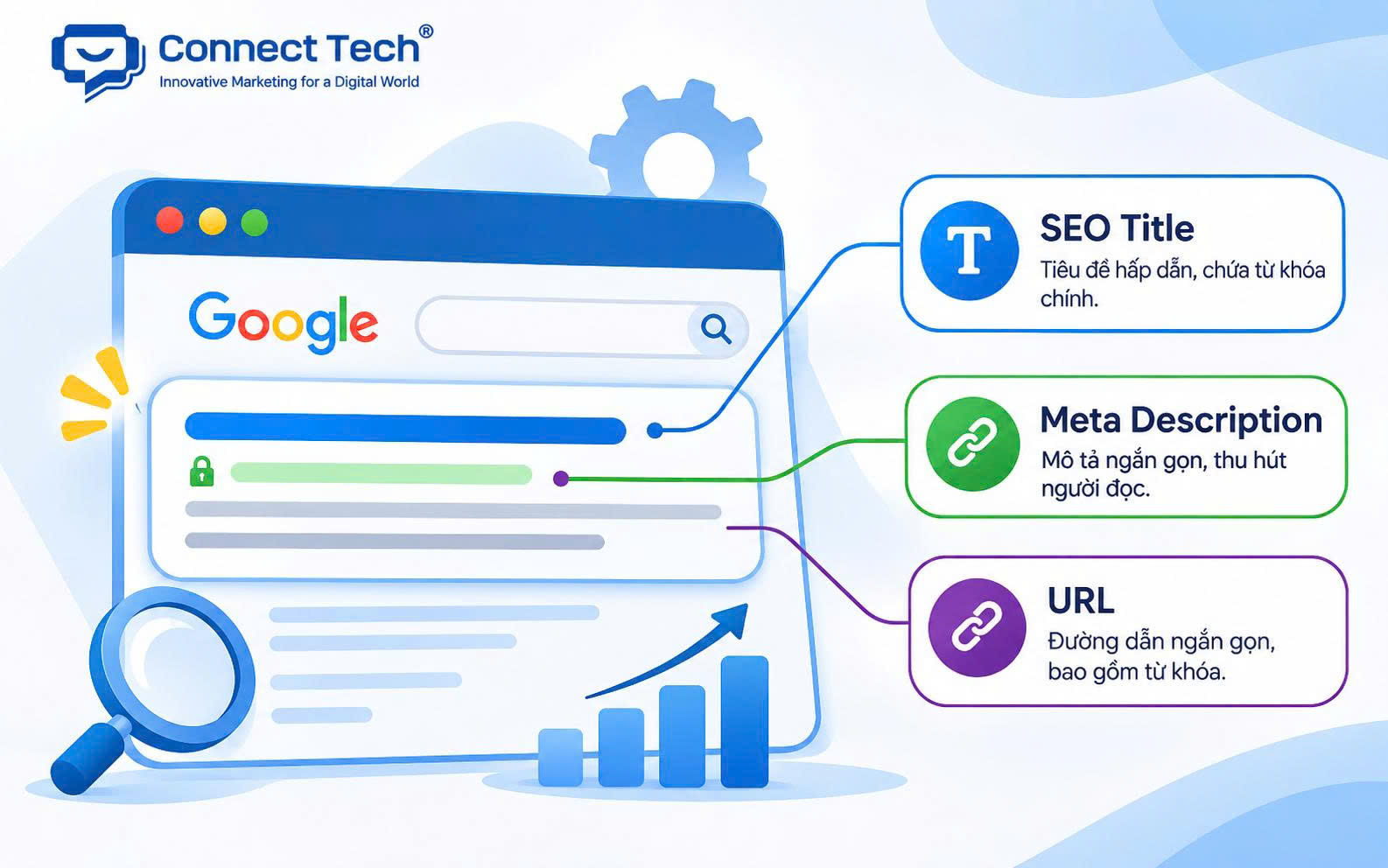
SEO Title
The SEO title is specified so search engines can use it when generating the title link shown in search results. A good title accurately reflects the content, is clear, and attracts relevant searchers.
For example:
Weak: Some SEO Information You Should Know
Better: What Is SEO-Friendly Content? Criteria and How to Write It Effectively
The second title identifies the topic and tells readers what they will learn.
Meta Description
A meta description is an HTML description of a page. Google may use it in search results or select another passage that better matches a query.
A useful meta description should accurately summarize the article, use clear language, and tell readers what information they will find.
URL
A URL should be short, readable, and descriptive. For example, the URL for this article could be:
/what-is-seo-friendly-content/
There is no need to stuff keywords into URLs or change existing URLs that work well just to make them shorter.
Optimizing Images and Links in the Article
Images and links add useful context, improve the reading experience, and help search engines understand relationships among pages on a website.
For images, choose visuals that are directly relevant to the content, optimize file size to support page speed, and use appropriate alt text.
Alt text is alternative text that describes an image’s content or function. For example, an illustration of the SEO writing process might use: “Flowchart showing the six steps of writing SEO-friendly content.”
For internal links, connect readers to relevant articles on the same website. When discussing keyword research, for example, you can link to a detailed keyword research guide.
For external links, favor trustworthy sources that verify or expand on a claim. When explaining Google’s SEO recommendations, you can refer to official Google Search Central documentation.
Only add links when they offer genuine value to readers. There is no fixed number you need to reach.
Ensuring a Good User Experience on the Website
User experience affects how readers engage with content. Even a high-quality article can become difficult to use if the page displays poorly on mobile devices or is obstructed by advertisements.
To improve readability:
- Use a comfortable font size.
- Apply consistent spacing between paragraphs and headings.
- Make sure content displays properly on mobile devices.
- Optimize images to reduce their impact on loading speed.
- Avoid pop-ups that interfere with reading.
The website should also allow search engines to access and crawl content intended to appear on Google. This is a technical aspect of SEO that supports the quality of the article.

How to Write SEO-Friendly Content: Step-by-Step Guide
The process of writing SEO-friendly content begins with researching search needs and continues through monitoring and improvement after publication. Follow the six steps below to create a clearly organized article that serves its readers.
Step 1: Define Your Audience and Article Goals

Identifying your target audience helps you select suitable information, explanations, and language. An article for SEO beginners should be presented differently from a specialized guide for experienced practitioners.
Before you write, answer three questions:
- Who will read this article?
- What problem are they trying to solve or what information do they need?
- What should they understand or be able to do after reading?
For the keyword “what is SEO-friendly content,” the audience may include new content writers, marketing students, and website owners learning about SEO.
The goal is to help them understand the concept, recognize the basic criteria, and learn how to begin writing SEO-friendly articles.
Step 2: Research Keywords and Search Intent

Keyword research identifies the phrases people use when searching for information about a topic. This research provides the foundation for content selection and outline development.
You can use tools such as Google Keyword Planner, Google Trends, Ahrefs, or Semrush to explore related keywords.
A basic process includes:
1. Identify the primary keyword representing the topic.
2. Find secondary and long-tail keywords.
3. Group keywords with the same search intent.
4. Analyze Google search results to understand what readers expect.
5. Select keyword groups that can be covered within one article.
For example, with “what is SEO-friendly content” as the primary keyword, terms such as “SEO content criteria,” “SEO article structure,” and “how to write SEO-friendly content” can fit within one comprehensive introductory guide.
Broader topics such as “SEO keyword research” can become separate in-depth articles.
Step 3: Analyze Competing Content and Build an Outline

Analyzing content in search results helps you see how other websites answer the same query. It also helps identify essential information and opportunities to provide a better explanation.
When reviewing competing articles, consider:
- The topics and information they explain.
- Their H1, H2, and H3 structure.
- The questions they answer.
- Their practical examples, tables, and instructions.
- Important information that is missing, unclear, or outdated.
Next, organize your outline from foundational explanations to practical guidance.
For “what is SEO-friendly content,” a useful outline could start with the definition, then cover evaluation criteria, a writing process, examples, and frequently asked questions.
Do not simply copy a competitor’s structure. Adapt the outline to reader needs and the distinct value you can provide.
Step 4: Write Useful, Easy-to-Understand Content

Writing SEO-friendly content means prioritizing direct answers to readers’ questions. Instead of opening with a lengthy introduction, explain the most important information first.
For example, under the heading “What Is SEO-Friendly Content?”, start with the definition. Subsequent paragraphs can explore its purpose, characteristics, and examples.
As you write:
- Use simple words and explain unfamiliar terms.
- Focus each paragraph on one main idea.
- Put the most important information near the beginning.
- Use examples to explain abstract ideas.
- Use tables and lists when they improve clarity.
- Avoid unnecessary repetition and wordiness.
Do not lengthen an article just to reach a target word count. A thorough, readable article that answers the question is more valuable than a longer piece filled with unnecessary information.
Step 5: Optimize On-Page SEO Elements
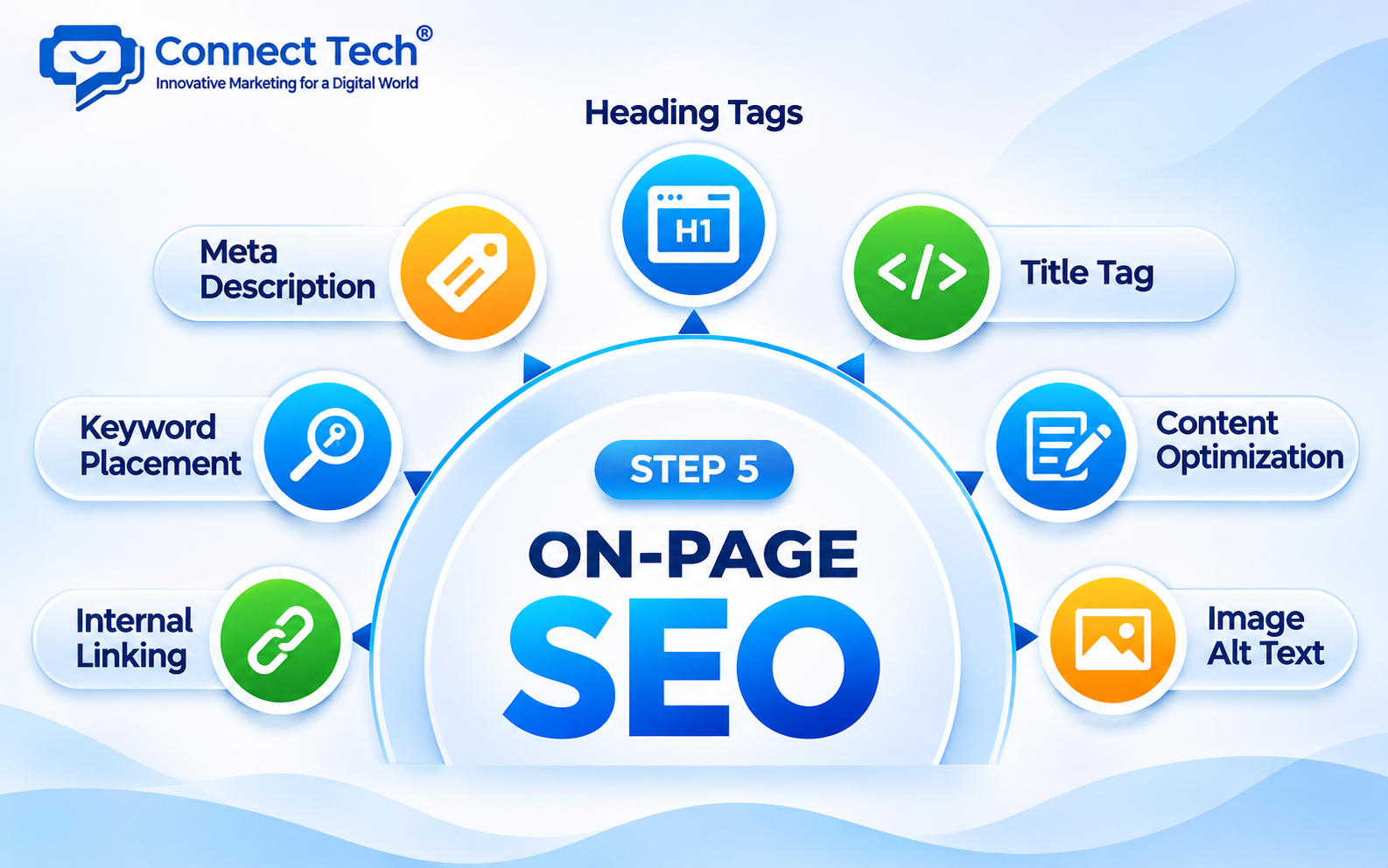
On-page SEO is the process of optimizing elements within a page to help users and search engines understand its content. Once you have a draft, review the most important elements.
First, check whether the SEO title and H1 accurately represent the topic. Then review the headings to make sure the article follows a logical sequence.
Next, assess keyword use. Primary and secondary keywords should appear naturally without making the wording awkward.
Finally, review images, alt text, URLs, and links. These elements should support the content rather than being added merely to satisfy a checklist.
Step 6: Review, Publish, and Measure Performance

Reviewing an article before publication helps prevent mistakes that could affect content quality and the reading experience.
Read the entire article again to check spelling, factual accuracy, heading order, and links. Preview the page on both desktop and mobile devices.
After publication, Google Search Console can help you monitor organic search performance through metrics such as:
- Impressions: How many times a page appears in search results.
- Clicks: How many times users click the result.
- CTR: The percentage of impressions that lead to clicks.
- Average position: The average position recorded when the result appeared.
This data helps you understand which queries lead people to your content and where improvements may be needed.
Writing SEO-friendly content does not end when you click Publish. Review and update content when information changes or performance data suggests the article is not meeting readers’ needs.
Example: How to Improve a Paragraph for SEO
Optimizing content for SEO means improving how information is communicated, not simply adding more keywords. Consider this example of a paragraph explaining SEO-friendly content.
Before optimization:
“SEO-friendly content is content written to be SEO-friendly. To write good SEO-friendly content, you need to know how to write SEO-friendly content. SEO-friendly content will make your website more SEO-friendly and improve SEO.”
The paragraph repeats the primary keyword several times but provides almost no new information. Readers still do not understand what makes content SEO-friendly.
After improvement:
“SEO-friendly content is created around users’ search needs and optimized to help Google understand its topic. A high-quality article should provide useful information, follow a clear structure, use keywords naturally, and address the questions readers care about.”
The improved version directly defines the concept, explains key characteristics, and uses language more naturally.
This example shows that SEO content quality depends more on helping readers understand and solve a problem than on the number of times a keyword appears.
Common Mistakes When Writing SEO-Friendly Content
Common SEO writing mistakes often come from focusing too much on optimization techniques and overlooking readers’ needs. Here are some mistakes to avoid:
Keyword stuffing: Repeating a keyword excessively makes writing sound unnatural. Use keywords where they fit and vary phrasing with relevant expressions.
Misunderstanding search intent: Content does not answer what people actually searched for. Analyze the query and relevant search results before building the outline.
Copying content: Rewriting information from other sites without adding unique value. Include useful examples, experience, or clearer explanations.
Overusing H2 and H3 headings: Dividing the article into too many small sections can make it fragmented. Use headings only when they separate meaningful ideas.
Focusing only on SEO tool scores: Plugin scores may reveal areas for improvement but cannot guarantee high rankings.
Failing to verify information: Outdated or incorrect claims can reduce credibility. Verify specialized information before publishing.
Neglecting updates: Content may become inaccurate over time. Review it periodically and update it when necessary.
Avoiding these mistakes makes articles easier to read, more trustworthy, and more relevant to users’ needs.
Should You Use AI to Write SEO-Friendly Content?
You can use AI to support SEO content writing, but you should not rely entirely on AI-generated text without reviewing and editing it. AI can be useful for brainstorming, suggesting article structures, and improving phrasing.
For example, AI tools can help group related keywords, create an outline, explain technical terms, or suggest clearer ways to present information. This can save time during certain stages of the writing process.
However, AI can also produce inaccurate claims, invent sources, or generate generic content. Writers must verify facts, contribute subject-matter knowledge, and adapt the result to their audience.
According to Google’s guidance on AI-generated content, using AI to create content is not automatically a violation. What matters is the purpose, quality, and compliance with Google’s spam policies.
The best approach is to use AI as a support tool while people remain responsible for the accuracy, usefulness, and final quality of the article.
Final Review Before Publishing an SEO-Friendly Article

Reviewing and refining an SEO-friendly article is an important step in making sure it meets users’ search needs and minimizes errors that could affect SEO performance. Before publishing, review the following:
Check search intent: Make sure the article directly answers the query and provides the information readers are actually looking for, rather than going off-topic.
Check content quality: Review the accuracy, completeness, and usefulness of the information so readers can understand the subject without needing to consult too many additional sources.
Check the SEO title and meta description: Make sure the title and description accurately reflect the article, include the primary keyword naturally, and encourage relevant users to click.
Check the H1, H2, and H3 structure: Arrange headings logically and divide the content into clear sections so readers can follow it and search engines can understand the structure.
Check keyword usage: Distribute primary, secondary, and related keywords naturally without excessive repetition that makes the article difficult to read.
Check images and alt text: Ensure images are relevant, clear, appropriately compressed, and provided with alternative text where needed to support accessibility and image SEO.
Check internal and external links: Ensure links work, lead to relevant pages, and help readers explore useful information.
Check mobile display: Make sure the article is easy to read, images do not overflow their containers, and interface elements do not obstruct the content on smaller screens.
Check spelling and presentation: Remove spelling mistakes, confusing sentences, repeated passages, and inconsistent formatting to make the article professional and accessible.
Once these checks are complete, you can publish the article and monitor search performance using Google Search Console. Continuing to review and update the content when needed will help keep it useful and relevant to readers.
Frequently Asked Questions About SEO-Friendly Content
How Many Words Should an SEO-Friendly Article Have?
There is no mandatory word count for an SEO-friendly article. Google does not require an article to contain 1,000, 2,000, or 3,000 words to rank well.
The appropriate length depends on the topic, search intent, and amount of information needed. A simple question may be answered fully in a short article, while an in-depth guide requires more detail.
Focus on answering readers’ questions thoroughly rather than making an article longer for its own sake.
What Is a Good Keyword Density?
Google does not require a fixed keyword-density percentage. Repeating a keyword more often does not automatically lead to better rankings.
Use keywords in relevant locations, such as the title, introduction, and sections where they naturally belong. Readability and natural phrasing matter most.
If a phrase appears so frequently that the article sounds forced, rephrase the sentence or remove unnecessary repetitions.
Does SEO-Friendly Content Guarantee a Top Google Ranking?
No. SEO-friendly content does not guarantee a top position on Google. Search rankings depend on many systems and signals, not only on how content is written.
Alongside article quality, topic competition, crawlability, website quality, and relevance to the query can all influence SEO performance.
Treat SEO content writing as part of a long-term website optimization strategy, not as a guaranteed ranking formula.
Which Tools Can Help Check SEO-Friendly Content?
Several tools can support SEO content research, optimization, and evaluation, each serving a different purpose.
- Google Search Console: Tracks impressions, clicks, queries, and indexing status.
- Yoast SEO: Helps assess certain on-page SEO and readability elements on WordPress websites.
- Rank Math: Offers features to optimize titles, descriptions, and other WordPress SEO elements.
- Ahrefs: Supports keyword research, competitor analysis, and SEO performance evaluation.
- Semrush: Provides tools for keyword research, content analysis, and search performance tracking.
These tools can identify potential improvements, but they cannot replace an informed assessment of content quality and readers’ actual needs.
SEO-friendly content meets users’ search needs while being optimized so search engines can understand it. To write effectively, focus on useful information, clear structure, and appropriate on-page SEO. We hope the guidance and review steps in this article help you create valuable, easy-to-read content and build a strong foundation for long-term SEO.

Table of Contents