Loading Table of Contents...
Website Design Technology: Which Platform Should Your Business Choose?
Quick Summary
Collapse
Explore website design technologies, compare platforms, key criteria, common mistakes, and choose the right solution to scale your business effectively today.
You are standing in front of dozens of choices in website design technology: WordPress, Shopify, React, Laravel? Every platform is advertised as the best, but in reality, there is no single solution that fits every business. So what is the real ticket that helps you optimize costs while ensuring speed and scalability in the future?
In this article, we will break down in detail the website design technologies that are currently dominating the market, analyze selection criteria based on real business problems, and point out 5 mistakes that can cause your website project to “fail” right from the start.
I. What Is Website Design Technology?

From a professional perspective, website design technology is the combination of programming languages, frameworks, content management systems, and infrastructure platforms used to build, operate, and scale a website.
Simply put, it is the technical framework that determines what platform your website runs on, how it processes data, and whether it can be easily expanded or integrated with additional features in the future.
Two websites may look identical on the surface, yet behind the scenes they can be completely different in terms of technology. And it is that invisible layer that determines page loading speed, SEO performance, security, and long term maintenance costs.
Basic Classification of Website Design Technology
To better understand website design technology, it can be divided into three main groups:
1. Hardware Technology
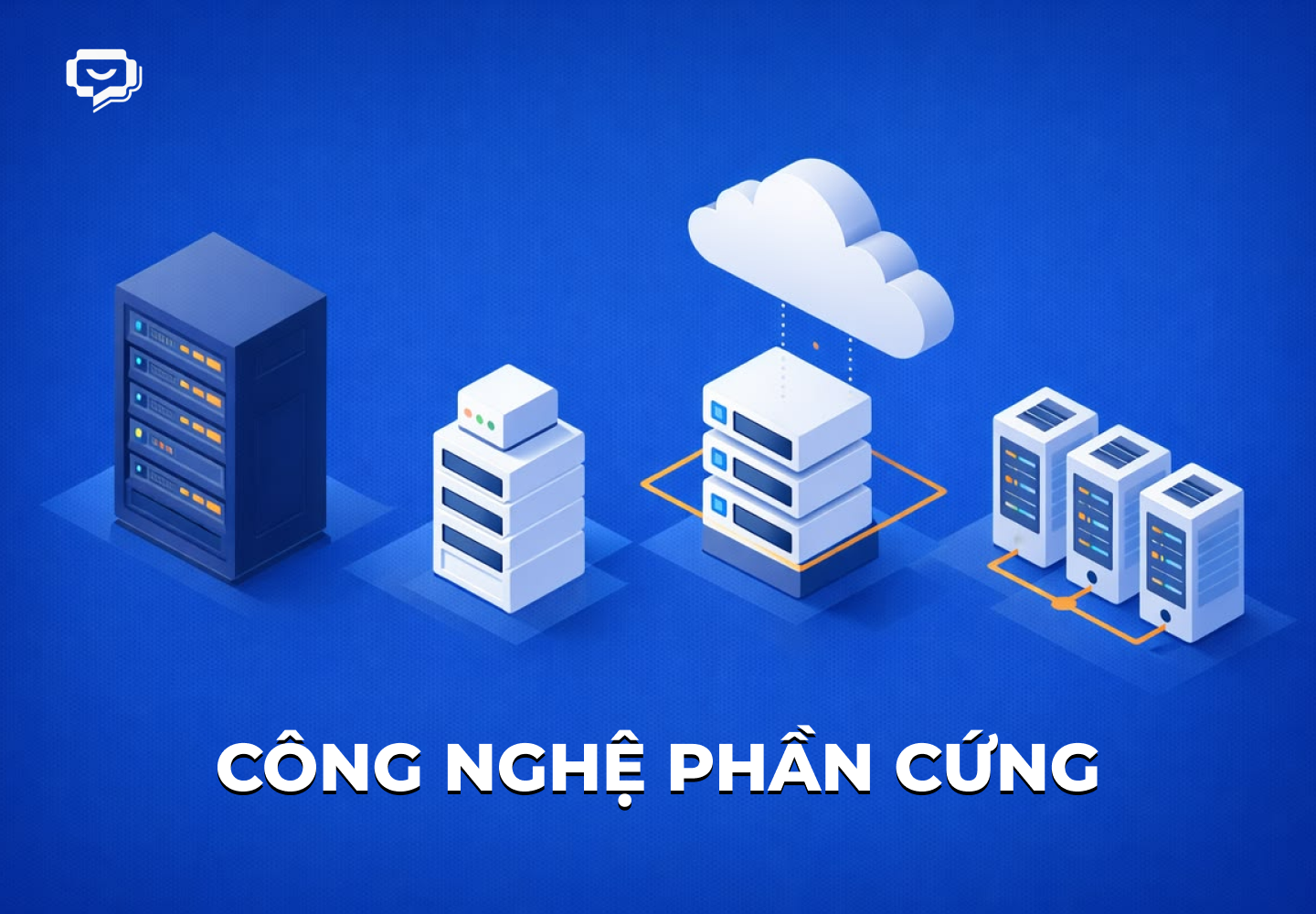
This refers to the physical infrastructure layer or hosting services, including:
- Physical servers
- VPS
- Cloud Server
- Shared hosting
This layer directly affects access speed, system stability, and the ability to handle high traffic when many users access the website at the same time.
2. Software Technology
This is the part responsible for building and operating the website, including:
- Front end: the user interface, typically using HTML, CSS, JavaScript, and frameworks such as React, Vue
- Back end: data processing and system logic, which may use PHP, Node.js, Python, .NET
The front end determines user experience. The back end determines business logic processing capability, security, and system integration.
3. Platform Technology

This refers to how businesses choose to deploy their website:
- CMS such as WordPress, Magento
- Pre built SaaS platforms
- Custom coded websites developed based on specific requirements
Each option has different advantages and disadvantages in terms of cost, scalability, and system control.
Understanding the nature of website design technology is not about becoming a technician. The goal is to help businesses make informed decisions, avoid following trends blindly, and avoid paying the price later through costly upgrades.
II. Criteria for Choosing the Right Technology
Choosing website design technology is not about selecting the most “advanced” option, but the one that best fits your business context. Below are the criteria that Connect Tech typically analyzes with clients before making a decision.
1. The Purpose of the Website

First, clarify what goal the website is meant to serve:
- A personal blog prioritizes content publishing and management.
- A corporate website aims to build credibility and capture leads.
- An e commerce website requires complex ordering processes, payment systems, and inventory management.
Each model requires different website design technology. For example, a personal blog may prioritize a flexible CMS. In contrast, e commerce requires a platform strong in data processing and transaction security.
If you want to dive deeper into how to choose between interface design, CMS, and overall operational structure, you can refer to the article: Website design for businesses: Interface, CMS, and operating technology for a more comprehensive strategic perspective.
2. Flexibility for Future Feature Expansion
Many businesses focus only on current needs and forget to project 2 to 3 years ahead.
Ask yourself:
- How much could traffic increase if marketing efforts scale up
- Are there plans to add features such as booking systems, online payments, CRM integration
A suitable website design technology must allow expansion without having to rebuild everything from scratch. This is a scalability issue, not just about current page loading speed.
3. Initial Investment and Ongoing Maintenance Costs
Low initial cost does not mean low total cost.
You need to consider:
- Design and development fees
- Hosting or server infrastructure
- Maintenance, updates, and security patching costs
- Additional investment required when expanding the website
I have seen many businesses choose cheaper solutions only to migrate later because the platform could not meet their needs. At that point, the migration cost exceeded the cost of investing properly from the beginning.
4. Security and Speed Requirements

If the website includes user logins, stores customer data, or processes payments, security is no longer optional.
An effective website platform should provide:
- Clear role based access control
- Regular security updates and patching mechanisms
- Compatibility with data encryption standards
In addition, page loading speed directly affects user experience and conversion rates. A heavy, poorly optimized platform will increase marketing costs while reducing performance.
5. SEO Friendliness
A beautiful website that is difficult to optimize for SEO is almost like cutting off a long term growth channel.
When evaluating website design technology, consider:
- Whether it is easy to edit meta tags, URLs, and headings
- Whether data structure and page loading speed are optimized
- Whether it supports sitemap creation and flexible content management
SEO is not an add on feature. It should be integrated from the foundational technology structure.
III. Overview of Today’s Website Design Technologies
The website design technology market today is extremely diverse, ranging from “no code” solutions for beginners to complex frameworks for professional developers. Each technology has its own strengths, serving different purposes and business problems.
In this section, we will review the most popular website design technologies, grouped by function so you can easily visualize and compare them.
1. Front end Technologies
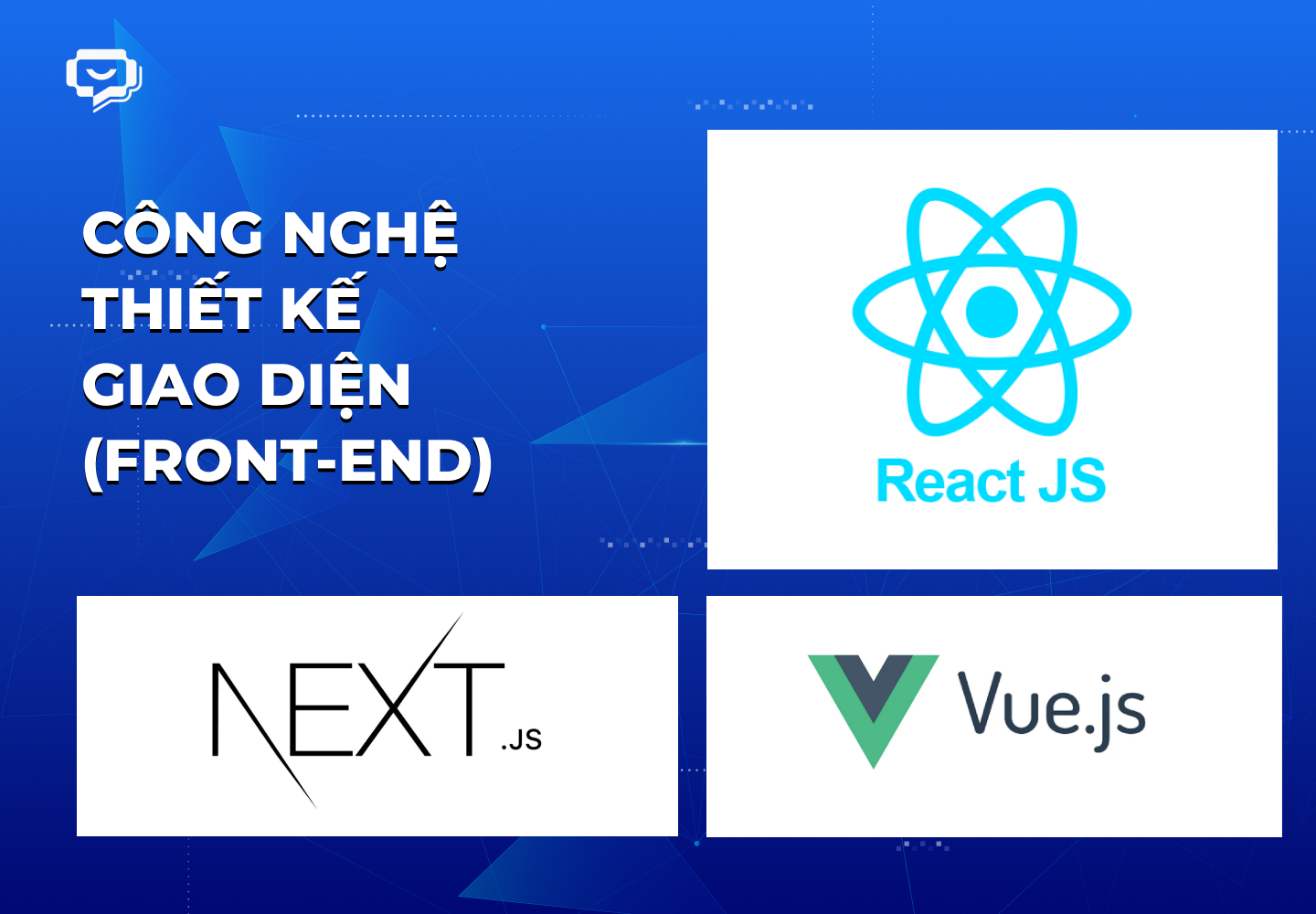
- React.js: A JavaScript library built and maintained by Meta. Advantages include flexibility, high performance, and a large ecosystem. Suitable for single page applications (SPA) and highly interactive websites.
- Vue.js: A framework that is easy to learn and accessible, with detailed documentation. Good performance, suitable for projects of various sizes.
- Next.js: A framework based on React, supporting server side rendering (SSR) and static site generation (SSG). Extremely strong in SEO and page loading speed.
2. Back end Technologies
- Node.js: Allows JavaScript to run on the server and handle thousands of simultaneous connections. Ideal for real time applications such as chat or online games.
- Python (Django/Flask): A versatile language with readable syntax. Django is a full stack framework with many built in security features. Suitable for startups and AI applications.
- PHP (Laravel): A powerful PHP framework with expressive syntax, enabling rapid development of complex web applications.
3. Content Management Systems (CMS) No Code Solutions

- WordPress: Currently used by more than 40 percent of websites worldwide. A massive plugin and theme ecosystem, easy to use. Suitable for blogs, news sites, and small to medium sized businesses.
- Shopify: A platform specifically designed for online selling. An all in one solution from hosting to payments and shipping.
4. Emerging Technology Trends
- PWA (Progressive Web App): Enables websites to function like mobile applications, work offline, and send notifications like an app.
- AI and Machine Learning: Personalizes content, powers intelligent chatbots, and optimizes user experience.
- Web3 and Blockchain: Decentralized technologies that bring higher transparency and security to transactions and data.
IV. Which Website Design Technology Should a Business Choose?
This is the question most CEOs or Marketing Managers ask. However, there is no universal answer for every business. Choosing website design technology must always be based on business context, development stage, and long term strategy.
Below is how I typically advise in specific scenarios.
1. Small businesses, limited budget, need quick deployment
If the goals are:
- Build a professional image
- Have a platform to run ads and capture leads
- Optimize basic SEO
Then a CMS such as WordPress or a ready built platform is a reasonable choice.
The advantages are low cost, fast deployment, and easy content management. The key is to optimize hosting and security from the beginning to avoid future risks.
At this stage, website design technology should prioritize flexibility and cost efficiency over complex architecture.
2. Growing businesses that need feature expansion

If the website is no longer just for introduction but has become a sales channel or a marketing operations platform, you need to think further ahead.
At this point, website design technology should:
- Support feature expansion without rebuilding from scratch
- Be easy to integrate with CRM, email marketing systems, and payment gateways
- Have a clear architecture between front end and back end
A possible solution is combining a modern front end framework with a strong back end system such as Laravel or Node.js. The goal is to control system architecture and prepare for the scaling phase.
3. E commerce businesses or digital platforms
For ecommerce models or tech products, the website itself is the product. In this case, choosing the wrong technology can directly impact revenue.
You need to consider:
- Scalability during large campaigns
- Page loading speed to optimize conversion
- Customer data security
- Personalization capabilities
In many cases, custom development or adopting a headless architecture is the appropriate direction. Although the initial cost is higher, it provides better long term control and scalability.
V. 5 Mistakes When Choosing Website Design Technology
In consulting projects, I have seen many businesses fail not because of weak marketing, but because they chose the wrong website design technology from the beginning. Below are five common mistakes.
1. Choosing Based on Trends
Hearing that React, AI, or Web3 is “hot” and deciding to implement it, even though the business model does not actually require that level of complexity.
Modern technology does not automatically mean effectiveness. If the platform does not directly support revenue generation or operations, it simply increases cost and complexity.
2. Choosing Based on the Lowest Price

Many businesses compare only the initial cost without considering the total cost of ownership over 3 to 5 years.
A low cost website may:
- Be difficult to scale
- Be hard to optimize for SEO
- Require rebuilding when demand increases
At that point, the total cost can be much higher than investing properly from the start.
3. Ignoring Scalability
When traffic increases, or when integrating CRM or sales systems becomes necessary, can the website still handle it?
A suitable website design technology must allow flexible expansion. If the architecture is too rigid, the business will become “stuck” within its own platform.
4. Overlooking the Capability of the Operating Team
Even good technology will fail if the team does not understand it or lacks the skills to operate it.
For example:
- A complex CMS but the marketing team cannot manage content
- A highly customized system but no technical staff to maintain it
Technology must align with internal capabilities, not just the available budget.
5. Ignoring Long Term Maintenance Costs

A website is not a one time project that ends after launch.
You need to consider:
- Security updates
- Hosting renewals
- Version upgrades
- Fixing unexpected issues
Without allocating a maintenance budget, businesses fall into a patchwork state, directly affecting performance and brand credibility.
Mistakes in choosing website design technology often do not show immediately. They surface when the business starts to grow. That is why this decision should be viewed as an infrastructure investment, not a short term expense.
VI. Conclusion
Ultimately, website design technology is not a race to use the newest framework or the most complex platform. It is an infrastructure decision that directly impacts marketing costs, scalability, and operational performance for years.
Choosing the right technology from the beginning helps businesses:
- Optimize investment budget
- Scale easily during growth
- Proactively integrate sales systems and data
- Reduce the risk of rebuilding the entire website
Connect Tech does more than design interfaces. We advise on selecting website design technology that aligns with your business model, growth projections, and budget. From strategic analysis to implementation and long term optimization.
👉 Contact Connect Tech today to receive consultation on the right website solution, instead of continuing to invest based on intuition. A website built on the right foundation is a competitive advantage, not just an online presence.
Related Article:

Table of Contents