Loading Table of Contents...
What Is Website Traffic? Types of Traffic and How to Increase It
Quick Summary
Collapse
What is website traffic? Explore the different traffic sources, traffic potential, its importance, ways to increase visits, and effective traffic analysis tools.
Website traffic is the volume of visits a website receives over a given period. It is an important metric that helps administrators assess their ability to attract users and the effectiveness of SEO and marketing activities. However, high traffic does not necessarily generate more customers if visitors are not the right audience. This article explains the main types of traffic, how to assess traffic potential, the factors that affect visits, and effective ways to grow website traffic.
What Is Website Traffic?

Website traffic refers to visits to a website over a specific period, usually tracked daily, weekly, monthly, or annually. In SEO and digital marketing, traffic helps businesses understand where visitors come from, how large their audience is, and whether visits are increasing or decreasing.
Traffic can come from search engines such as Google, social networks, paid advertising, email, or referral links on other websites.
However, traffic is not exactly the same as the number of visitors. One person may visit a site several times, browse multiple pages, and generate several sessions. To assess website traffic accurately, administrators need to understand the related measurement metrics.
The Difference Between Traffic, Users, Sessions, and Pageviews
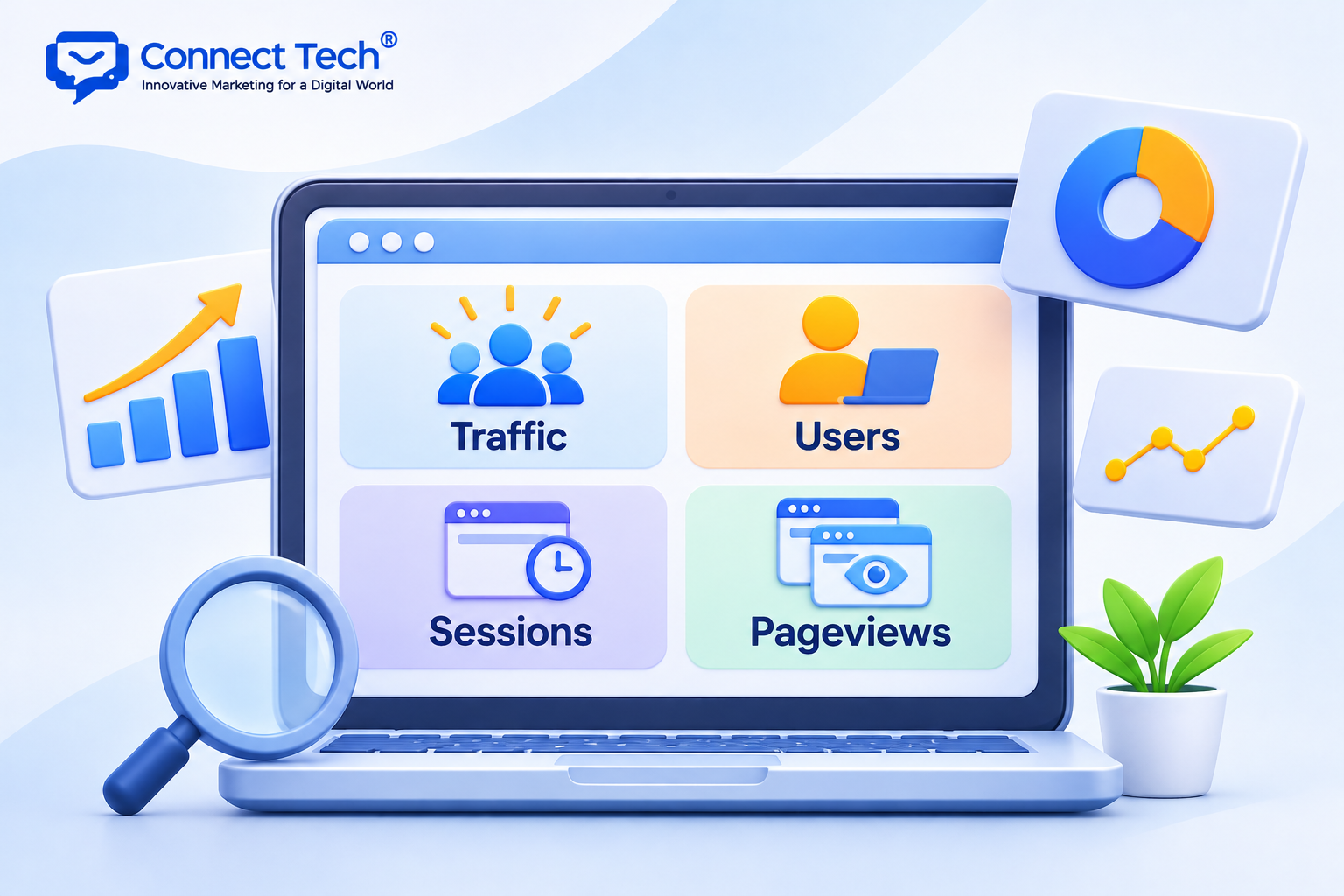
Traffic is a broad term for website visits, whereas users, sessions, and pageviews are specific metrics used to measure website activity.
|
|
|
|
|
|
|
|
|
|
|
|
|
|
|
|
|
|
|
|
Although these metrics are connected, they represent different aspects of website activity. Understanding them helps you read traffic reports correctly without confusing visitors, sessions, and total pageviews.
Common Types of Website Traffic
Website traffic is classified into several types based on the channels that bring users to a site. Correctly identifying traffic sources helps a business determine which marketing channels work best and where to focus resources.
Organic Traffic - Visits from Organic Search
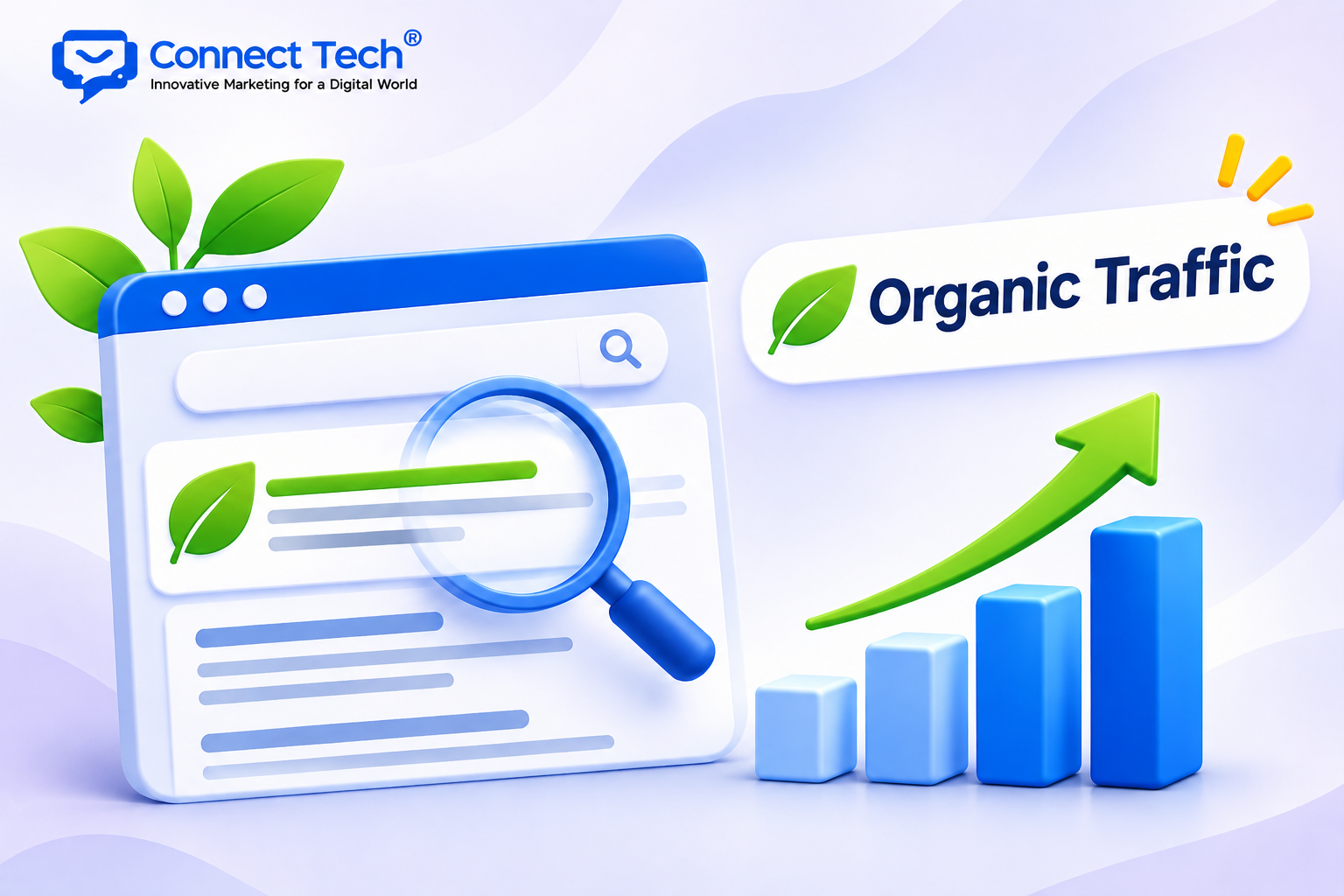
Organic traffic refers to visits from unpaid search results on search engines such as Google and Bing, excluding clicks on paid advertisements.
Organic traffic plays an important role in SEO because a website can continue attracting readers through well-optimized content that ranks prominently in search results.
To maintain this traffic, websites should regularly update content, improve the user experience, and monitor ranking changes.
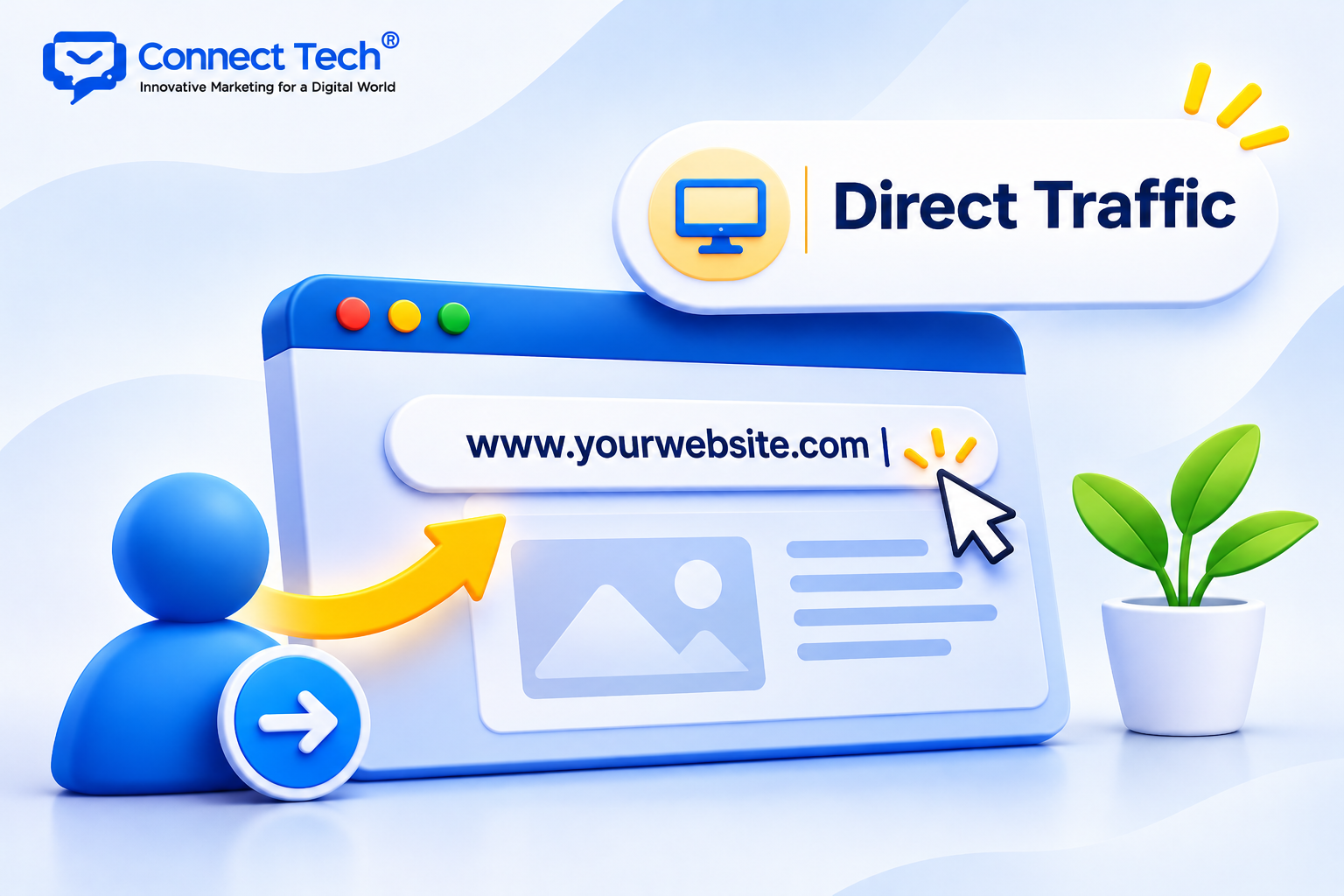
Direct Traffic - Direct Visits
Direct traffic refers to visits for which analytics tools cannot identify a clear referring source. It often includes users typing a site's address into their browser or opening a saved bookmark.
Some visits from PDF files, messaging apps, or links without source information may also be categorized as direct traffic.
Therefore, direct traffic does not mean every visitor manually entered the URL. Businesses should also consider missing attribution data when analyzing this channel.
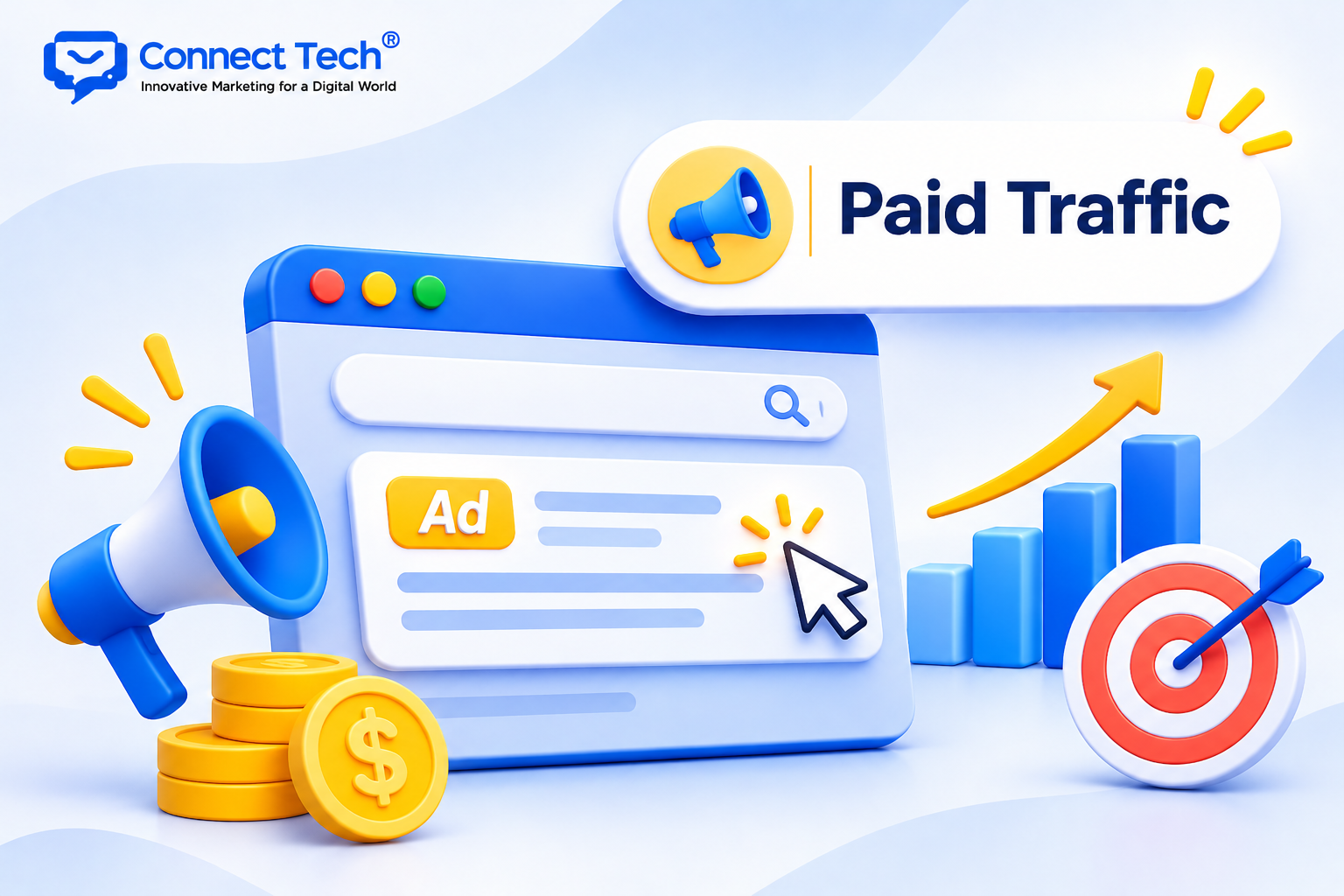
Paid Traffic - Visits from Paid Advertising
Paid traffic comes from paid advertising campaigns, such as Google Ads, Facebook Ads, and other digital advertising platforms.
Its main advantage is that businesses can reach target audiences quickly, manage budgets proactively, and adjust campaigns based on performance.
However, advertising traffic usually depends on spending. When ads are paused, campaign-related visits may drop significantly.
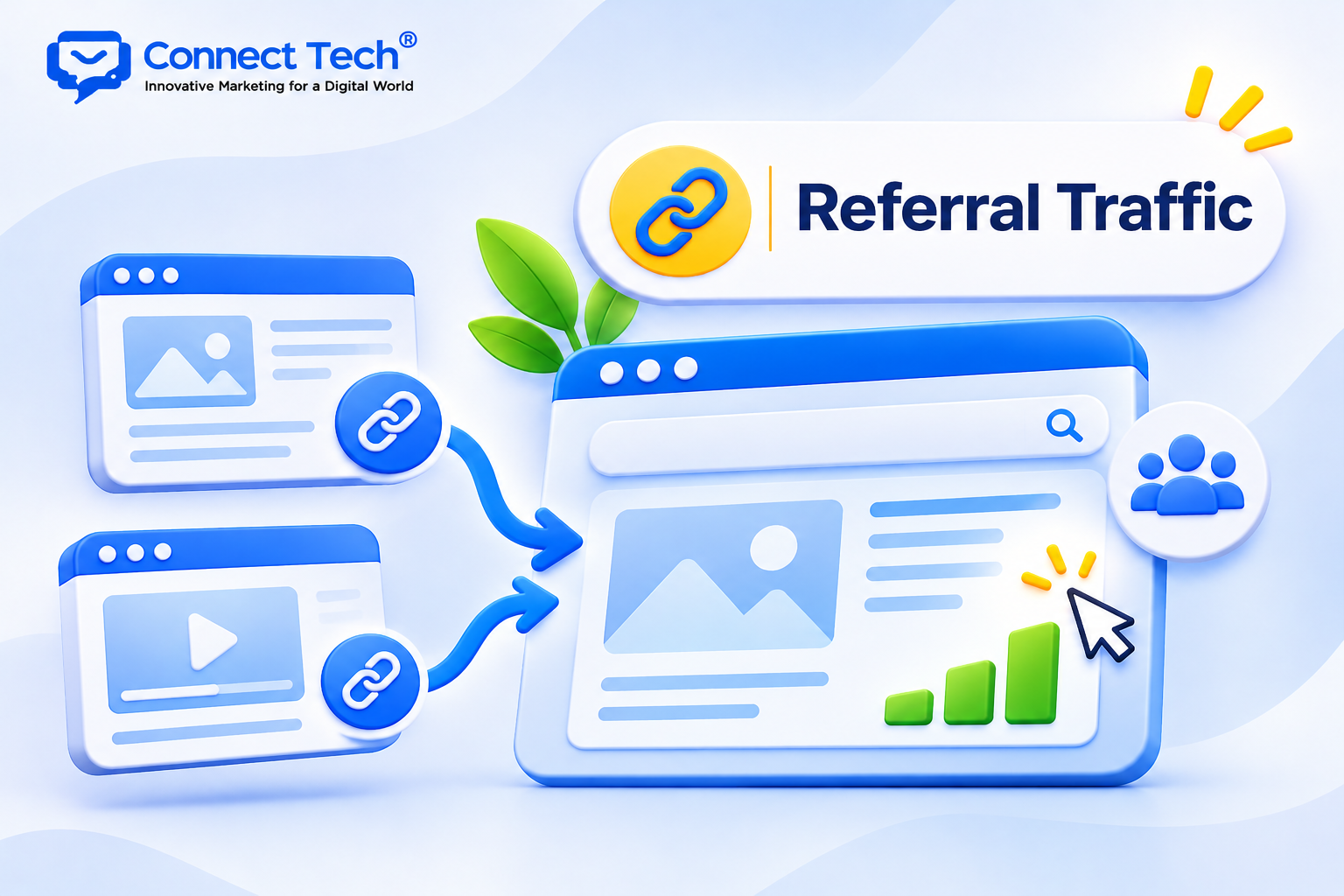
Referral Traffic - Visits from Other Websites
Referral traffic comes from links placed on other websites, excluding traffic attributed to search engines or separately categorized channels.
It enables businesses to reach audiences on websites that cover related topics or serve similar interests.
Links from trustworthy, relevant sources generally provide more value than widespread links placed on unrelated websites.
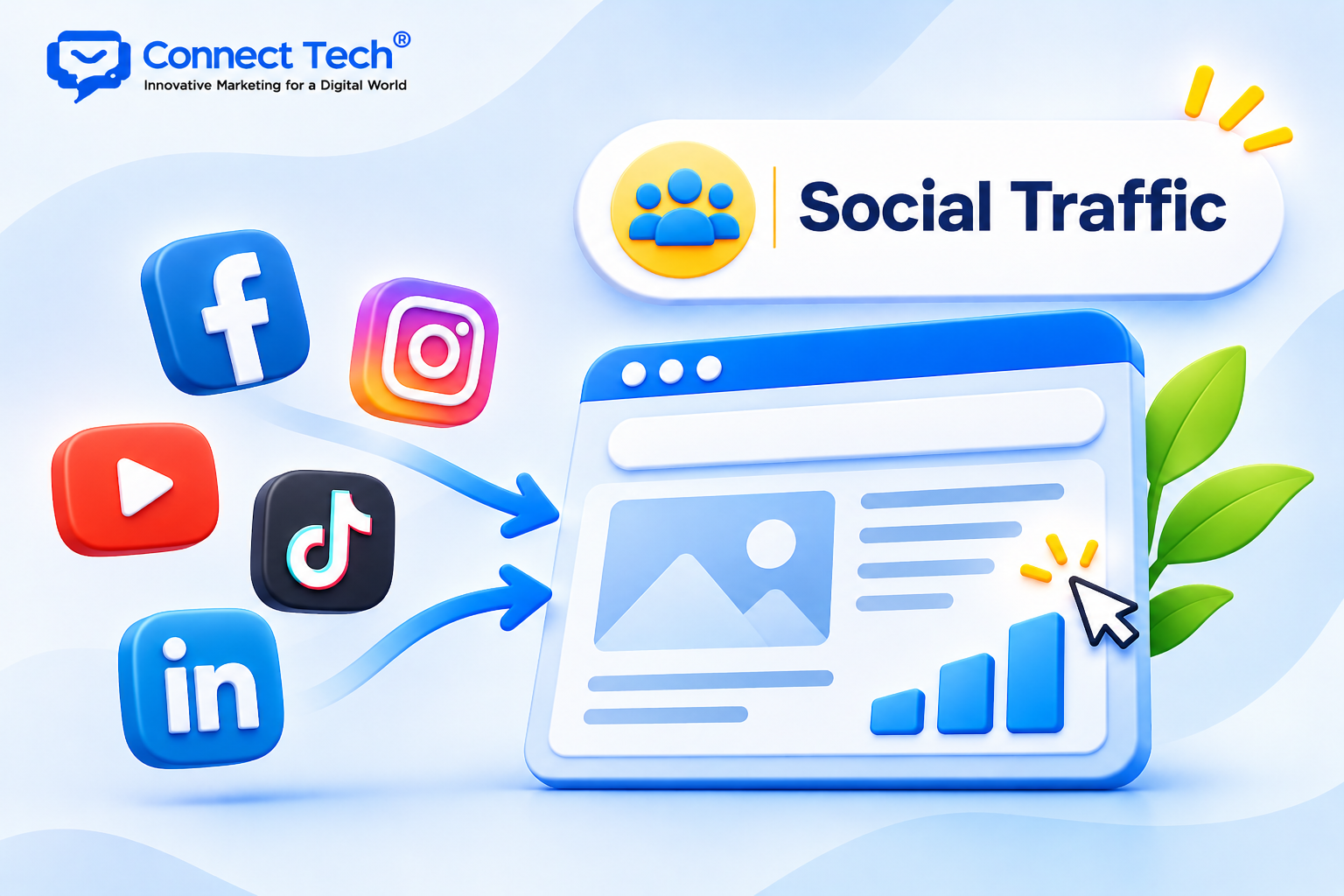
Social Traffic - Visits from Social Media
Social traffic comes from social platforms such as Facebook, TikTok, LinkedIn, and Instagram.
It helps businesses reach communities, distribute content, and attract users interested in their brands.
Its effectiveness depends on content quality, engagement, and the ability to direct users to the website. Analytics reports may also distinguish Organic Social from Paid Social to separate unpaid activity from advertising.
Email Traffic - Visits from Email
Email traffic comes from links in email messages, particularly marketing emails, newsletters, and customer engagement campaigns.
This channel is especially useful for businesses with subscribers or customers already interested in their products or services, helping maintain engagement and encourage return visits.
For more accurate attribution, businesses should attach UTM parameters to email links rather than relying solely on plain URLs.
What Is Traffic Potential?
Traffic potential is the amount of traffic a webpage or website could attract, based on research data and assumptions about future performance.
In SEO, it helps marketers determine whether a topic is worth investing in rather than relying only on the search volume of a single keyword.
Understanding Traffic Potential in SEO
In keyword research, traffic potential is commonly used to assess the organic traffic a topic may attract.
An article may rank not only for its primary keyword but also for dozens or hundreds of related queries.
In Ahrefs, the Traffic Potential metric is estimated from the total organic traffic received by the top-ranking page for a target topic or keyword, across all keywords that page ranks for.
This explains why a keyword with modest search volume can still belong to a topic that generates substantial traffic.
How to Estimate a Website's Traffic Potential
Traffic potential can be estimated by combining search demand, expected rankings, and the likelihood of earning clicks.
Key factors to consider include:
- Search Volume: The average number of searches for a keyword during a given period.
- Expected Rankings: The positions a website may achieve in search results.
- CTR (Click-Through Rate): The percentage of impressions that result in a click.
- Related Keywords: Other queries for which the same page could rank.
- Competition: How difficult it may be to compete with websites already ranking highly.
If a keyword receives 10,000 searches per month and the site is assumed to achieve a 5% CTR, estimated clicks from that keyword would be:
10,000 × 5% = 500 clicks per month.
This is only an illustrative calculation for one keyword, not the exact formula for Ahrefs' Traffic Potential metric.
To assess an entire topic, also examine related queries and the estimated traffic of pages that already perform well in search results.
Traffic Potential vs. Actual Traffic
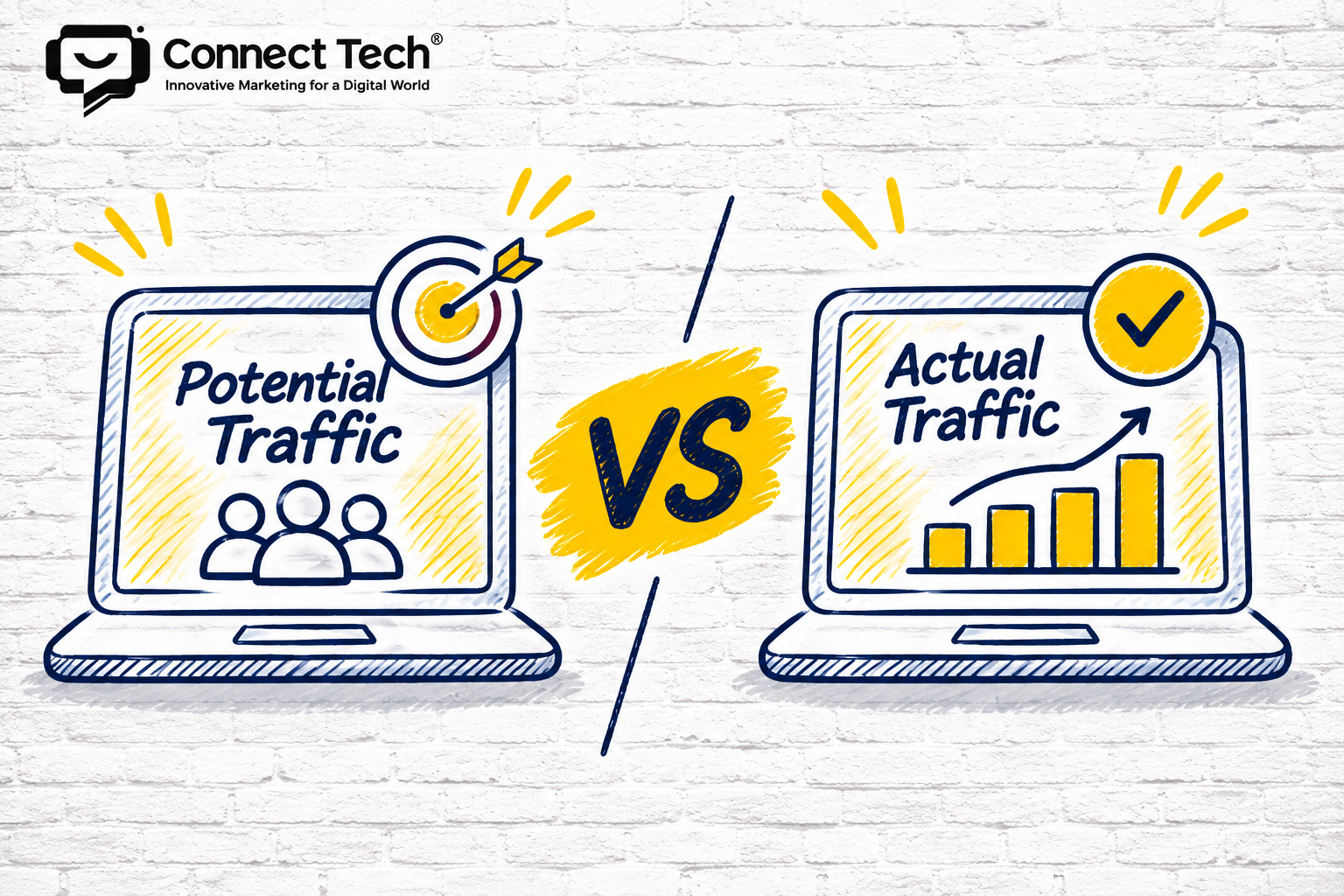
The key difference between traffic potential and actual traffic is the nature of the data. Potential traffic is an estimate, while actual traffic refers to visits recorded by analytics systems.
|
|
|
|
|
|
|
|
|
|
|
|
|
|
|
|
|
|
|
|
|
|
|
|
Businesses should use both measures to identify content growth opportunities and evaluate actual SEO results.
Why Website Traffic Matters
Website traffic is an important metric for assessing a business's online reach and website performance. When analyzed correctly, traffic data also supports marketing decisions and reveals opportunities for growth.
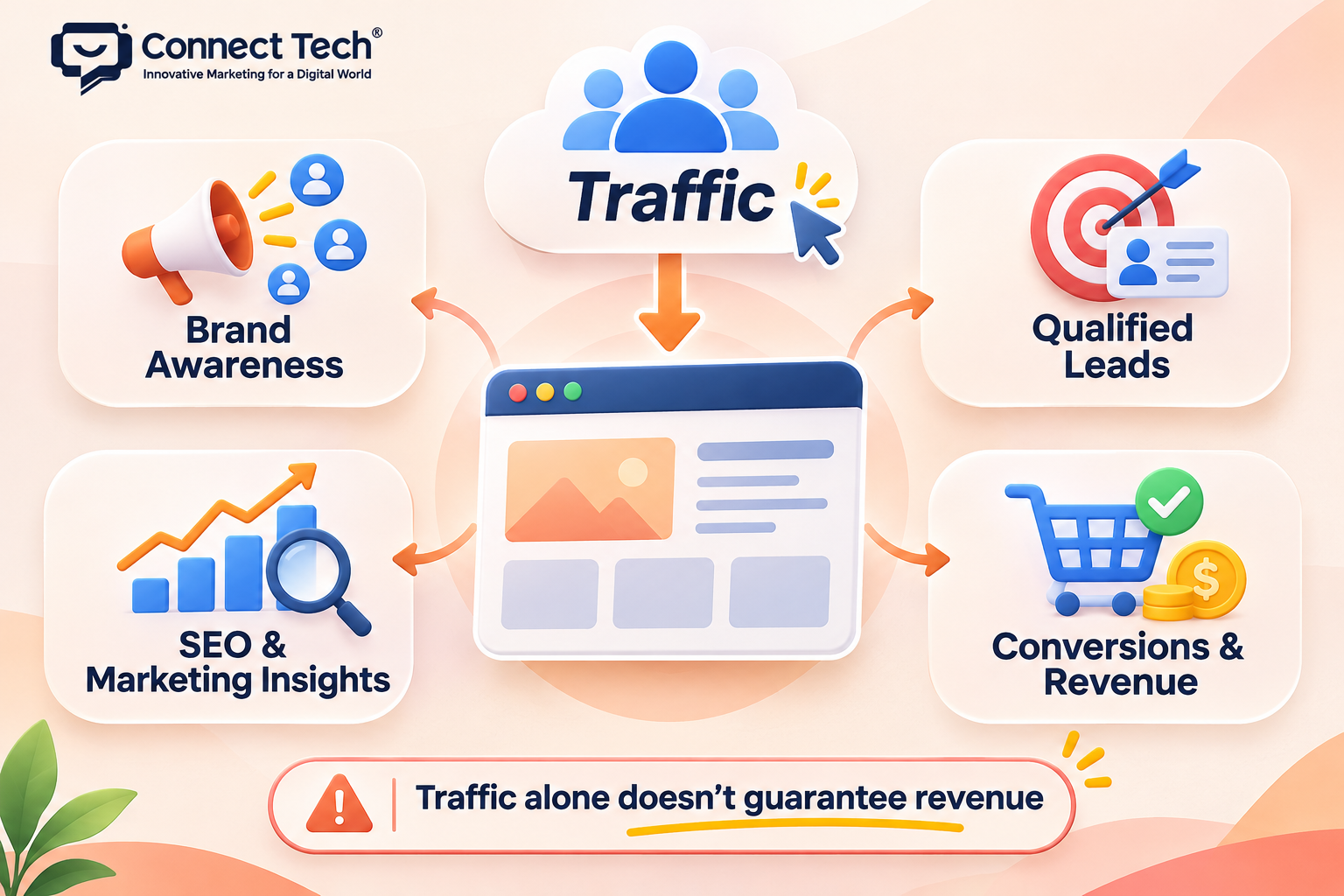
Increasing Reach and Brand Awareness
Traffic helps websites expose their content, products, and services to a wider audience.
When an article appears on Google or is shared through social media, the business has another chance to introduce its brand to people who may not have heard of it before.
Not every visit contributes equally to awareness, however. Recall also depends on the content, user experience, and level of interest.
Creating Opportunities to Attract Leads
Relevant traffic can help businesses reach people who are interested in their products or services.
Visits driven by researching products, comparing solutions, or looking for a service provider are generally more likely to create business opportunities than unrelated visits.
Clear information, compelling content, and convenient contact forms give a website more opportunities to convert visitors into leads.
Evaluating SEO and Marketing Performance
Traffic enables businesses to assess SEO, advertising, and communication efforts using data rather than intuition alone.
Traffic reports can reveal:
- Which channels deliver the most visits.
- Which articles or product pages attract visitors.
- Whether traffic increases or decreases after a campaign.
- Which traffic sources generate more inquiries or purchases.
These insights help businesses allocate budgets more effectively and focus on activities that produce results.
Supporting Conversions and Revenue Growth
Traffic creates conversion opportunities when visitors take valuable actions, such as signing up, submitting an inquiry, placing an order, or completing a payment.
When a site attracts the right audience and offers relevant content and a good experience, conversion opportunities can improve.
Actual sales still depend on traffic quality, products, pricing, and the buying experience. Businesses should therefore optimize conversion rates rather than pursuing visits alone.
Factors That Affect Website Traffic
Website traffic is influenced by search rankings, content quality, user experience, and marketing activity. Understanding these factors helps explain why visit volumes fluctuate.
Keyword Rankings in Search Engines
Keyword rankings affect how easily users discover and click a website in search results.
Prominent search results generally have more opportunities to earn clicks. Actual click-through rates also depend on search intent, titles, descriptions, and how Google presents results.
If an article loses rankings for important keywords, its organic traffic may decline as well.
Content Quality and Relevance
Content that matches search intent has a better opportunity to attract readers interested in the topic.
Accurate articles that solve problems clearly and follow an easy-to-read structure provide a better reader experience.
Websites should prioritize helpful, appropriately detailed content and update it as information changes.
User Experience and Page Speed
User experience affects whether visitors continue using a website after opening a page.
A slow-loading site, a mobile-unfriendly design, or intrusive ads can cause visitors to leave before finding what they need.
Businesses should optimize loading speed, responsive layouts, content presentation, and navigation.
A good experience does not guarantee high rankings, but it makes content easier to access and supports long-term performance.
Competition and Search Demand
Search demand and competition can cause traffic to rise or fall even when a website's content has not changed.
Seasonality, market trends, new competitors, and changes to search result layouts can all affect visit volumes.
Businesses should therefore analyze traffic in its market context rather than judging performance solely from differences between two dates.
Advertising and Multichannel Marketing
Advertising, social media, email, and public relations campaigns can change traffic levels over short periods.
These activities help businesses reach users beyond search engines and distribute content across multiple channels.
However, businesses should distinguish temporary campaign-driven spikes from sustained growth through ongoing channels.
Effective Ways to Increase Website Traffic
Growing website traffic effectively requires a combination of SEO, content development, advertising, and suitable communications channels. Instead of pursuing the highest possible visit count, businesses should focus on reaching relevant users.
Researching and Selecting the Right Keywords
Keyword research helps websites identify topics their target customers are searching for.
Before creating content, examine search volume, search intent, and the competition associated with each keyword.
Combining informational, commercial, and related queries helps a website reach users at different stages of researching and choosing products or services.
Creating Quality Content That Matches Search Intent
High-quality content helps websites attract readers and provides opportunities to receive organic traffic from related keywords.
Businesses should publish articles that solve real customer problems rather than only posting product introductions.
Useful actions include:
- Build topic clusters around the website's main areas of expertise.
- Write content that directly addresses search intent.
- Add valuable information, comparison tables, and practical guidance where useful.
- Update older articles when their information becomes outdated.
- Use internal links to connect related content.
This structure helps readers explore further information and helps search engines discover related pages.
Optimizing On-Page SEO and Technical SEO
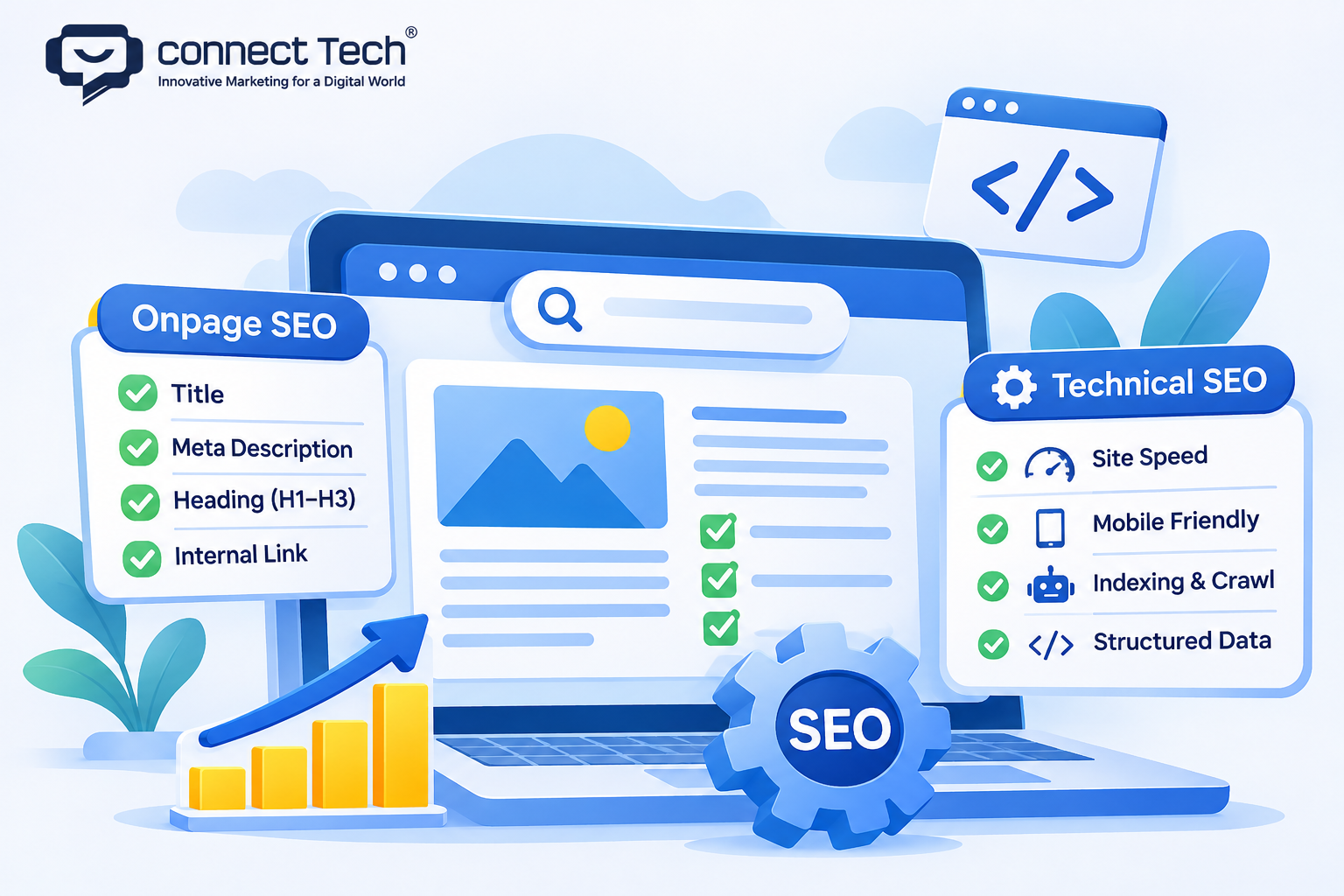
On-page and technical SEO make content easier for search engines to discover, understand, and display appropriately.
Important elements to review include:
- Title and Meta Description: Clearly communicate the page's topic and appeal to relevant searchers.
- H1, H2, and H3 Headings: Organize content logically to help readers follow it.
- URL: Use a short, understandable page address.
- Internal Links: Connect pages covering related topics.
- Images: Optimize file size, filenames, and appropriate alt text.
- Page Speed: Reduce unnecessary resources and improve loading performance.
- Indexability: Check robots.txt, noindex tags, canonicals, and sitemaps where appropriate.
Crucially, websites must ensure important pages are crawlable and indexable by Google. Even a useful article will struggle to attract organic traffic if search engines cannot access or index it.
Building Links and Increasing Brand Visibility
Links from relevant websites can introduce content to additional readers and may support SEO performance.
Businesses can publish expert resources, research, guides, and other useful materials that other websites may voluntarily reference and link to.
PR, content collaborations with partners, and sharing knowledge in professional communities can also build brand recognition.
However, avoid buying or selling links to manipulate rankings or building large numbers of backlinks from low-quality websites.
Using Social Media and Email Marketing
Social media and email marketing help websites reach audiences beyond search engines.
On social networks, businesses can share blog posts, short videos, guides, and useful information to encourage users to visit their sites.
Through email marketing, they can send regular newsletters, expert resources, and new content to people who have subscribed to updates.
The key is tailoring content to each channel and giving users a clear reason to click through.

Running Paid Advertising to Drive Visits
Paid advertising helps websites reach target users quickly when businesses need to promote new products, services, or campaigns.
Google Ads can reach people actively searching for solutions, while social media ads may reach audiences based on their characteristics and interests.
To improve paid traffic performance, businesses should target the right audience, build suitable landing pages, and monitor cost per valuable result.
Advertising traffic is useful only when visitors have a reasonable chance of taking the desired action.
Monitoring and Optimizing Traffic with Analytics Tools
Regular traffic analysis helps businesses identify what works and what needs improvement.
You can start with a simple process:
- Review the website's total monthly traffic.
- Identify the main traffic sources.
- Find pages with high traffic or significant declines.
- Analyze engagement and conversions.
- Adjust content, SEO, or marketing campaigns based on the findings.
Continuous monitoring and optimization reduce dependence on one traffic source and help detect performance changes early.
Important Considerations When Evaluating and Improving Traffic
Website traffic should be evaluated in terms of volume, quality, and the results visits generate. Looking at one metric alone may lead businesses to misjudge performance.
Prioritize Traffic Quality over Volume
Quality traffic consists of visits from users whose needs are relevant to a website's content, products, or services.
Visitors from relevant target audiences are generally more likely to engage, explore further, and take valuable actions than unrelated visitors.
Businesses should therefore prioritize traffic aligned with their goals rather than increasing visit counts at any cost.
Do Not Confuse High Traffic with a High Conversion Rate
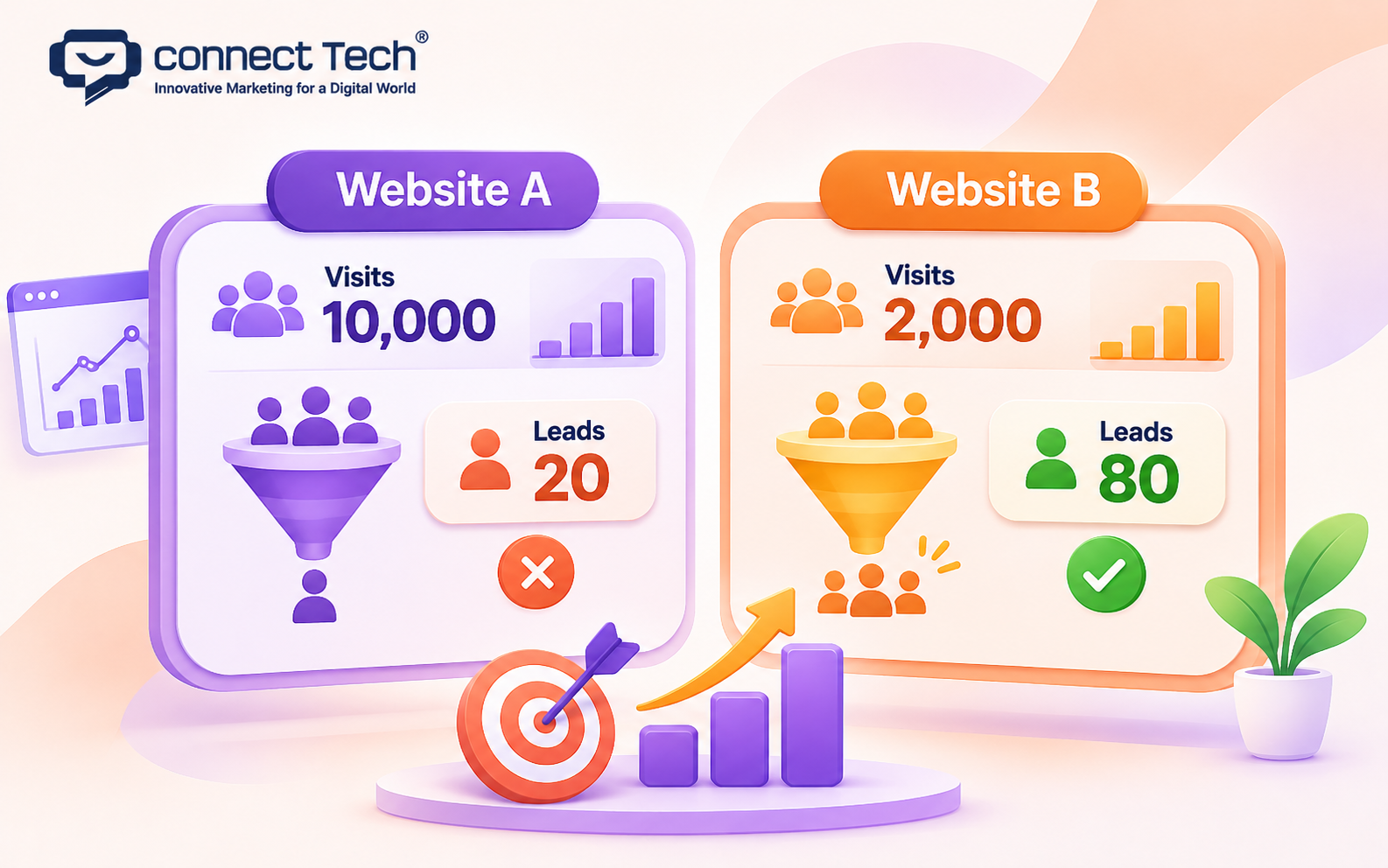
More visits do not automatically mean a higher conversion rate or stronger revenue.
Consider two websites selling the same service:
|
|
|
|
|
|
|
|
|
|
|
|
|
|
|
|
Although Website A receives more visits, Website B generates more inquiries.
This shows why businesses should assess traffic alongside conversion rates to judge actual results.
Avoid Fake Traffic and Artificial Growth Methods
Fake traffic consists of visits generated by bots, automated tools, or methods that do not reflect genuine user interest.
When most visits are not from real users or do not represent actual demand, they rarely create business value.
Fake traffic can also distort reports, making it difficult to evaluate marketing performance and make informed decisions.
Websites should instead develop content and channels that attract real users rather than chasing meaningless numbers.
Monitor Traffic by Source and Time Period
Tracking traffic by source and time helps businesses identify reasons for growth or decline.
Compare equivalent periods, such as this month versus last month, the same period last year, or before and after a campaign.
For seasonal industries, account for changes in search demand to avoid misleading conclusions.
Evaluate Traffic Against Business Objectives
Traffic performance should be evaluated according to what the website is designed to achieve.
For informational websites, readership, engagement, and returning visitors may be priorities.
For e-commerce sites, conversion rate, orders, average order value, and revenue also matter.
Service websites may focus on submitted forms, calls, or consultation requests.
There is no universal 'good' traffic level for every website. Businesses need goals appropriate to their size, sector, and development stage.
Popular Tools for Checking Website Traffic
Traffic analysis tools help you monitor website visits, identify sources, and evaluate SEO performance. Depending on your goals, you can use tools that measure your own website or estimate competitors' traffic.
Google Analytics 4
Google Analytics 4 (GA4) is Google's analytics platform for tracking user behavior and traffic across websites and applications.
GA4 lets administrators analyze users, sessions, traffic sources, engagement, and key events configured for measurement.
To check website traffic in GA4:
- Visit Google Analytics and select the website property with tracking installed. Google Analytics
- Open Reports.
- Find the Traffic acquisition report under Acquisition. Menu locations may vary depending on the report configuration.
- Select the period you want to analyze.
- Review session counts, traffic channels, and engagement metrics.
GA4 is suitable for businesses seeking to measure their own website activity and evaluate which sources generate results.
Google Search Console
Google Search Console is a free Google tool for monitoring a website's performance in Google Search results.
It provides metrics such as:
- Total Clicks: The number of clicks from Google Search results.
- Total Impressions: How often the website appeared in Google Search according to Search Console's counting rules.
- Average CTR: The average click-through rate.
- Average Position: The average position of the website in search results.
To review search performance, open Google Search Console, choose a verified property, and go to the Performance report. Google Search Console
Here, you can examine queries that generate clicks, identify strong-performing pages, and follow search trends over time.
Google Search Console is particularly useful for SEO, but it does not measure all website traffic. It focuses on performance data from Google's search products.
Ahrefs
Ahrefs is an SEO platform for keyword research, backlink analysis, and estimating website organic traffic.
SEO professionals use Ahrefs to estimate competitors' organic search traffic, identify top-performing pages, and research keywords that attract visits.
To check traffic with Ahrefs:
- Visit Ahrefs.
- Open Site Explorer.
- Enter the domain or URL you want to analyze.
- Review the Organic Traffic metric, along with the keywords and pages driving estimated visits.
Ahrefs is useful for competitor research and SEO content planning. Its displayed organic traffic, however, is an estimate rather than actual first-party website analytics data.
Semrush
Semrush is a digital marketing and SEO platform for keyword analysis, competitor research, and website traffic evaluation.
Its Domain Overview and Traffic Analytics reports provide different perspectives on a domain's performance.
Basic steps include:
- Visit Semrush
- Choose the appropriate analysis tool.
- Enter the domain you want to investigate.
- Review estimated traffic, traffic channels, and trends.
Domain Overview focuses on SEO metrics, while Traffic Analytics provides a broader view of visits across multiple channels.
Semrush suits businesses that want to compare their sites with competitors and identify opportunities to improve marketing performance.
Similarweb
Similarweb is a digital market intelligence platform that estimates website traffic and analyzes online audience behavior.
It provides estimated visits, traffic trends, channel breakdowns, and information about competing websites.
To check traffic, visit Similarweb, enter the domain you want to analyze, and browse the available reports. Similarweb
Similarweb is useful for evaluating the general scale of a site's audience or comparing multiple competitors.
Its data is derived from multiple sources and estimation models, so results may differ from actual Google Analytics figures.
Overall, Google Analytics 4 and Google Search Console should be the primary tools for monitoring your own website. Ahrefs, Semrush, and Similarweb are useful for competitor research.
Traffic is an important metric for understanding a business's online reach and website performance. By analyzing traffic sources, assessing potential, and using appropriate measurement tools, you can identify opportunities to improve website visits. Ultimately, the goal is not simply to bring more people to a site, but to reach the right audience and create genuine value.
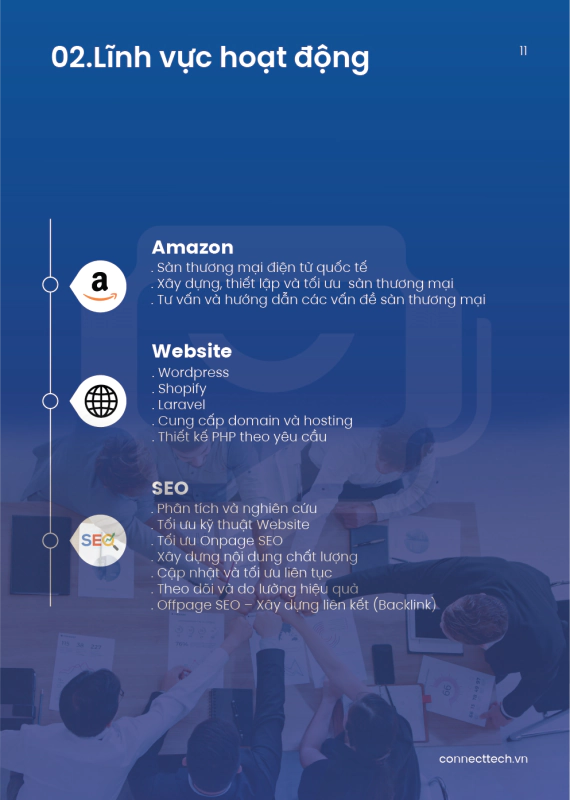
If your business wants to improve organic traffic and build a long-term SEO strategy, Connect Tech can support website analysis, content optimization, and expanding customer reach through search engines.

Table of Contents