Loading Table of Contents...
What is an SEO Title? How to Write Titles that Rank and Convert
Quick Summary
Collapse
What is an SEO Title and how does it impact CTR and rankings? Learn the best SEO Title practices, proven formulas, and common mistakes to avoid—with tools and examples.
Did you know? An attractive headline can double your click-through rate on Google. But if that headline isn’t properly optimized for SEO, Google may simply skip over it without a second thought. On the flip side, a technically perfect title that lacks emotion or appeal won’t perform any better either.
So where is the balance? How do you write a title that is both SEO-compliant and irresistible to users?
In this article, Connect Tech will help you understand what an SEO Title is, how it impacts search rankings and organic CTR, and more importantly, how to write effective SEO titles in 2025. You’ll get practical formulas, real examples, and common mistakes to avoid.
What is an SEO Title and why is it important in SEO?
What is an SEO Title?
An SEO Title (also known as a Meta Title or Title Tag) is the title that appears in Google’s search results, helping users understand what your page is about before they click. It’s the bold, blue line of text you often see when searching for anything on Google.
Example: When you search for "How to write effective SEO titles," the top result might be: "What is an SEO Title? How to write titles that increase CTR and rank on Google", that’s the SEO Title.

Key terms to distinguish
- SEO Title: The title that appears on Google, optimized to increase visibility and attract clicks.
- Page Title: The heading displayed on the web page itself, often as the tag. It may or may not match the SEO Title.
- Meta Title / Title Tag: The technical term used in a page's HTML code. Often interchangeable with SEO Title in most tools.
Where does the SEO Title appear?
- On Google Search Results (SERP)
→ This has the strongest influence on click-through rate (CTR). - On browser tabs
→ Helps users identify your page when multiple tabs are open. - When sharing links on social media
→ Many social platforms pull the SEO Title to display alongside the thumbnail image.
Why is the SEO Title important?
1. Directly affects CTR (Click Through Rate)
If your title grabs attention, matches search intent, and includes emotion or benefit, users are more likely to click. A generic or unclear title = low CTR = poor Google ranking.
2. Impacts keyword rankings
While not a deeply technical factor, SEO Titles indirectly affect rankings via CTR and user experience. High engagement signals Google that your content is valuable.
3. Improves user experience (UX)
The SEO Title is your first promise to the reader. If you match their intent, they’ll click and stay. If not, bounce rate increases, hurting your SEO.

Read more article: What is UI/UX? Why Should You Design a UI/UX-Friendly Website?
4. It's the first element Google crawls
During indexing, Google reads the title first to understand your page’s topic. If your title isn't optimized, you're missing a chance to rank from the start.
📌 Tip for you: If you're new to SEO, read our articles on What is SEO? or What is SEO Onpage? to build your foundation before optimizing titles.
8 Criteria for Writing SEO-Friendly Titles
An effective SEO Title not only helps you rank but also encourages users to click. Here are 8 key criteria, along with tips and examples, to guide you in writing SEO Titles that work.
1. Optimal length to avoid truncation
Google usually displays about 55–65 characters (or around 580 pixels wide) in search results. If your title is too long, the end will be cut off with ellipses (...), reducing clarity and impact.
2. Unique and non-duplicate titles
Each page on your website should have a unique title. Duplicate titles confuse Google on which page to rank and may result in thin or duplicate content penalties.
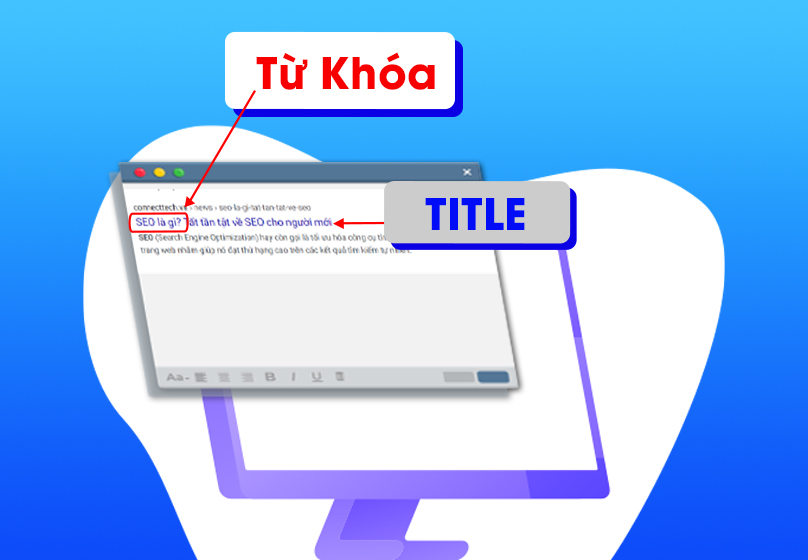
3. Place main keyword at the beginning
Google prioritizes keywords near the beginning of the title, and users tend to scan the first few words quickly to determine relevance.
4. Reflect the article content
A good title reflects the core subject of the article. When titles align with actual content, both Google and users stay longer, bounce rate drops, and trust increases. Misleading or clickbait titles backfire.
5. Natural, readable, and action-inspiring
Avoid robotic or keyword-stuffed titles. Write like you're talking to the reader — friendly, clear, and helpful.
📌 Tips to make your title more appealing:
- Use numbers: “5 ways to write SEO-friendly titles”
- Use strong adjectives: "effective," "quick," "easy to apply"
- Use questions: "Are you writing SEO titles the right way?"
6. Target reader insights
A powerful title addresses a real pain point or desire. Think about what your audience wants or struggles with, then craft a title that responds directly to it.
7. No spelling mistakes or excessive capitalization
These may seem small, but clean grammar and proper capitalization convey professionalism and attention to detail. Sloppy titles damage credibility.
8. Consider adding a soft call to action (CTA)
Even with limited space, you can subtly insert a CTA to increase clicks. Keep it natural and user-focused, not overly promotional.

Common Mistakes to Avoid in SEO Titles
Even if you understand what an SEO Title is and how it works, a few frequent mistakes can ruin its performance. Here are 4 major pitfalls you should absolutely avoid:
1. Copying titles from the top 10 results
If your title closely resembles what's already ranking, it will blend into the crowd. Research competitors, but always create unique and differentiated titles.
2. Keyword stuffing
Overloading your title with multiple keywords makes it unreadable and unnatural. Google penalizes this. Stick to one main keyword, placed naturally.
3. Rambling, unfocused titles
Overly long titles that lack a clear benefit confuse users. Worse, Google may rewrite your title or display your tag instead, which hurts visibility.
4. Misleading or mismatched content
Never promise one thing in the title and deliver another in the article. Users will leave quickly, bounce rate increases, and Google downgrades your page.
6 Proven SEO Title Formulas That Work
If you don't know where to begin, try one of these 6 battle-tested SEO Title formulas. These are beginner-friendly and proven to boost CTR.
|
|
|
|
|---|---|---|
|
|
|
|
|
|
|
|
|
|
|
|
|
|
|
|
|
|
|
|
|
|
|
|
Tools to Help You Test Your SEO Titles
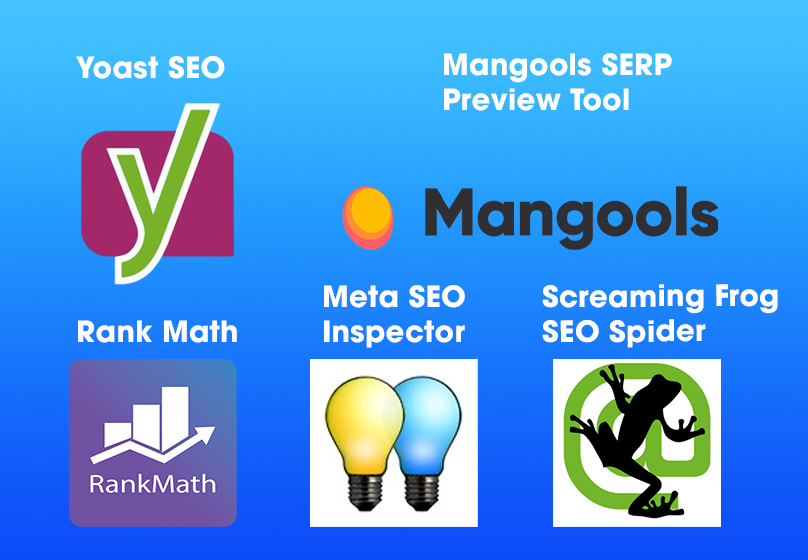
These free and widely used tools help you evaluate your title’s length, uniqueness, and SERP appearance so you never publish a weak headline again:
- Yoast SEO: WordPress plugin that scores and previews SEO titles.
- Rank Math: Another powerful plugin that grades your titles and gives optimization tips.
- Meta SEO Inspector: Chrome extension to quickly view title and meta data of any page.
- Screaming Frog SEO Spider: Crawls your site to detect duplicate, missing, or overly long titles.
- SERPsim or Mangools SERP Preview Tool: Simulates how your title looks on desktop and mobile Google search results.
Want more? Check out our guide on Top Free SEO Tools from Connect Tech to explore more powerful tools.
Final Thoughts
A compelling, SEO-optimized title that aligns with user intent is your strongest asset in boosting CTR, improving keyword rankings, and building brand trust.
Don’t rush it. Write 3–5 different versions for every post and pick the one that performs best in both message and length. Don’t overlook this small step if you’re serious about growing traffic and creating a sustainable SEO strategy.
Want to:
- Optimize your entire website for SEO?
- Learn how to write SEO content from A to Z?
Let Connect Tech support you! Register for our SEO Services at connecttech.vn

Table of Contents