Loading Table of Contents...
What Is a Low-Cost Website? Concepts and Current Trends
Quick Summary
Collapse
Low-cost websites have become a popular choice for many small and medium-sized businesses when establishing their online presence. However, a lower price often comes with significant technical and business risks that many business owners may not fully recognize before signing a contract. Connect Tech, a professional website design agency in Vietnam, provides a detailed analysis of these potential risks and outlines key criteria for selecting the right website development partner.
What Is a Low-Cost Website? Concepts and Current Trends
In the current Vietnamese web design market, a low-cost website is generally defined as a website package priced between VND 1 million and VND 5 million, sometimes even lower. Service providers offering these packages typically use pre-built templates, provide little or no customization based on a business's specific requirements, and limit the number of revisions after delivery.
Why Do Many Businesses Choose Low-Cost Websites?
According to an internal survey conducted by Connect Tech with more than 200 SMEs in 2024, there are three main reasons businesses choose low-cost website packages:
-
Limited startup budgets, with priority given to cash flow for core business operations.
-
Lack of information to properly evaluate website design service quality.
-
The misconception that a website is merely a "digital storefront" that does not directly impact revenue.
However, this perception is changing as the number of users searching for information and making purchases through websites continues to grow. An underperforming website means a business is losing customer conversion opportunities every day.
Differentiating Between Low-Cost Websites and Reasonably Priced Websites
Not all low-cost websites are poor in quality. The key issue is whether the provider ensures essential technical factors such as page loading speed, SSL security, SEO optimization capability, and post-launch technical support. When these factors are sacrificed to reduce costs, businesses often face higher expenses later on.

Differentiating between low-cost websites and reasonably priced websites based on technical criteria.
Technical Risks of Low-Cost Websites
Technical risks are the most serious category of issues and often emerge shortly after the website is delivered. Below are the most common risks Connect Tech has identified when assisting clients transitioning from previous providers.
Slow Page Loading Speed – Losing Customers Within Seconds
Google confirms that 53% of mobile users abandon a website if it takes longer than three seconds to load (Source: Think with Google). Low-cost websites are often hosted on low-quality shared hosting plans, lack image optimization, do not use a CDN, and contain uncompressed code. As a result, page load times commonly range from 5 to 10 seconds—double Google's recommended threshold.
In a real case handled by Connect Tech in 2024, a retail business in Ho Chi Minh City was using a low-cost website with a PageSpeed Insights score of only 28/100 on mobile devices. After migrating to an optimized platform, the score increased to 87/100, and conversion rates rose by 34% within 60 days.
Security Risks – Website Attacks and Data Loss
Low-cost websites often rely on unlicensed WordPress plugins or themes (null themes) that are not updated regularly. This is one of the most common entry points for hackers. According to a Sucuri report (2023), 39.3% of compromised websites were running outdated CMS versions with unpatched plugins.
Specific consequences businesses may face include:
-
Loss of all customer data, orders, and website content.
-
Malware injection that redirects visitors to suspicious websites.
-
Google displaying a warning label such as "This site may harm your computer," resulting in the loss of all organic traffic.
-
Legal risks if customer data is leaked (related to Decree No. 13/2023/ND-CP on personal data protection).
No SSL or Expired SSL Certificates – Damaging Brand Credibility
SSL (HTTPS) is not only a technical requirement but also a Google ranking signal and an important trust indicator for users. Many low-cost website packages provide free SSL certificates (Let's Encrypt) but fail to configure automatic renewal. When the certificate expires, Chrome displays a "Your connection is not private" warning, causing visitors to leave immediately.

Websites without SSL or with expired SSL certificates lose brand credibility and suffer reduced Google rankings.
Poor Mobile Display Performance
As of Q1 2025, more than 70% of website traffic in Vietnam comes from mobile devices (Source: Statista). Many low-cost websites use outdated templates that do not follow responsive design standards, resulting in broken layouts, unreadable text, and malfunctioning buttons on mobile screens. Google has implemented Mobile-First Indexing since 2021, meaning websites that are not mobile-friendly can experience significant ranking declines.
SEO Risks of Using Low-Cost Websites
In addition to technical issues, low-cost websites are often built without proper SEO structure, causing businesses to spend additional money on SEO later or lose the ability to compete in search engine rankings altogether.
URL Structure and Meta Tags Are Not Optimized
Low-cost websites frequently overlook SEO-friendly URL structures and fail to configure Title tags, Meta Descriptions, or Open Graph tags. These are among the most fundamental on-page SEO elements, directly affecting Google's ability to crawl, index, and display search results.
Missing Proper Sitemap and Robots.txt Files
Sitemap.xml helps Googlebot discover and index important website pages. Robots.txt controls which pages are allowed to be crawled. When these files are incorrectly configured or omitted, Google may miss important pages or index unnecessary pages (admin pages, product filter pages, etc.), diluting link equity.
Website Performance Affects Google SEO
Google officially incorporated Core Web Vitals (LCP, FID, CLS) into its ranking criteria in 2021. A low-cost website with an LCP (Largest Contentful Paint) exceeding four seconds is likely to perform poorly in these metrics, directly affecting keyword rankings compared to competitors with technically optimized websites.
Operational Risks and Hidden Costs
Many businesses only realize the true cost of a low-cost website after six to twelve months of use, when operational problems begin to accumulate.
Multiple Hidden Costs After Launch
Common additional fees associated with low-cost websites that businesses are often not clearly informed about before signing a contract include:
-
Domain and hosting renewal fees that increase significantly after the first year.
-
Charges for content updates, adding pages, or changing banners on a per-request basis.
-
Upgrade fees when additional features are needed (shopping carts, online payments, live chat, etc.).
-
Technical support fees for issues occurring outside business hours.
When combined, the actual three-year cost of a low-cost website is often not lower—and can even be higher—than a professionally built website created correctly from the beginning.
No Control Over Source Code and Data
Some low-cost website providers do not transfer source code ownership or hosting access to clients. This means businesses do not truly own their websites. When switching providers or taking management in-house, they are forced to rebuild the website from scratch, losing all accumulated data and SEO rankings.
Unreliable Support Services
This is the most common complaint from businesses using low-cost website design services. When serious issues occur (server outages, cyberattacks, payment failures, etc.), delayed response times result in direct revenue losses. Many small providers lack a dedicated 24/7 technical team or cease operations after a short period.
Differences Between Low-Cost Websites and Professionally Built Websites
The comparison table below summarizes key criteria to help businesses make informed investment decisions:
| Criteria | Low-Cost Website (< VND 5 Million) | Professional Website (Connect Tech) |
|---|---|---|
| Initial Cost | VND 1 – 5 million | VND 10 – 30 million |
| Design | Shared pre-made templates | Custom design aligned with brand identity |
| Loading Speed | Typically 5 – 10 seconds | Under 3 seconds (Google Core Web Vitals standard) |
| SSL/HTTPS Security | May be missing or expire without renewal | Standard SSL with automatic renewal |
| SEO Support | Limited SEO capability | Full on-page SEO structure |
| Technical Support | Limited or charged separately | 24/7 support included |
| Scalability | Difficult to upgrade as the business grows | Flexible expansion based on business needs |
| Long-Term Cost (3 Years) | May reach VND 15 – 25 million due to additional fees | Stable and transparent |
How to Choose the Right Website Design Provider
After understanding the risks associated with low-cost websites, businesses need specific criteria to evaluate and select a provider. Below is the five-step process recommended by Connect Tech.
Step 1: Define the Business Objectives of the Website
Before searching for a provider, businesses should clearly answer three questions: What is the website's purpose (brand awareness, online sales, lead generation)? Who are the target visitors? What measurable goals should be achieved within six to twelve months? The answers will determine the website's required scope and features, helping establish a realistic budget.
Step 2: Review the Provider's Portfolio
Request at least five websites delivered within the past 12 months. Visit each website and evaluate loading speed (using Google PageSpeed Insights), mobile responsiveness, and SSL status. If most websites score below 50 on PageSpeed, this is a clear warning sign.
Step 3: Carefully Review the Service Contract
The following clauses should be included in any professional website design agreement:
-
Commitment to transfer complete source code ownership and administrative access to hosting and domain accounts.
-
Minimum technical warranty period (recommended: 12 months).
-
SLA (Service Level Agreement) commitments regarding maximum issue response times.
-
Clearly defined number of free revisions and costs for additional modifications.
-
Clauses regarding data ownership and customer information security.
Step 4: Evaluate Technical Expertise During Consultation
A reputable provider will ask not only about design preferences but also about business objectives, target audiences, and long-term growth strategies. If the provider only asks, "What color do you want?" or "How many pages do you need?" without discussing technical performance and SEO, this is a sign of limited expertise.
Step 5: Request Written Performance Commitments
A professional website provider should commit to specific technical metrics, including minimum PageSpeed scores (recommended: above 70/100), page load times (under three seconds), uptime guarantees (minimum 99.9%), and technical support response times. These commitments should be explicitly stated in the contract rather than promised verbally.

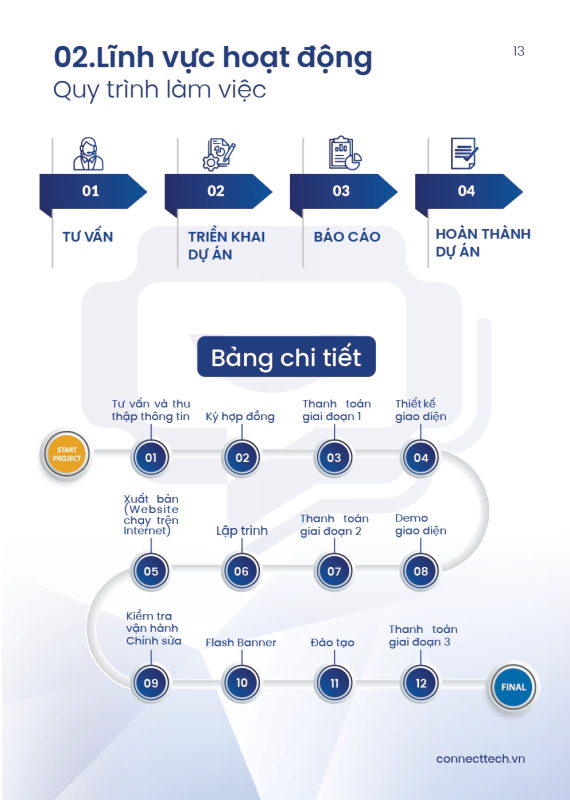
Five steps to evaluate a website design provider before signing a contract.
Frequently Asked Questions About Low-Cost Websites (Q&A)
Is a VND 1–2 Million Website Sufficient for a Small Business?
It depends on the business's actual operational requirements. If the website is only intended to display basic contact information and does not require SEO or commercial functionality, a simple package may be sufficient. However, if the business plans to grow over the next two to three years, investing in a professional website from the start will reduce future redevelopment costs.
Should I Build My Own Website Using Wix or Free WordPress?
Wix and WordPress.com (not WordPress.org) are suitable for testing ideas during the early stages. However, these platforms have limitations in technical customization, are not ideal for serious SEO strategies, and do not provide full ownership of business data. As the business grows, migrating to another platform often costs more than building a professional website from the beginning.
What Are the Signs That a Website Needs to Be Rebuilt?
-
Mobile page load speed exceeds four seconds.
-
PageSpeed Insights score below 50/100.
-
Browser security warnings appear.
-
Layout issues occur on mobile devices.
-
Basic content cannot be edited without contacting the provider.
-
The website does not appear in Google search results despite being active for more than six months.
Conclusion
Low-cost websites offer lower initial investment costs but carry significant risks related to security, technical performance, SEO, and operations, potentially causing greater long-term losses. To avoid these pitfalls, businesses should evaluate providers using specific technical criteria and require written commitments before signing a contract. Connect Tech provides professional website design services with clear performance guarantees, full source code ownership transfer, and ongoing technical support throughout the project lifecycle.
Businesses can learn more about available solutions at connecttech.vn or call the hotline: 077 317 5996 to receive a detailed quotation tailored to their budget and business objectives.
Related Articles
Can a Landing Page Replace a Website? A Practical Perspective
Agency vs. Freelancer for Website Development: Which One Should You Choose?

Table of Contents