Loading Table of Contents...
SEO Standard Medical Website Design - Comprehensive Solution for Medical Facilities
Quick Summary
Collapse
Healthcare website design helps hospitals and clinics build credibility, share transparent information, improve patient experience and ensure sustainable growth
Healthcare website design not only helps promote the brand but also provides a convenient online experience for patients and users. In this article, we’ll explore the benefits, requirements, and key criteria of an SEO-optimized healthcare website, along with tips on choosing a professional and reliable web design agency to help healthcare organizations build an effective online platform.
I. What is Healthcare Website Design?
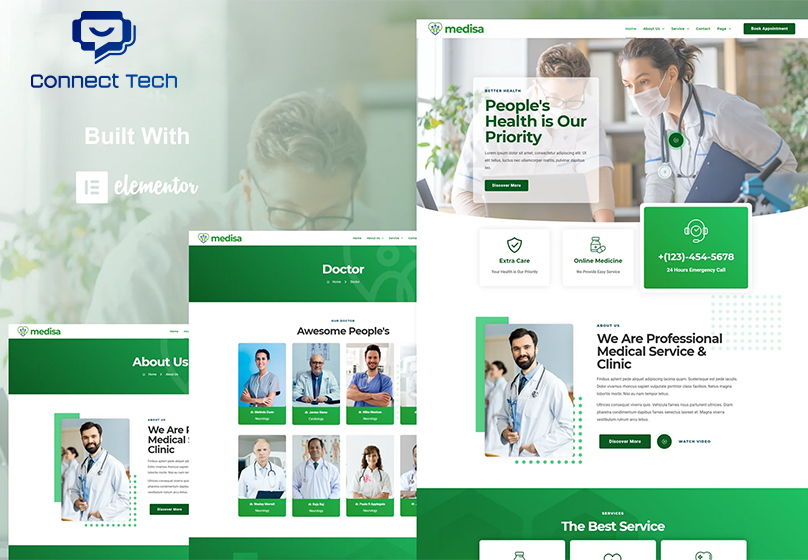
Healthcare website design is the process of creating and developing a specialized online platform for organizations in the healthcare sector, including hospitals, clinics, vaccination centers, laboratories, pharmacies, or medical equipment suppliers.
The main purpose of such a website is to publicly share operational information in compliance with the Ministry of Health’s regulations, while also promoting the brand, offering online services, and improving the overall patient experience.
II. Benefits of Healthcare Website Design
1. Build and promote a professional brand
A modern interface, SEO-optimized content, and carefully curated visuals help:
- Enhance the image, credibility, and reputation of healthcare organizations.
- Create a professional impression with patients, partners, and investors.
- Strengthen brand recognition, especially when users search for healthcare services on Google.
2. Increase accessibility to patients and potential clients
A healthcare website operates 24/7, serving as an unlimited channel for information and consultation, regardless of time or location. Thanks to SEO optimization and mobile responsiveness, patients can:
- Easily search for information, book appointments, or register for consultations online.
- Receive timely support via chatbot, hotline, or contact forms.
- Help healthcare facilities reach more potential clients and improve conversion rates from online searches to actual appointments.
3. Improve operations and customer care efficiency
A smart healthcare website can integrate various management and patient-care features such as:
- 24/7 chatbot consultation to reduce workload for customer service staff.
- Electronic storage and access to medical records and test results, increasing convenience for both patients and healthcare providers.
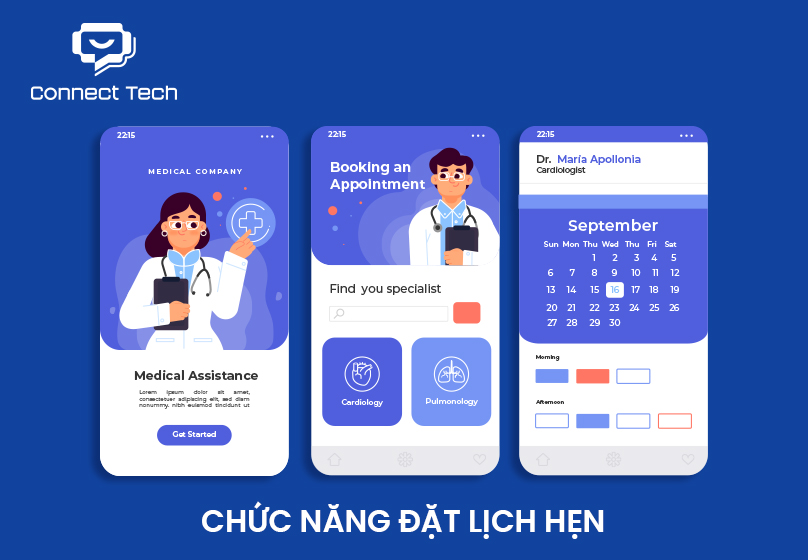
- Automated appointment scheduling and doctor timetable management.
4. Reduce operating and marketing costs
Compared to traditional advertising methods such as flyers, billboards, or opening new branches, investing in a healthcare website helps:
- Lower long-term costs thanks to wide online customer reach.
- Leverage SEO, Google Ads, and social media to attract patients at optimal cost.
- Automate processes such as registration, appointment booking, and feedback handling, reducing the workload for reception and customer service teams.
5. Demonstrate the professionalism of the business
A well-designed healthcare website with quality content and modern functionality clearly reflects the professionalism of the medical facility. This helps:
- Build patient trust and confidence in healthcare services.
- Reinforce the organization’s management capability and service quality.
- Strengthen competitiveness in today’s rapidly digitalizing healthcare market.
III. Key considerations when designing a healthcare website
1. Define clear goals and target audience
- Each type such as general hospital, specialized clinic, testing center, vaccination center has its own characteristics in terms of content, features and patient approach.
- Understanding the main audience (patients, family members, doctors, or investors) ensures the website is designed in the right direction and delivers practical results.

2. Choose a design style that fits the brand
The website design must reflect the identity and core values of the healthcare organization.
- Colors, logo, and fonts should be consistent with the brand’s visual identity (Brand Guidelines).
- Prefer gentle tones that convey trust and safety, such as blue, white, and light green.
- Use real, high-quality images of facilities, medical staff, and equipment to enhance credibility and create a positive impression.
- Avoid overly bright colors or complex layouts that can be visually distracting.
3. Optimize user experience (UX/UI)
In healthcare website design, optimizing UX/UI is a crucial factor because:
- Navigation should be logical and clear, allowing users to find information (appointment schedules, doctors, services) within a few clicks.
- Page loading speed must be fast, especially for mobile users and elderly visitors.
- Registration, appointment booking, and contact forms should be simple and easy to use.
- Include a visible chatbot or hotline to ensure patients receive timely support.
4. Plan a reasonable budget
Depending on the scale and needs of the organization, you should consider choosing a suitable design package:
- Template-based: Low cost, quick deployment suitable for small clinics.
- Custom design: Tailored to the brand identity and optimized features suitable for hospitals or large medical centers.
- Comprehensive package: Includes design, SEO, maintenance, hosting, domain, and ongoing technical support.

5. Choose a reputable web design agency
This is a key factor in determining the quality and operational effectiveness of your website. When selecting a web design agency, you should:
- Prioritize companies with practical experience in the healthcare sector that have completed similar projects.
- Review their portfolio to evaluate design style, features, and overall quality.
- Ensure the agency has a transparent workflow, including consultation → design → development → testing → delivery → warranty.
- Clarify policies on warranty, maintenance, and technical support after handover to ensure the website remains stable and up-to-date with technology trends.
IV. Why choose Connect Tech’s SEO-optimized healthcare website design service
1. Custom design – aligned with your brand
Each healthcare facility has its own operational focus, service style, and patient target audience. Connect Tech provides a tailored healthcare website solution that ensures:
- Exclusive interfaces reflecting the brand’s identity and core values.
- Colors, layout, images, and content built consistently with the existing brand identity.
- Flexible design that can be easily upgraded or expanded as hospitals or clinics grow in scale.
2. SEO optimization and enhanced user experience
A healthcare website is only truly effective when optimized for SEO to appear easily in search engines and attract potential patients. Connect Tech ensures:
- Optimization of the entire website structure: URLs, meta titles, headings, sitemaps, internal links, and healthcare schema.
- User-friendly interface (UX/UI): clear, easy to navigate, fully responsive across all devices (desktop, tablet, mobile).
- Fast loading speed: reduced bounce rate, improved user experience, and higher conversion potential.

3. Integrate comprehensive modern features
A healthcare website is not just an information channel but also an effective tool for patient management and care. Connect Tech provides an intelligent, user-friendly system with features such as:
- Online appointment booking and payment, synchronized with the doctor schedule management system.
- Chatbot and online consultation, providing 24/7 customer support.
- CRM for patient management, storing and tracking medical history.
- Integration of SSL security, email marketing, automatic appointment reminders, and analytics tools to enhance operational efficiency.
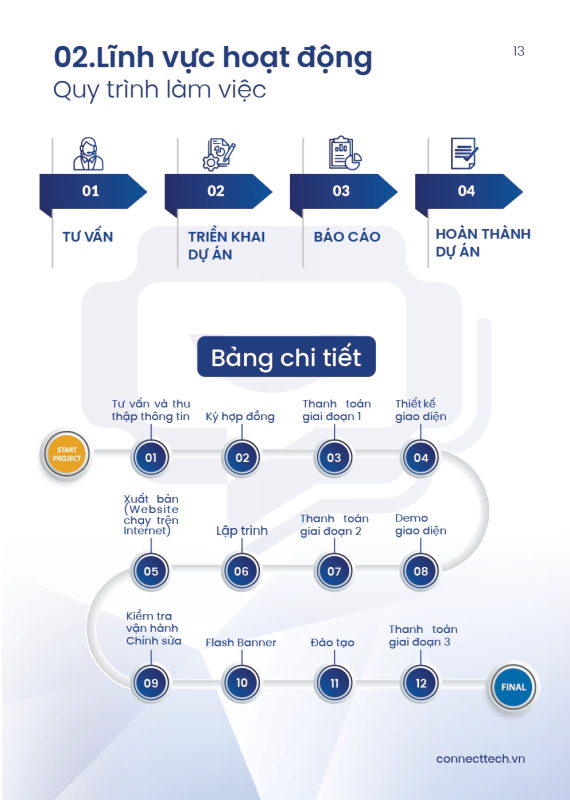
4. Professional 6-step workflow
Connect Tech applies a structured, transparent, and easy-to-follow web design process, ensuring clients feel confident throughout the project:
- Consultation & requirement gathering: Understand objectives, industry specifics, patient target audience, and the healthcare organization’s needs.
- Advance payment & implementation: Sign the contract and pay a portion of the initial cost.
- Design & revisions: Build an interface aligned with brand identity, provide a demo, and make adjustments based on feedback.
- Development & testing: Transform the design into a complete website and thoroughly test all features.
- Delivery & administration guidance: Hand over all source code, accounts, and provide detailed usage instructions.
- Warranty & maintenance: Offer technical support, updates, and rapid issue resolution to ensure the website operates stably.

V. Conclusion
Healthcare website design is an essential step for medical facilities to establish credibility and enhance service quality. In addition, a professional, user-friendly, and SEO-optimized healthcare website helps hospitals and clinics connect with patients more efficiently, provide transparent information, and deliver a better user experience.

Table of Contents