Loading Table of Contents...
Mechanical Website Design Built for the Industry, Fully Functional
Quick Summary
Collapse
Mechanical website design tailored for the industry, presenting machinery, products, and projects to attract clients and support long-term sales growth online.
Mechanical website design is no longer just a box to tick in a company profile. For many mechanical businesses, the website is now the first place potential clients assess capability, scale, and reliability. The common issue is not the lack of a website, but having one that fails to explain what the company actually does, what it can produce, and why it should be trusted for technical projects.
In practice, mechanical website design needs to reflect the realities of the industry. Machinery, production capacity, technical standards, and completed projects must be presented clearly and logically. When a website is built around real operations instead of generic layouts, clients can quickly understand capabilities and are more likely to make contact. This article looks at the current demand for mechanical websites, the essential components, common mistakes, and how a properly structured, industry-ready website can support long-term business growth.
I. Current Demand for Mechanical Website Design
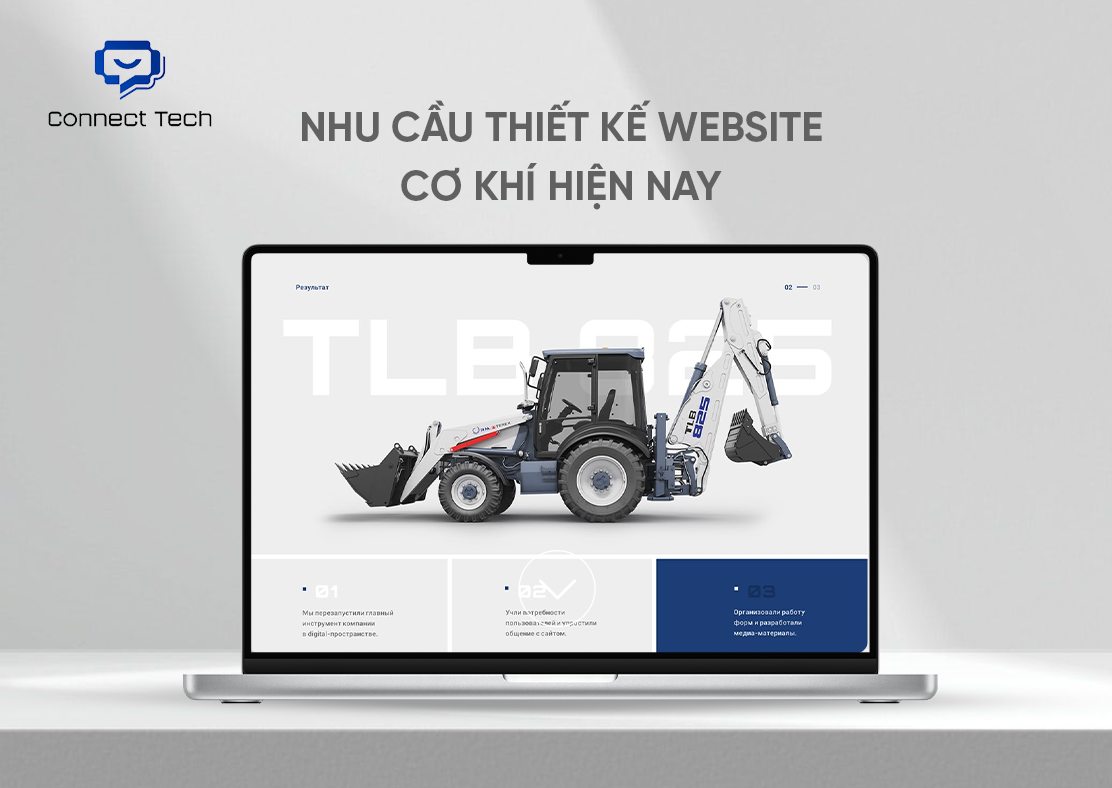
Today, mechanical website design is no longer a formal requirement, but is directly tied to finding clients and partners. In most cases, mechanical businesses are asked for their website before any detailed discussion about pricing or capabilities. If the website fails to clearly present products, machinery, and real project experience, the risk of being filtered out at an early stage is very high.
Market observation shows a common issue: many mechanical websites are built like generic company introduction sites. The content is brief, images are mostly illustrative, technical details are missing, and core machining or manufacturing strengths are not clearly defined. In the mechanical industry, clients usually want to see specific information such as machinery in use, types of products produced, tolerances, materials, and similar past projects. A website that does not provide these details offers little reference value.
As a result, the demand for mechanical website design is shifting toward a more practical direction. Businesses need a website that allows regular product updates, clearly presents capabilities by service area, is easy to share with clients during quotations, and provides a solid foundation for long-term SEO. At this stage, the website functions as an online capability profile that supports daily sales and operations, rather than simply existing for visibility.
II. Essential Components of Mechanical Website Design
For mechanical website design to be effective in real business use, the website must be built with components that match industry-specific requirements, not generic templates. The elements below are considered almost mandatory if a company wants its website to properly present capabilities and support sales activities.
1. Clear capability overview page
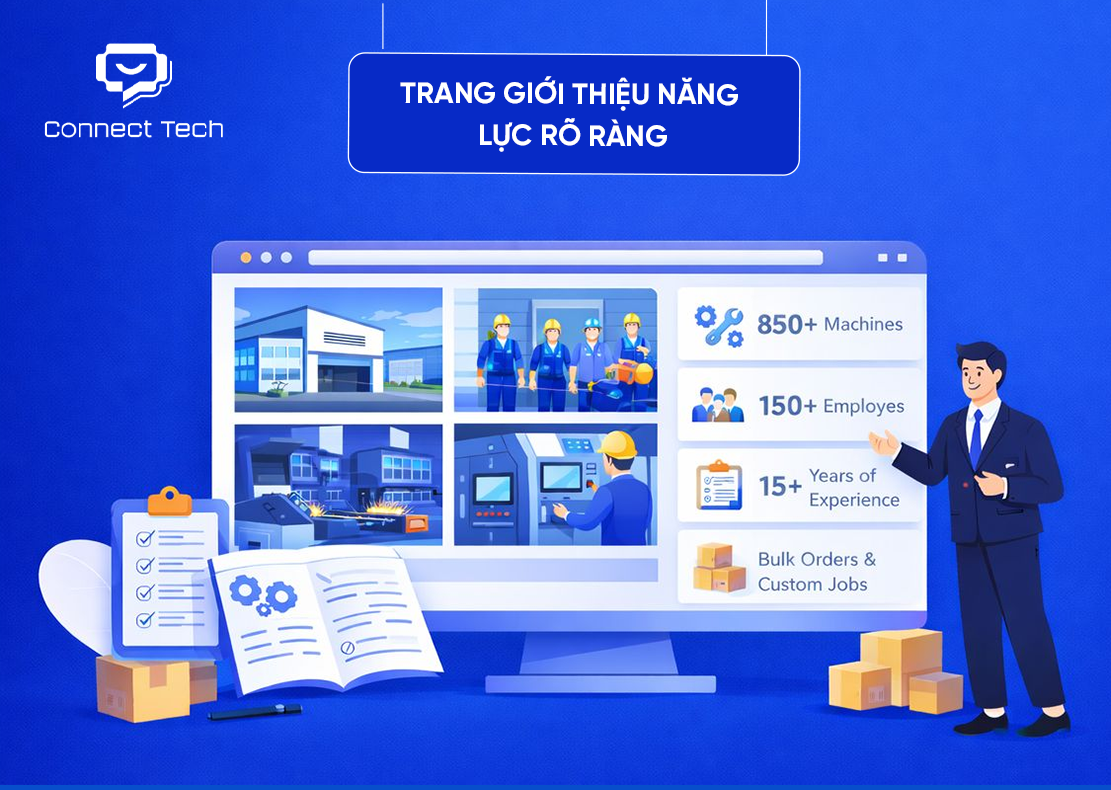
A mechanical website needs to clearly show which areas the company operates in, whether it focuses on machining or manufacturing, and whether it handles custom orders or large-volume production. Information about the workshop, machinery, workforce scale, and experience should be presented visually and concretely, avoiding vague descriptions. This forms the basis for clients to quickly assess suitability.
2. Detailed products and services sections
When working on mechanical website design, products and services should be organized into clear categories. Each section should include real images and concise descriptions covering materials, machining technologies, and applications. This structure helps visitors find what they need and determine whether the company can meet their requirements.
3. Projects and completed work showcase
This is a critical component that is often underdeveloped. A mechanical website should include a dedicated area for showcasing completed projects, orders, or representative products. Real images combined with brief information on scale and timeline build far more credibility than general statements.
4. Real workshop and machinery visuals
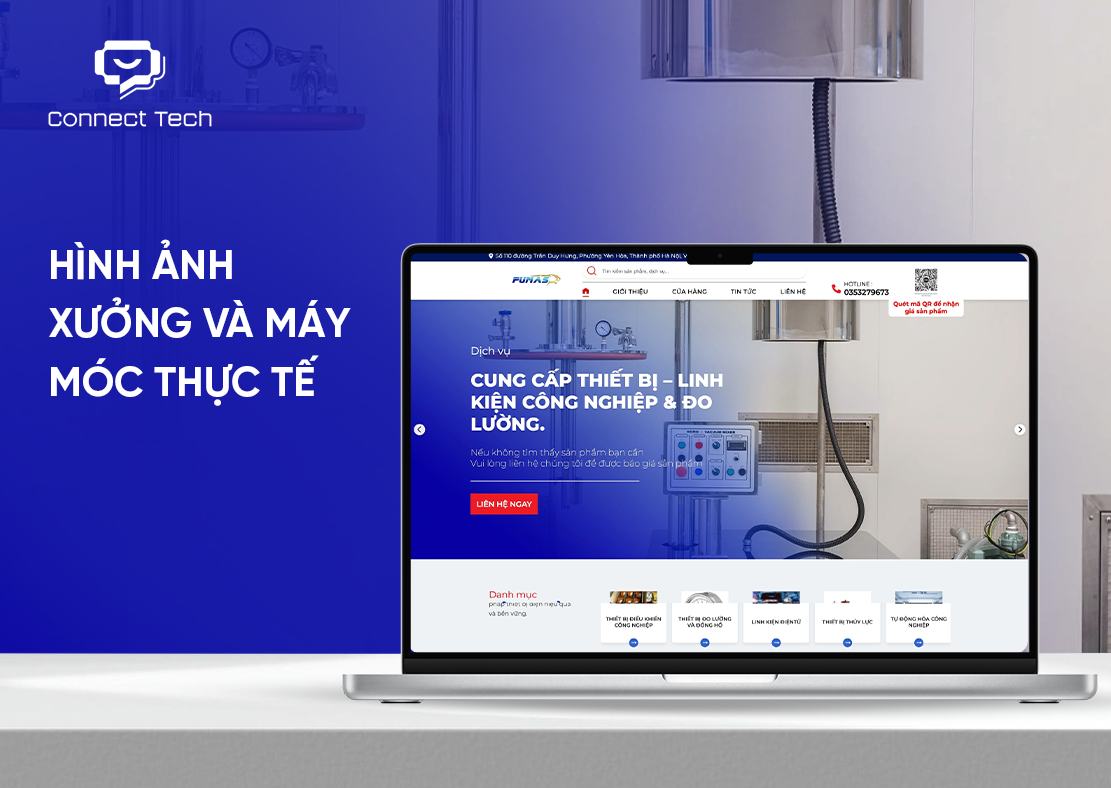
In mechanical website design, visuals play a key role. Images of workshops, CNC machines, production lines, and machining processes allow clients to quickly understand actual capabilities. These should be authentic photos taken in the real working environment to strengthen trust.
5. Clear contact and quotation request forms
The website should include easy-to-use contact forms placed in prominent positions. For mechanical businesses, the form should allow clients to submit basic technical requirements or attach drawings. This helps sales teams process inquiries more efficiently.
6. SEO-ready structure and platform

An effective mechanical website design requires a clear, scalable structure that supports content expansion and search engine optimization. This enables the website to consistently reach new clients over time, rather than relying solely on traditional referrals.
III. Reliable Mechanical Website Design Services at Connect Tech
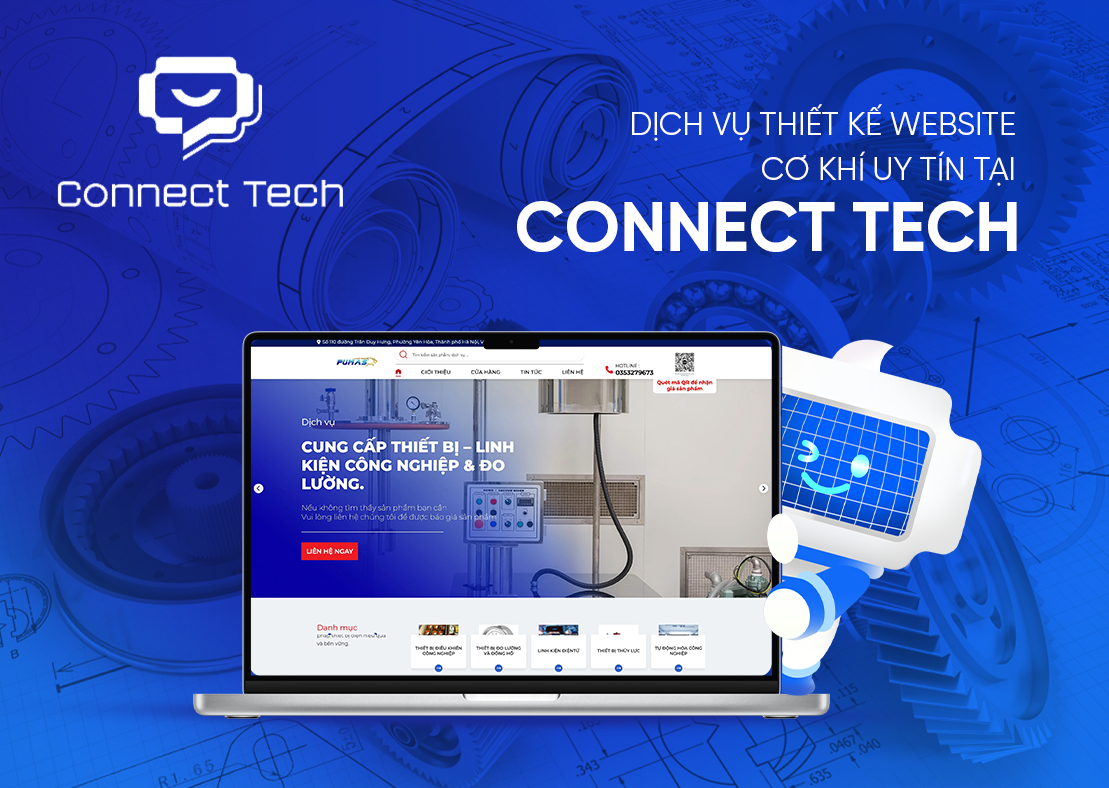
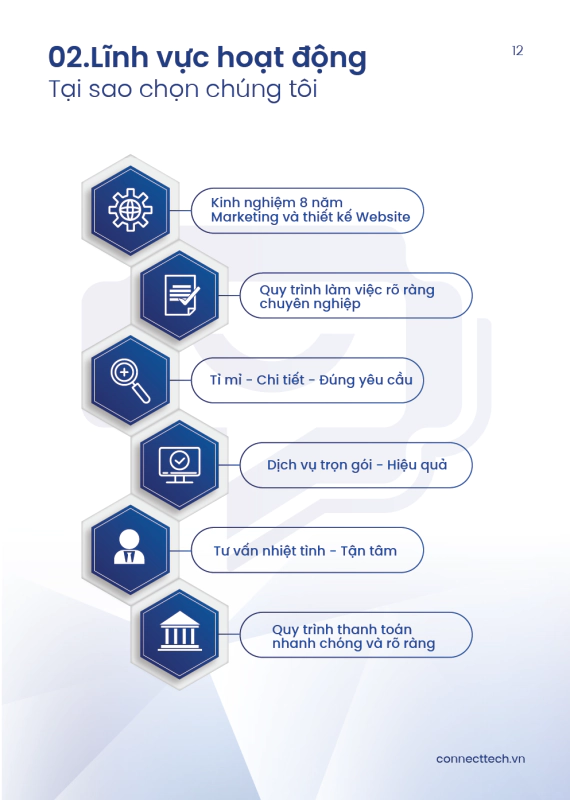
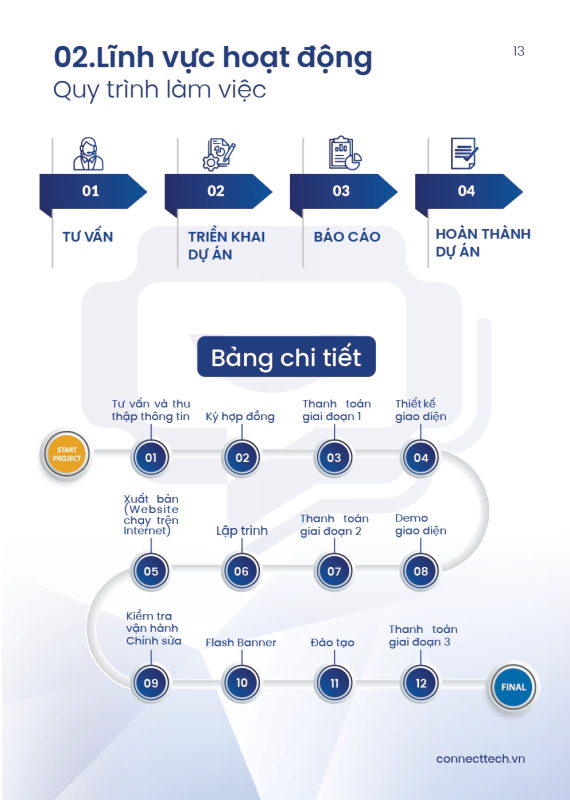
For businesses in the industry, mechanical website design is not just about creating a new interface. It is about building a tool that can be used long term in daily business operations. At Connect Tech, mechanical websites are developed based on how each business actually operates, not on ready-made templates or generic content.
- A clear understanding of the mechanical industry
Connect Tech starts by understanding which segment the business operates in, whether it focuses on machining or manufacturing, who the target clients are, and how internal workflows are structured. From there, the website structure is built to match real capabilities and usage goals, allowing visitors to evaluate suitability from their first visit. - Design based on real capabilities, not for show
Connect Tech’s mechanical website design service focuses on presenting machinery, production facilities, products, and completed projects. Content is organized clearly, prioritizing real images and essential information, turning the website into an online capability profile for the business. - Clear structure with SEO considered from the start
Websites are built with a scalable structure that makes it easy to update new products and projects. Search optimization is planned from the initial stage, helping the website reach potential clients consistently over time instead of relying solely on traditional referrals. - Ongoing support and long-term partnership
After handover, Connect Tech provides guidance on content management, image updates, and handling basic requests. The mechanical website design service at Connect Tech is focused on creating websites that are genuinely usable, supporting daily sales and operations rather than being left unused after launch.
If your business is looking for a structured, industry-appropriate mechanical website design solution that can support long-term growth, Connect Tech is a practical option to consider.
IV. Conclusion
Mechanical website design should not stop at having a website for basic company introduction. It needs to function as a tool that accurately reflects real capabilities and supports practical business activities. When a website is built to match industry requirements, has a clear structure, and is easy to use, businesses can more effectively reach clients, send quotations, and expand content over time.
Investing in a well-structured mechanical website design from the beginning helps businesses avoid repeated revisions later and allows the website to be used as a long-term working channel, rather than just a display presence.
Related Article:

Table of Contents