Loading Table of Contents...
B2B-Ready Logistics Website Design That Attracts Clients and Partners
Quick Summary
Collapse
B2B logistics website design helps logistics companies showcase capabilities, build trust with clients and partners, and support more effective sales growth.
In the logistics industry, many companies operate very well but lose points at the very first touchpoint because their websites are too basic, hard to understand, or fail to reflect their real capabilities. B2B clients and partners do not have much time to ask for every detail. They look at the website to assess professionalism, scale, and partnership potential before deciding whether to make contact.
Logistics website design, therefore, is not just about having a presence on Google. A proper B2B website needs to function as an online capability profile, helping visitors quickly understand what services you offer, where your strengths lie, who you have worked with, and whether you are worth further discussion. This article clearly analyzes how clients evaluate logistics companies through their websites and the essential elements a website needs to truly persuade the B2B market.
I. Why Is a Logistics Website Considered a Capability Profile?
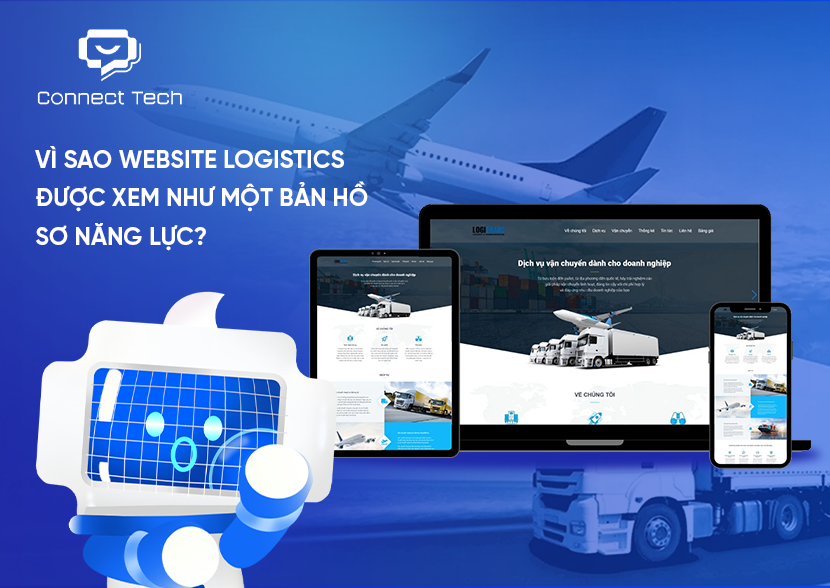
For B2B clients and partners, the website is often the first touchpoint before they decide to get in touch. In the logistics industry, where trust and operational capability are top priorities, the website is the fastest and most direct way they evaluate a company. At its core, logistics website design is how you present your capability profile in an online environment.
1. How do B2B clients typically view a website?
They do not read every line carefully. Most skim quickly to find answers to very familiar questions:
- What logistics services does this company provide?
- Which transport routes, cargo types, or logistics models are their strengths?
- Which clients have they worked with, and at what scale?
- Do they look professional enough to proactively contact?
If the website cannot help them find these answers within the first few minutes, there is a high chance they will close the tab and move on to another provider.
2. The website shows capability in place of verbal introductions
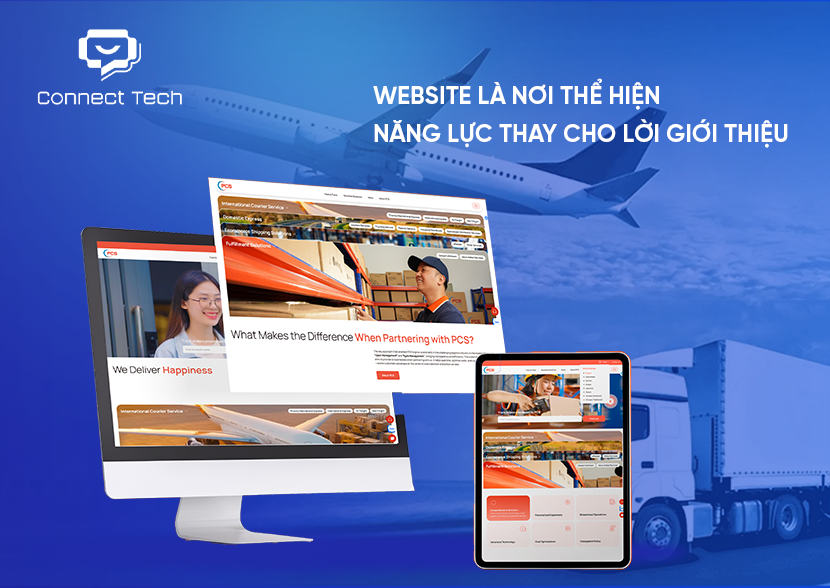
A well-invested logistics website can speak on behalf of the business in many ways. From a clear service structure and workflow descriptions to images of warehouses, vehicles, and completed projects. All of this helps clients visualize real capabilities, even before any direct conversation takes place.
3. Why do many companies treat the website as an online capability profile?
In practice, many businesses use their website link to share with clients, partners, or parties involved in pre-cooperation evaluations. In these cases, the website functions as a capability profile that is always ready, up to date, and easy to share. This is why logistics website design is not just about being visible on Google, but about building trust from the very first interaction.
II. How Do Clients Evaluate Logistics Companies Through Their Websites?
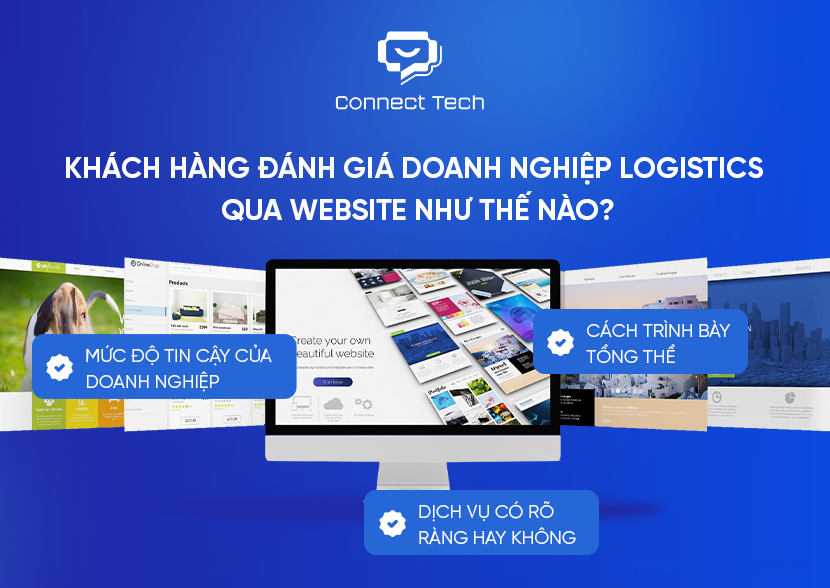
For B2B clients, a website is where the first impression of a logistics company is formed. Before making contact, they usually visit the website to quickly check whether the company is a good fit. As a result, logistics website design directly influences whether a visitor continues exploring or leaves.
In most cases, clients evaluate a website based on very practical factors:
- Service clarity
Does the website clearly explain the logistics services being offered, or does it only list them in a vague and hard-to-understand way without addressing real needs? - Business credibility
Is there information about past clients, completed projects, or visual evidence such as warehouse facilities and transportation assets? - Overall presentation
Is the website clean, easy to read, and well-structured, or cluttered, unfocused, and difficult to navigate?
When a website looks basic and the content feels thin, clients often assume the business lacks professionalism. On the other hand, a well-developed website helps logistics companies build initial trust and increases the likelihood that B2B clients will proactively reach out.
III. What Should a Logistics Website Design Show to Convince B2B Clients?
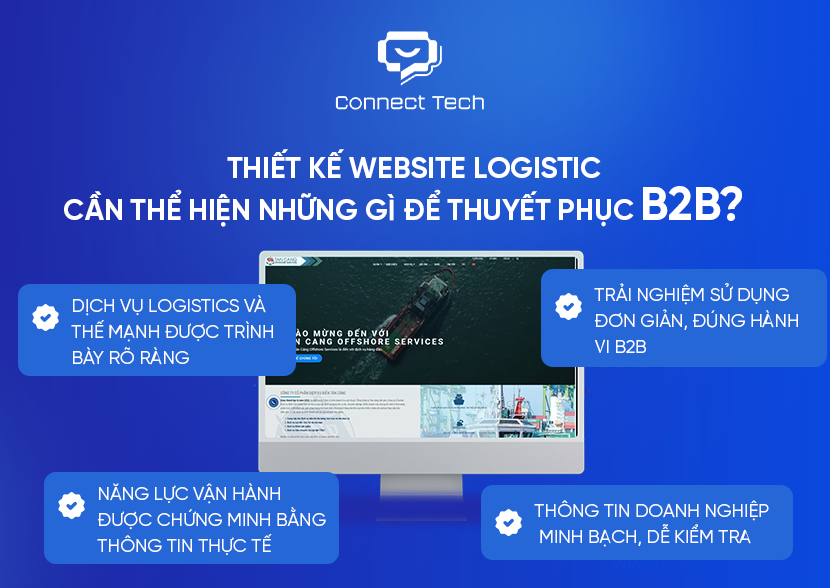
For B2B clients, a website is not a place to read lengthy promotional messages. They visit to quickly assess capability and suitability before making contact. Therefore, logistics website design must focus on clearly presenting the core elements that B2B clients care about most.
- Clear presentation of logistics services and strengths
In logistics website design, the service section should clearly show which segments the business operates in and where its strengths lie, whether in specific transport routes, cargo types, or logistics models. Clear presentation allows clients to quickly determine if the company fits their needs. - Operational capability proven with real information
A convincing logistics website design should include images of warehouses, vehicles, workflows, and completed projects. This is the most direct way for clients to evaluate real operational capacity, rather than relying solely on written claims. - Transparent and verifiable company information
Business address, licenses, partners, and key clients should be clearly displayed. Transparency is a critical factor in building trust within the logistics industry. - Simple user experience aligned with B2B behavior
The website should be easy to read, easy to navigate, and provide clear contact points. B2B clients tend to make decisions quickly, so everything needs to be concise and focused.
When these elements are fully presented, logistics website design not only makes a business appear more professional but also genuinely supports attracting high-quality B2B clients and partners.
IV. Which Company Should You Choose for Logistics Website Design?
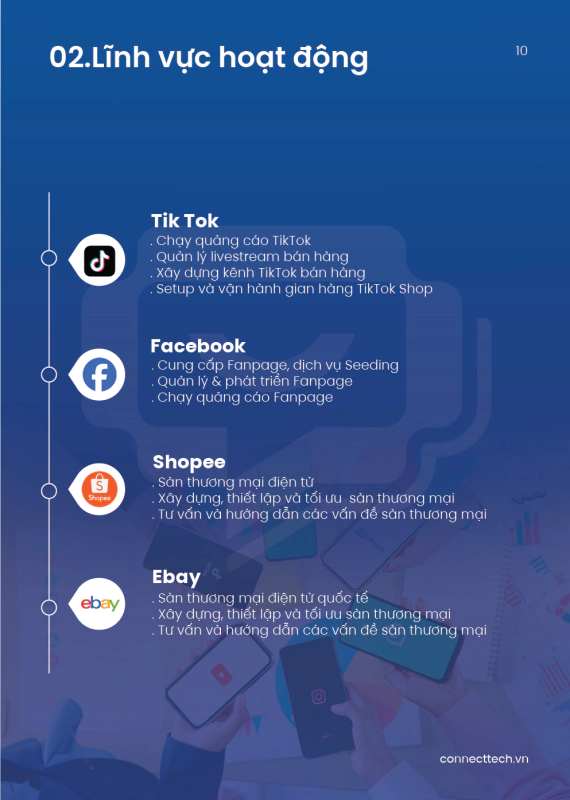
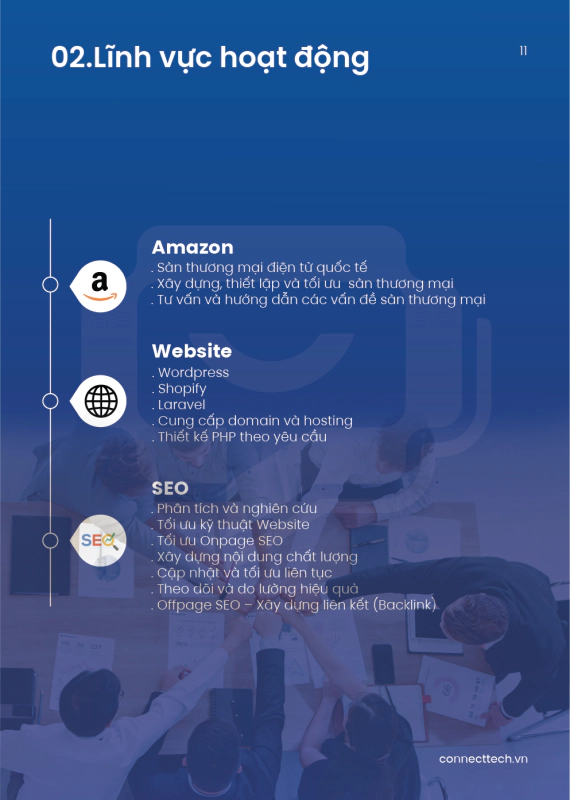
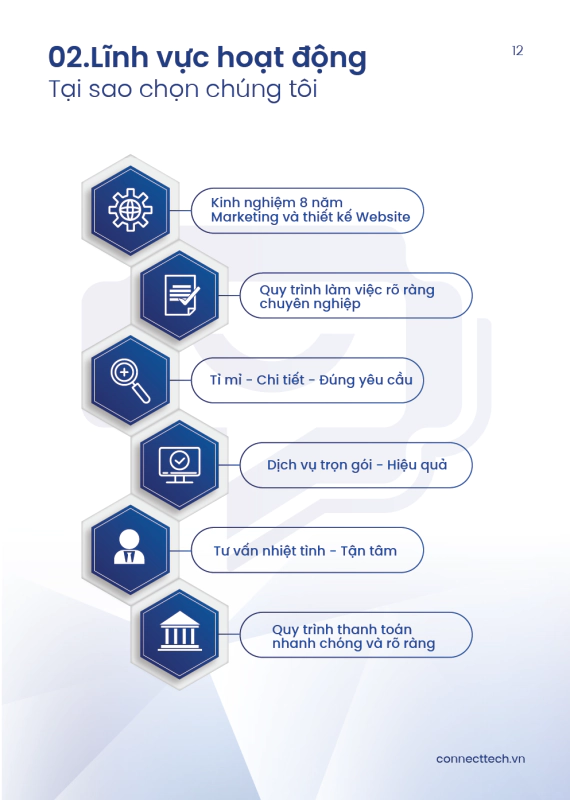
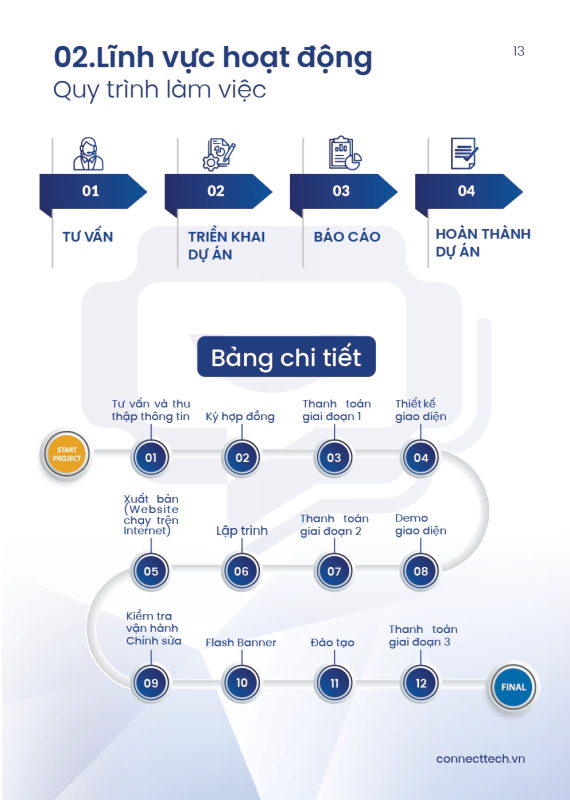
If you are looking for a logistics website design partner that truly understands the industry and works with a B2B mindset, Connect Tech is a practical option to consider. We do not start with visual design. We start with a very real question: who does this website need to persuade, and what business goals should it support?
At Connect Tech, every logistics website design project is built as an online capability profile. We focus on clearly presenting core services, transport route strengths, operating models, and the key factors that help B2B clients quickly assess your capabilities. The website content and structure are organized so visitors need only a few minutes to understand whether your company is a good fit for collaboration.
We also understand that logistics businesses do not need overly complex websites. What matters most is clarity, ease of navigation, and clear contact points. That is why Connect Tech prioritizes clean logistics website design aligned with real user behavior, while also optimizing SEO so the website reaches the right clients and potential partners.
If you need a website that is not only visually professional but also supports sales and builds long-term credibility in the logistics industry, Connect Tech is a partner that can work with you from the very beginning.
V. Conclusion
In the logistics industry, a website is not just a company introduction channel. It is where B2B clients and partners make their initial decisions. A clear and focused website helps you demonstrate capability, build trust, and open up more opportunities for collaboration.
Logistics website design should therefore be viewed as a long-term investment, not a box-ticking expense. When a website accurately reflects your services, strengths, and working approach, it becomes an effective tool for supporting sales and building brand credibility. For logistics businesses looking to approach B2B clients in a more structured way, starting with a properly designed website is a necessary step.
Related Article:

Table of Contents