Loading Table of Contents...
Key Considerations for Designing a Professional Real Estate Website
Quick Summary
Collapse
Learn essential real estate website design elements to boost leads. Discover how professional features and smart layouts convert visitors into actual prospects.
Today’s real estate buyers don’t make decisions after a single phone call. They search on Google, compare multiple projects, review pricing, visuals, and details before deciding whether to leave their contact information. In that journey, your website becomes the most critical touchpoint. If it lacks clarity, credibility, or a smooth experience, potential customers will leave before you even have a chance to engage.
That is why real estate website design is no longer just about aesthetics. It is about building a high-performing sales tool. A well-structured website can help qualify leads, improve conversion rates, and reduce reliance on third-party platforms. On the other hand, a poorly executed website can cost you valuable opportunities right from the start.
This article focuses on the essential elements of real estate website design, helping you create a platform that not only attracts visitors but also converts them into real prospects.
I. What is a Real Estate Website?
A real estate website serves as an online “virtual office.” It allows clients to access information about projects, developers, local amenities, construction progress, and more without visiting a physical office.
In the 4.0 era, where homebuyers research online before making decisions, investing in professional website design services has never been more critical. A website that is SEO-optimized, user-friendly, and compatible across platforms enables you to reach clients anywhere, 24/7, unrestricted by time or distance.
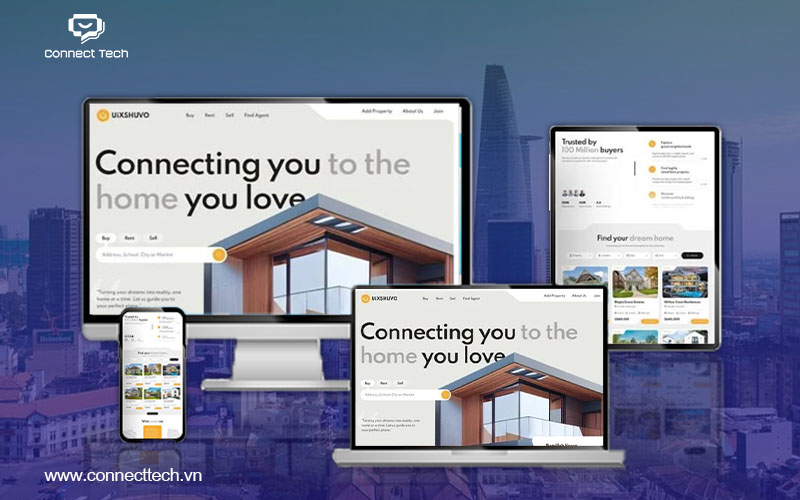
II. Essential Content for a Real Estate Website
To create a comprehensive, user-friendly, and engaging website, include the following sections:
- Detailed Project Information: Include location, developer, amenities, size, orientation, etc. Accurate and comprehensive details allow clients to explore without needing direct contact.
- Location and Nearby Amenities: Maps and details about nearby facilities like supermarkets, hospitals, or entertainment areas help clients visualize life in the area.
- 3D Images, Videos, and Virtual Reality: 3D visuals, videos, and virtual tours captivate clients, offering an immersive experience before purchasing.
- Developer Information: Provide complete details about developers and partners to build trust in the project.
- Online Consultation: A convenient feature allowing clients to submit inquiries or chat directly for questions or needs.
- Market News and Trends: Market analyses, trends, and price ranges establish your website as a reliable information source.

III. Key Considerations for Website Design
1. Clear and Logical Information
An effective real estate website is not the one with the most information, but the one that helps users find what they need in the shortest time possible. In reality, if visitors spend more than a few seconds searching for key details like price, location, or property type, the chances of them leaving increase significantly.
The structure should be built around how buyers think, not how businesses want to present information. Critical elements such as pricing, legal status, location, layout, and construction progress should be clearly prioritized and easy to access from the start. Content should be well-organized, scannable, and properly layered to avoid overwhelming users with too much information at once.
2. Mobile Optimization
Over 80% of clients access websites via smartphones. Ensure your website displays perfectly on all devices, from desktops to smartphones. A multi-platform-compatible website keeps clients engaged instead of leaving after a few seconds.
3. Smart Search Functionality
On a real estate website, the search feature is not just a supporting tool, it acts as the core navigation system of the entire experience. Most users do not have the patience to browse page by page. They want to quickly narrow down options that match their specific needs.
Instead of offering only a basic search bar, the website should include practical and detailed filters such as:
- Price range or budget
- Location, district, or map-based search
- Property type such as apartments, land, or townhouses
- Area size, number of bedrooms
- Legal status or project progress
It is also important to allow users to combine multiple filters at once, helping them refine results efficiently. The less effort users need to think or search, the faster they can find relevant properties.
A well-optimized search system not only keeps users engaged longer but also improves lead quality. When users actively filter based on clear criteria, they are far more likely to leave their information or make direct contact.
4. Clear and Compelling CTAs (Call to Action)
Design prominent, high-contrast CTAs like “Request a Quote,” “Consult Now,” or “View Project Details” to catch attention. Place CTAs strategically for easy access. If unsure how to organize them, partner with Connect Tech—an experienced real estate website design provider for tailored advice and a website optimized for user experience and conversions.

5. Highlight Benefits and Nearby Amenities
Amenities like schools, healthcare centers, shopping areas, entertainment, and transportation are key factors for homebuyers. Including comprehensive details about local amenities helps clients envision their lifestyle, leading to more confident purchasing decisions.
IV. Reputable Real Estate Website Design Provider
Choosing a real estate website design agency is not just about finding someone who can create a visually appealing interface. It is about working with a partner who understands how buyers search, evaluate, and make decisions. If a website fails to generate qualified leads, everything else becomes less meaningful.
A strong partner should:
- Understand real estate buyer behavior
- Structure content to support conversion
- Have proven, hands-on experience in the industry
Connect Tech has delivered over 130 website projects, including many in the real estate sector. The key difference lies in its approach. Instead of starting with design, the process begins with user behavior and conversion goals. From content structure and search functionality to CTA placement, every element is built with the intention of improving conversion rates and lead quality.
If the goal is not just to “have a website” but to build a real sales tool, choosing the right partner like Connect Tech can make a significant difference.

Table of Contents