Loading Table of Contents...
High-End Resort Website Design: Stunning Interface, Increased Direct Bookings
Quick Summary
Collapse
High-end resort website design that boosts direct bookings with premium UX, SEO, and smart booking systems. Elevate your brand and reduce OTA dependence today.
As travelers increasingly prefer to book directly instead of through OTAs, resort website design is no longer just about creating an online brochure. It is about building a true sales channel. A website that is professionally invested in visual design, user experience, and conversion optimization helps a resort assert its brand prestige, create emotional impact from the very first visit, and sustainably increase the rate of direct bookings. If a resort continues to use generic templates that lack uniqueness and are not optimized for guest search behavior, it risks losing its competitive edge right on its own “digital storefront.”
I. What Is Resort Website Design? Why Should Resorts Avoid Generic Templates?
Resort website design is the process of building an online platform that is customized to reflect the brand identity, service experience, and booking behavior of travelers. The website is not only a place to present information about rooms, facilities, and location, but also a channel to evoke emotions, persuade visitors, and convert them into direct bookings.
Unlike standard corporate websites, a resort website must clearly convey architectural style, resort atmosphere, service quality, and the overall level of experience. Every detail, from color palette and layout to imagery, page loading speed, and the booking flow, directly influences a guest’s decision to make a reservation.
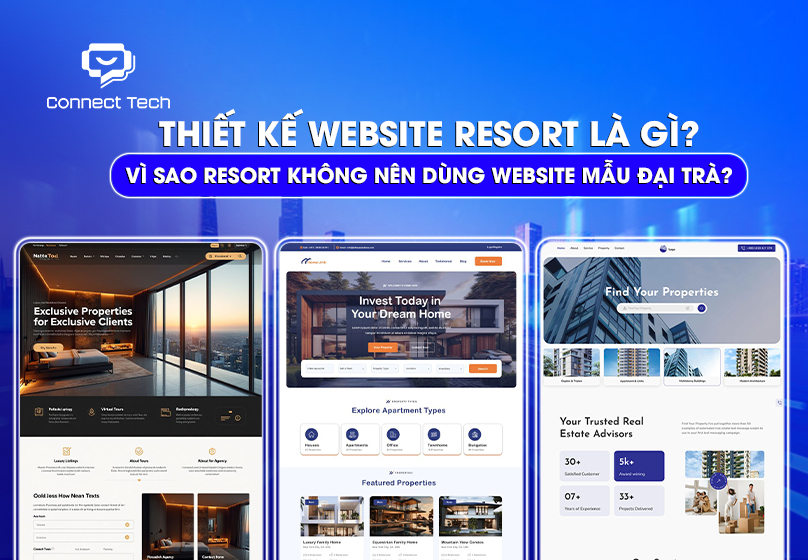
Resorts should avoid using mass-produced website templates for the following reasons:
- Repetitive interfaces that fail to express brand identity and are easily confused with hundreds of other sites on the market.
- Structures that are not optimized for search behavior and booking journeys, resulting in lower direct conversion rates.
- Limited scalability and difficulty integrating booking engines, payment systems, CRM, chatbots, or marketing tools.
- Poor mobile experience, while the majority of guests search and book via smartphones.
A professional, tailor-made resort website solution, built around the business model and target customer segments, enables the resort to fully control its brand image, reduce dependence on OTAs, and sustainably grow revenue from direct booking channels.
II. What Should a Professional Resort Website Include?
A professional resort website project is not limited to an attractive interface. It must be built as a complete online sales ecosystem, optimized simultaneously for brand image, user experience, and conversion performance. Below are the core elements that a high-end resort website should have:
- Premium interface reflecting the resort concept
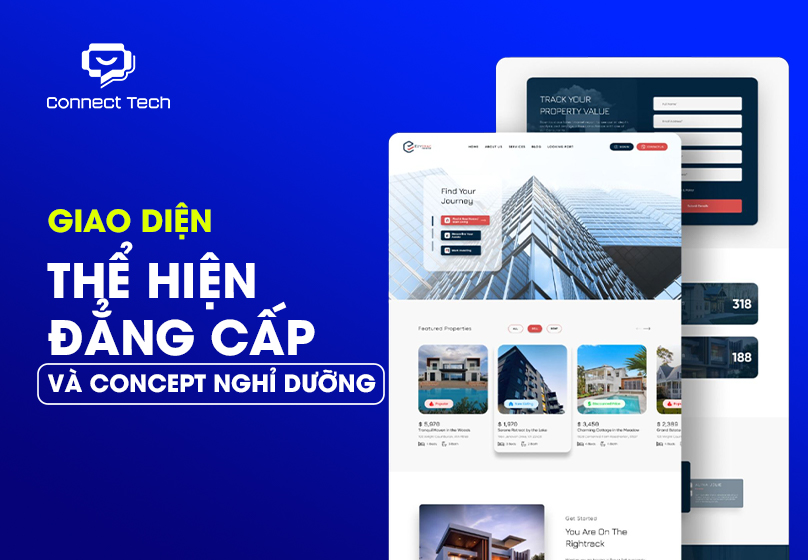
Colors, layout, imagery, and typography must be consistent with the architectural style and target customer segment, whether it is a beach resort, mountain retreat, or luxury wellness resort. The design should create a sense of relaxation and aspiration from the very first visit.
- Seamless user experience across all devices
The website must be fully optimized for mobile, tablet, and desktop, with fast loading speed and intuitive navigation, allowing guests to explore rooms, facilities, and complete bookings in just a few simple steps. - Intelligent online booking system
Integration of a booking engine with real-time room availability, dynamic seasonal pricing, and online payment support helps increase direct booking rates and reduce dependence on OTAs. - SEO-optimized content and brand storytelling
Room pages, service descriptions, experience sections, and travel blogs should follow SEO-friendly structures and keyword optimization, with a strong focus on “resort website design” aligned with brand values and user search intent.

- High-quality images and videos
Professional photo sets, drone footage, and 360-degree virtual tours help guests visualize the space more clearly, building trust and emotional connection before making a booking decision. - Marketing and data collection features
Consultation forms, live chat, chatbots, CRM integration, email marketing, and remarketing tools enable resorts to nurture leads and increase repeat bookings.
A website can only deliver its full business value when it is planned and executed professionally from the resort website design stage, ensuring it is not only visually appealing, but also functionally powerful and flexible enough to support long-term business and marketing strategies.
III. Professional Resort Website Design Process
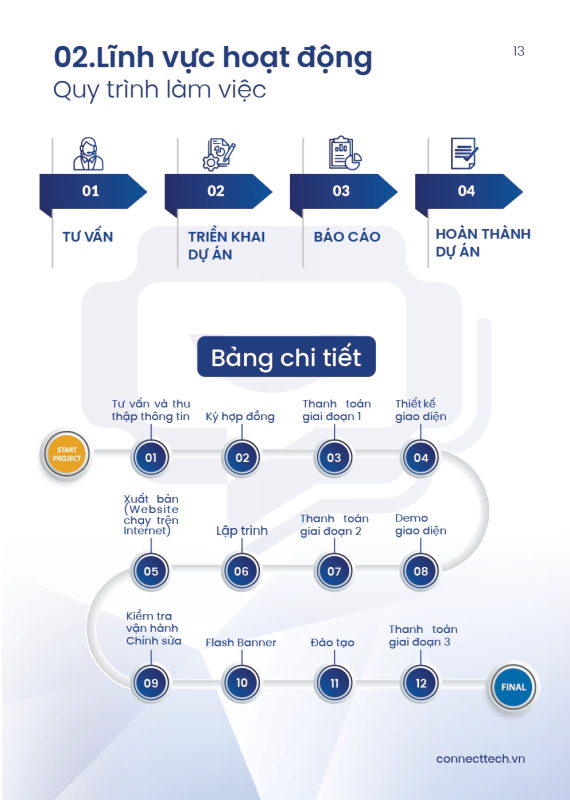
For a resort website design project to be effective in terms of brand image, user experience, and direct booking growth, the implementation process must be carried out systematically through clearly defined stages. A standard process typically includes the following eight steps:
01. Consultation and Requirement Analysis

Analyze the resort’s business model, target customer segments, architectural style, brand positioning, and website business objectives. This forms the foundation for defining a resort website design solution that aligns with real operational needs.
02. Planning and Quotation
Develop the website structure, feature list, number of design layouts, implementation timeline, and detailed cost breakdown for each item, enabling the investor to proactively manage budget and project schedule.
03. UX/UI Design Development
Design the user experience and interface based on the resort concept, optimizing the journey for room browsing, facility exploration, and the booking flow. This stage directly determines user emotions and conversion potential.
04. Design Approval

The client reviews and approves layouts, color schemes, typography, structure, and visual style before moving into development, ensuring the final product is fully aligned with the resort’s brand direction.
05. Feature Development
Develop and integrate the booking system, payment gateways, content management system, CRM, chatbots, marketing tools, and all essential functionalities required for real-world resort operations.
06. Testing and Content Integration
Test loading speed, cross-device display, security, and booking engine stability. At the same time, upload SEO-optimized content and keyword-structured pages, with a focus on “resort website design.”
07. Handover and Training
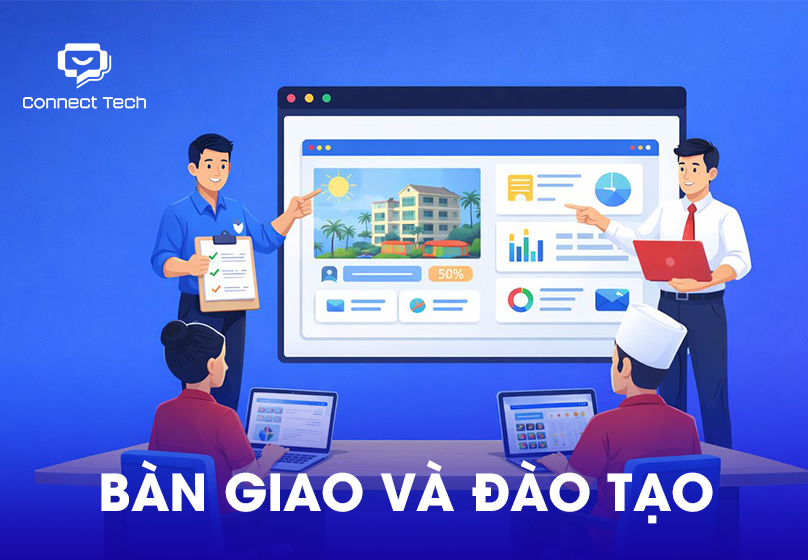
Deliver the complete system and train the resort team on content management, room rate updates, promotional campaigns, and customer data tracking.
08. Ongoing Support and Marketing Services
Provide technical maintenance, feature upgrades, SEO optimization, advertising, and digital marketing activities to ensure the website continues to function as a long-term direct booking channel.
A professional resort website design process, implemented in accordance with these eight steps, enables resorts to build an online platform that is fully aligned in branding, functionality, and business performance.
IV. Cost of High-End Resort Website Design
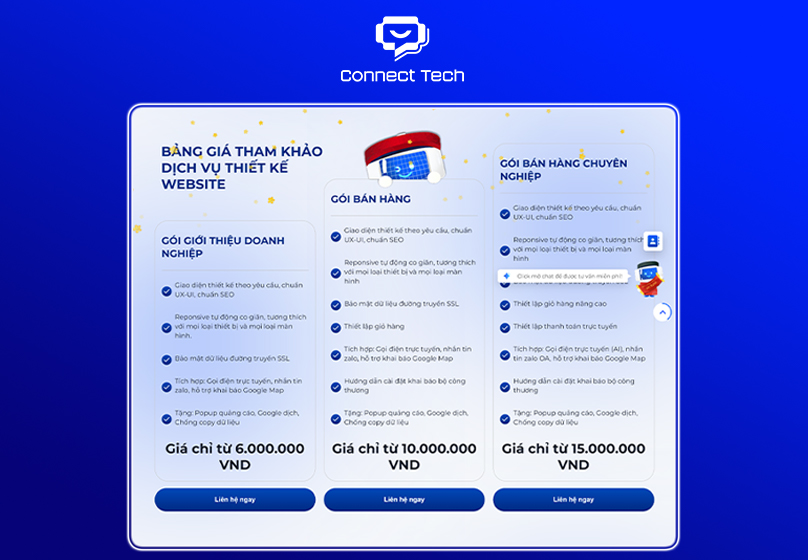
The cost of high-end resort website design depends on the level of investment in visual design, functionality, and the strategy of leveraging the website as a direct booking channel. Unlike low-cost template packages, a custom-designed resort website requires a budget that reflects the brand’s positioning and the business performance it is expected to deliver. Below are the reference price ranges for the most common resort website design packages at Connect Tech.
V. Conclusion
In the context of intense competition in the resort and hospitality industry, investing in high-end resort website design is a strategic move that helps elevate brand value, create a premium online experience, and increase the volume of direct bookings. A professional website is not only a branding platform but also an effective business tool that generates long-term value for the resort.
If you are looking for a reliable partner to implement your resort website design, Connect Tech is a trusted choice. With solid experience and a highly skilled team, Connect Tech is committed to delivering SEO-optimized solutions, visually impressive interfaces, and an optimized booking system, enabling your resort to strengthen its market position and grow sustainably through direct booking channels.
Related Article:

Table of Contents