Loading Table of Contents...
Why Does a Website Have No Traffic? Causes & Effective Solutions
Why does your website have no traffic? Connect Tech analyzes the five most common causes and provides practical solutions to help your website generate sustainable organic traffic. Contact us for expert consultation today!
Businesses invest in websites with the expectation of attracting customers, building brand awareness, and generating revenue. However, after months of operation, many websites still receive little to no traffic from Google. Even with regular content publishing and professional web design, the results often fall short of expectations.
In reality, a website with no traffic is a common issue faced by many businesses, especially newly launched websites or those that have not been properly optimized for SEO. Without identifying the root cause, businesses may continue investing time and money while seeing very little return.
In this article, Connect Tech will explain the most common reasons why a website has no traffic, discuss how this affects business performance, and share practical solutions to help increase sustainable organic traffic.
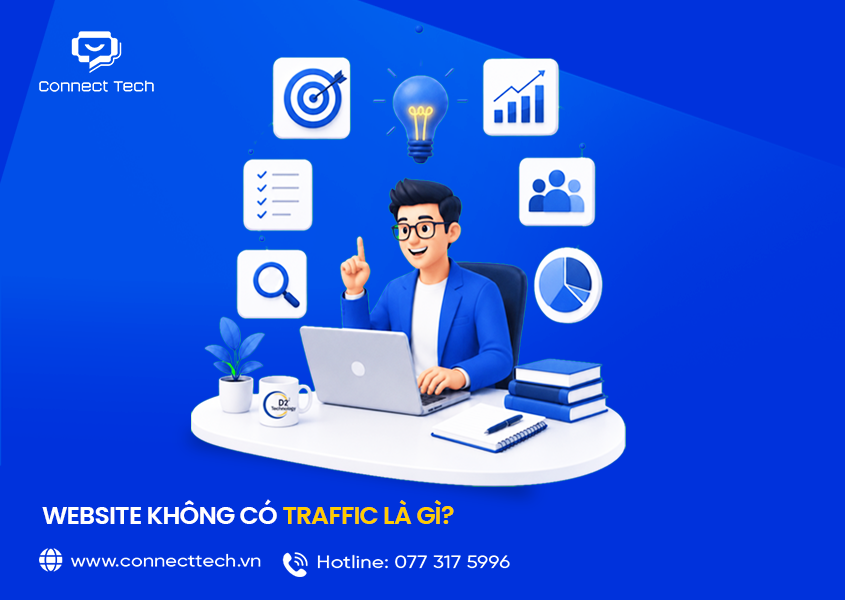
Website không có traffic là gì?
What Is a Website with No Traffic?
A website with no traffic refers to a website that receives very few or no visitors, particularly organic traffic from search engines such as Google. This can happen even if a business regularly publishes content or has invested significantly in developing its website.
Most users search for products or services through Google. If your website does not appear in search results or ranks too low, the chances of users clicking on it are extremely small. This explains why many websites remain ineffective at generating leads despite being online for a long time.
A lack of website traffic affects more than just SEO performance it also reduces the effectiveness of your entire digital marketing strategy. Without traffic, businesses lose opportunities to reach new customers, experience lower conversion rates, and become increasingly dependent on paid advertising.
To solve this issue effectively, businesses need to identify the actual causes of low website traffic instead of simply publishing more content.
How Does a Website with No Traffic Affect Your Business?
An effective website is more than just an online brochure it is a sales and marketing channel that works 24/7. When a website has little or no traffic, businesses often face several negative consequences:
- Reduced ability to reach potential customers: If customers cannot find your website on Google, valuable business opportunities are lost.
- Wasted website investment: A beautifully designed website provides little value if no one visits it.
- Increased dependence on paid advertising: Without organic traffic, businesses must rely on Google Ads or Facebook Ads to attract customers.
- Lower brand credibility: A website that rarely appears in Google search results may reduce customer trust.
- Difficulty competing with competitors: While competitors continue generating leads through SEO, your website struggles to create a competitive advantage.
This is why improving website traffic should always be one of the primary goals of any long-term SEO strategy.
Where Does Website Traffic Come From?
Many businesses believe that website traffic only comes from Google. In reality, website visitors can come from various traffic sources.
Organic Traffic
Organic Traffic refers to visitors who find your website through Google and other search engines. It is considered the most valuable traffic source because users are actively searching for the products, services, or information your business provides.
Direct Traffic
Direct Traffic comes from users who visit your website by typing the domain directly into their browser or accessing it through bookmarks.
Referral Traffic
Referral Traffic consists of visitors coming from other websites through backlinks or referral links. When your website is mentioned by reputable websites, referral traffic can increase significantly.
Social Traffic
Social Traffic includes visitors from platforms such as Facebook, LinkedIn, TikTok, YouTube, and other social media channels.
Paid Traffic
Paid Traffic refers to visitors generated through advertising platforms such as Google Ads, Facebook Ads, and other paid marketing channels.
Among all traffic sources, Organic Traffic remains the most valuable because it delivers long-term results, lower acquisition costs, and a more sustainable source of qualified leads.
Why Is Your Website Not Getting Traffic?
Many different factors can prevent a website from attracting visitors. Some are technical issues, while others are related to content strategy or improper SEO implementation.
Below are the most common reasons why websites fail to generate traffic, based on Connect Tech's experience working with businesses across various industries.
1. Poor On-Page SEO Optimization
On-page SEO forms the foundation that helps Google understand your website's content. If the essential SEO elements are not properly optimized, search engines will struggle to crawl, index, and evaluate your pages.
Some common On-page SEO mistakes include:
- Title tags that do not include the primary keyword.
- Meta descriptions that are too short or duplicated.
- Missing H1 headings or using multiple H1 tags on the same page.
- Long, unfriendly URLs containing unnecessary characters.
- Missing image Alt Text.
- Lack of internal links between related articles.
- Thin content that fails to satisfy user search intent.
These issues make it difficult for your website to achieve higher Google rankings, even if new content is published regularly.
2. Content Does Not Match Search Intent
Google increasingly prioritizes content that directly satisfies user intent.
For example, when someone searches for "why a website has no traffic," they expect to learn the reasons behind low website traffic, how to diagnose the issue, and the best ways to fix it. If your content mainly promotes services without providing useful information, Google is likely to consider it irrelevant to the user's search intent.
Additionally, articles that are too short, lack depth, or copy information from multiple sources are unlikely to compete well in search results.
3. Slow Website Loading Speed
Website loading speed is an important ranking factor that affects both user experience and SEO performance. If a page takes too long to load, visitors are likely to leave before the content appears. This increases the bounce rate and sends negative engagement signals to Google.
Common reasons for slow website performance include:
- Images that have not been compressed.
- Low-quality or unstable hosting.
- Bloated source code.
- Excessive plugins or third-party extensions.
- Failure to enable browser caching or a Content Delivery Network (CDN).
Besides negatively impacting SEO, slow loading speeds also reduce conversion rates. Modern users, especially those browsing on mobile devices, expect websites to load almost instantly.
Businesses should regularly test website performance using tools such as Google PageSpeed Insights and GTmetrix to identify and resolve technical issues before they affect rankings and user experience
4. Lack of High-Quality Backlinks
Backlinks are links from other websites pointing to your website. They are considered one of the most important factors Google uses to evaluate a website's authority and credibility.
However, having more backlinks does not necessarily mean better rankings. The quality and relevance of those backlinks are what truly matter.
A website that only receives backlinks from low-quality or irrelevant sources will struggle to compete against competitors with a strong and authoritative backlink profile.
Businesses should prioritize earning backlinks from:
- Industry-related websites
- Reputable online newspapers and publications
- Niche blogs
- Business partners or clients
- Trusted business directories
At the same time, publishing valuable, in-depth content naturally attracts backlinks, contributing to long-term SEO success.
5. Your Website Is New and Not Fully Indexed by Google
This is one of the most common reasons why newly launched websites receive little or no traffic.
After a website goes live, Google needs time to crawl its pages, evaluate the content, and add them to its search index. If your website has not been fully indexed—or only a small portion of it has been indexed—it is unlikely to appear in search results.
Common signs that your website has not been fully indexed include:
- Your website cannot be found on Google.
- Only a small number of pages are indexed.
- Newly published articles do not appear in search results after several days.
- Google Search Console reports indexing errors.
To speed up the indexing process, businesses should:
- Verify the website with Google Search Console.
- Submit an XML Sitemap.
- Check and resolve crawl errors.
- Build a logical internal linking structure.
- Publish fresh content regularly.
Websites that are built with SEO best practices from the beginning are generally indexed faster and more consistently.
Reasons Why Your Website Is Not Ranking on Google
How to Effectively Increase Website Traffic
Once you have identified the root cause, the next step is implementing a comprehensive SEO strategy instead of focusing on a single factor. Successful SEO requires optimization across technical performance, content quality, and user experience.
Optimize Your On-Page SEO
Start by auditing your website to ensure every essential On-page SEO element is properly optimized.
This includes:
- Optimizing Title Tags and Meta Descriptions.
- Using a clear H1, H2, and H3 heading structure.
- Creating SEO-friendly URLs.
- Adding descriptive Alt Text to every image.
- Improving your internal linking structure.
- Removing duplicate or thin content.
A well-structured website helps Google better understand your content and improves your chances of achieving higher rankings.
Create Content That Matches Search Intent
High-quality content is not simply about writing longer articles. It must answer the questions users are actually searching for.
Before creating SEO content, businesses should research:
- What information are users looking for?
- What topics are competitors covering?
- What questions frequently appear on Google?
- Which keywords have the highest conversion potential?
Instead of writing solely to include keywords, focus on creating informative, up-to-date, and practical content that genuinely helps readers.
Improve Website Speed
Several techniques can significantly improve page loading speed:
- Compress images before uploading.
- Use the WebP image format.
- Minify CSS and JavaScript files.
- Enable browser caching.
- Choose high-performance hosting.
- Use a Content Delivery Network (CDN) for high-traffic websites.
Faster websites not only perform better in search rankings but also improve user experience and increase conversion rates.
Build High-Quality Backlinks
Backlink building should always be viewed as a long-term SEO strategy.
Businesses should focus on:
- Guest posting on reputable websites.
- Publishing PR articles on trusted news websites.
- Sharing valuable content on industry platforms.
- Earning backlinks from business partners.
- Building brand authority to attract natural backlinks.
Rather than creating hundreds of backlinks in a short period, prioritize relevance and quality for sustainable SEO growth.
Monitor and Optimize Your Website Regularly
SEO is an ongoing process, not a one-time task.
Businesses should consistently monitor key performance metrics such as:
- Organic Traffic
- Keyword Rankings
- Click-Through Rate (CTR)
- Bounce Rate
- Average Time on Page
- Conversion Rate
By analyzing data from Google Analytics and Google Search Console, businesses can quickly identify issues and continuously improve their SEO strategy.
How to Fix a Website with No Traffic
SEO Website Design Services by Connect Tech
Not every business has an in-house SEO or web development team. In many cases, websites are visually appealing but contain technical issues that prevent Google from effectively crawling and ranking their pages.
With extensive experience delivering websites for businesses across various industries, Connect Tech provides SEO-friendly website design services built on a solid technical foundation. This helps businesses minimize technical issues while creating the ideal environment for long-term SEO success.
When working with Connect Tech, businesses receive:
- SEO-friendly website design from the ground up.
- Google-friendly URL structure.
- Optimized Heading tags, Meta Titles, and Meta Descriptions.
- Fast loading speed on desktop and mobile devices.
- XML Sitemap and Robots.txt configuration.
- Google Search Console and Google Analytics integration.
- Fully responsive website design across all devices.
- Long-term Content SEO strategy consultation.
A properly optimized website foundation helps businesses save both time and SEO costs in the future.
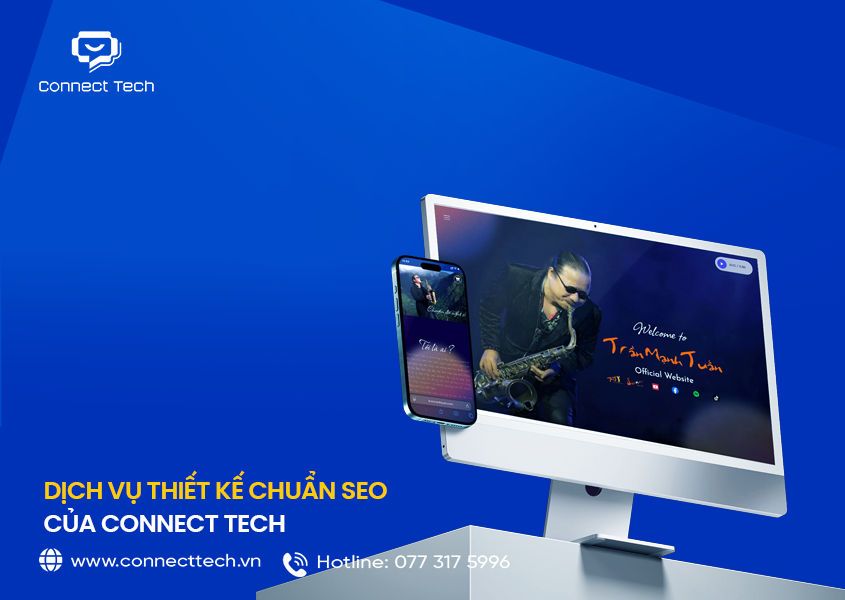
Connect Tech SEO Website Design Services
Frequently Asked Questions
How long does it take for a new website to get traffic?
A new website typically takes 2 to 6 months to begin generating organic traffic when SEO is implemented correctly. The timeline depends on factors such as industry competition, content quality, and the website's technical foundation.
My website is indexed by Google but still has no traffic. Why?
If your website has already been indexed but still receives little or no traffic, the issue may be that your target keywords are not ranking, your content does not satisfy search intent, or your website still has significant On-page or Off-page SEO issues.
Should I run paid ads if my website has no traffic?
Yes. Paid advertising helps businesses generate visibility and leads in the short term. However, investing in SEO alongside paid campaigns is essential for reducing long-term advertising costs and building sustainable organic traffic.
How often should I evaluate SEO performance?
SEO performance should be reviewed monthly. Regular monitoring helps businesses identify issues early and adjust their SEO strategy before rankings or traffic decline.
Conclusion
A website with no traffic can result from several factors, including poor On-page SEO, content that does not satisfy search intent, slow loading speed, weak backlink profiles, or incomplete Google indexing. Without identifying the real cause, businesses may continue investing in their website without achieving meaningful results.
To generate sustainable organic traffic, businesses need a comprehensive SEO strategy that combines technical optimization, high-quality content creation, and continuous performance monitoring.
If your business is struggling with low website traffic or wants to build an SEO-friendly website from the ground up, Connect Tech is ready to help with comprehensive website design and optimization solutions that improve online visibility, attract more potential customers, and support long-term business growth.
Related Articles
Website Lead Generation: How Many Leads Per Month? Calculation Formula
Table of Contents
Related news
Professional & Affordable Real Estate Website Design to Increase Closing Rates
Professional, affordable real estate website design optimized for UX/UI, SEO, speed, and functionality — helping businesses build credibility, generate leads, and increase conversion rates.
Why Does a Website Have No Traffic? Causes & Effective Solutions
Why does your website have no traffic? Connect Tech analyzes the five most common causes and provides practical solutions to help your website generate sustainable organic traffic. Contact us for expert consultation today!

Website Lead Generation: How Many Leads Per Month? Calculation Formula
How many leads should your website generate each month? Connect Tech explains the lead calculation formula, industry benchmarks, and proven strategies to optimize your website for sustainable lead generation and higher conversions.
When Should You Upgrade Your Website?
Wondering when to upgrade your website? Connect Tech highlights 7 key signs, the benefits, and website upgrade costs to help businesses optimize performance, improve user experience, and retain more customers.
Does Your Website Need CRM Integration? A Complete Guide
Does your website need CRM integration? Connect Tech explains the benefits, the right time to integrate CRM, and the best implementation approach to help businesses improve customer management and sales performance.
What's the Difference Between a Rental Website and an Owned Website?
What’s the difference between a rental website and an owned website? Connect Tech compares costs, ownership, advantages, and limitations to help businesses choose the right solution. Get a free consultation today!