Loading Table of Contents...
What Is SEM? A Complete Beginner's Guide to Search Engine Marketing
Quick Summary
Collapse
Discover what SEM is and how to build effective Search Engine Marketing strategies that boost visibility, attract leads, and maximize your ad budget.
If you're managing a website or working on digital campaigns, you've probably heard the term “SEM.” But what is SEM exactly, and how can it help your business grow online? In this guide, we’ll walk you through everything you need to know about Search Engine Marketing, from its basic definition to how to set up your first campaign effectively.
I. What Is SEM?
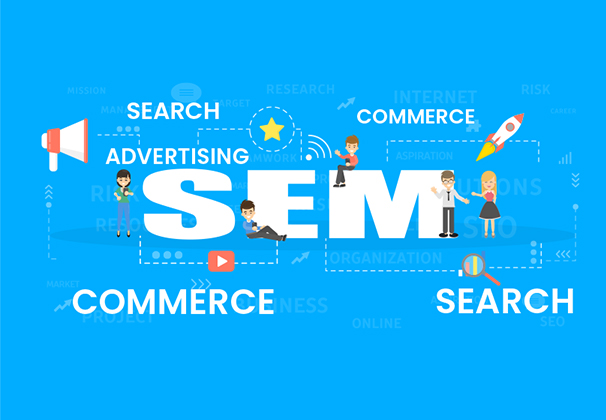
SEM, short for Search Engine Marketing, refers to the practice of using paid advertising on search engines to reach users who are actively looking for products, services, or information.
Unlike SEO, which relies on organic ranking through content and technical optimization, SEM allows you to appear immediately at the top of search engine results pages (SERPs) by bidding on specific keywords.
In simple terms, if you’re wondering what SEM is, think of it as a method of buying traffic from search engines through keyword-based advertising, mainly using platforms like Google Ads.
II. How Does SEM Work?
Understanding what SEM is goes beyond its definition – you also need to grasp how it works in practice. Here are the core components that make up a typical SEM campaign:
1. Paid Search Advertising (PPC)
This is the foundation of SEM. You create ads that appear when users search for relevant terms. You only pay when someone clicks your ad – this is known as Pay-Per-Click (PPC).
2. Keyword Bidding
You choose keywords that potential customers might use, then set bids for how much you're willing to pay per click. The better your ads and landing pages match the search intent, the more likely your ads will be shown.

3. Quality Score
Search engines evaluate your ads based on factors like relevance, ad copy, landing page experience, and click-through rate. A higher Quality Score can reduce your cost per click while improving ad placement.
III. Why Is SEM Important?
Now that you understand what SEM is, let’s look at why it’s such a valuable tool for businesses:
- Fast visibility
SEM lets you reach the top of search results almost instantly, unlike SEO, which takes time to build. - Intent-based traffic
You connect with users who are actively searching for what you offer, which means a higher chance of conversion. - Clear performance tracking
With tools like Google Ads and Google Analytics, you can monitor your campaigns in real time and measure ROI accurately. - Budget flexibility
Whether you’re a startup or an established brand, SEM allows you to scale your spending based on goals and results.
IV. SEM vs. SEO: What’s the Difference?
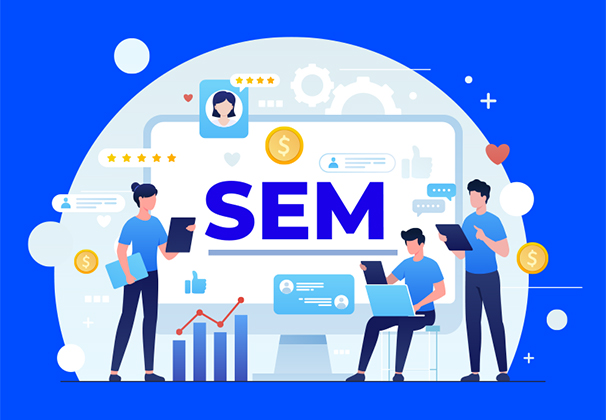
A common confusion for beginners is mixing up SEM and SEO. While they’re both about search engines, they function very differently:
|
Feature |
SEO (Organic) |
SEM (Paid) |
|---|---|---|
|
Display |
Non-sponsored results |
Paid ads marked with “Ad” |
|
Time to show |
Slower (months) |
Instant (once ads go live) |
|
Cost per click |
No cost per visit |
You pay per click |
|
Control |
Limited (depends on algorithms) |
High (you control bids, timing, etc.) |
Using both together creates a powerful search strategy that balances long-term growth with short-term results.
V. Step-by-Step Guide to Launching an SEM Campaign
Once you're clear on what SEM is, you can start planning your first campaign. Here’s a simple step-by-step breakdown:
Step 1: Conduct Keyword Research
Use tools like Google Keyword Planner or Ahrefs to find relevant search terms. Focus on keywords with high intent and reasonable competition.

Step 2: Organize Keywords into Ad Groups
Group similar keywords into tightly themed ad sets. This helps improve your ad relevance and Quality Score.
Step 3: Write Compelling Ad Copy
Your ads should include a clear headline, a concise value proposition, and a strong call to action (CTA). Be sure to align the copy with the keywords being targeted.
Step 4: Optimize the Landing Page
The page your ad leads to must be relevant, mobile-friendly, and easy to navigate. It should match the user’s search intent and encourage action (e.g., sign-up, purchase).
Step 5: Monitor and Optimize Regularly
Review campaign performance often. Pause underperforming ads, test new variations, adjust bids, and refine targeting to maximize results.
VI. Common SEM Mistakes to Avoid
Even if you understand what SEM is, mistakes in execution can cost you time and money. Watch out for these pitfalls:
- Skipping conversion tracking
Without tracking, you won’t know if your ads are truly working or not. - Bidding on vague or unrelated keywords
This leads to irrelevant traffic and a wasted budget. - Sending users to poor landing pages
If your page doesn’t deliver what the ad promises, visitors will leave instantly – hurting your Quality Score. - Not optimizing campaigns continuously
SEM isn’t set-it-and-forget-it. You need to constantly tweak and improve.
VII. Final Thoughts
By now, you should have a solid grasp of what SEM is and how it can benefit your online growth. It’s not just about buying ad space; it’s about targeting real users who are ready to take action.
SEM can deliver significant results when done right, and when combined with other inbound channels like SEO and content marketing, it becomes a powerful engine for growth.
Looking to run your first SEM campaign? Connect Tech has helped hundreds of businesses maximize their SEM performance with tailored strategies, precise targeting, and measurable outcomes. Let our experience turn your traffic into real business results.
Related Article:

Table of Contents