Loading Table of Contents...
What Are Website and Web App? Detailed Distinction and How to Choose the Right One
Quick Summary
Collapse
Learn the key differences between a Website and Web App. Compare their functions and goals to choose the right digital solution for your business strategy now.
In the process of consulting and deploying digital platforms, many businesses often hesitate between a website and a web app. These two concepts may look similar in interface, but they serve completely different goals in business strategy and operation.
Websites are usually suitable for branding, providing information, and implementing marketing activities. In contrast, web apps are designed to handle business logic, increase interaction, and support users in performing specific functions. Choosing correctly between a website and a web app not only affects investment costs but also determines operational efficiency and long-term scalability.
This article will help clarify what a website and a web app are, provide a detailed comparison of each type, analyze the pros and cons, and provide a basis for choosing the right solution for the development goals of the business.
I. Overview of Website and Web App
Before diving into comparison and selection, it is necessary to clearly understand the nature of a website and a web app. These are two core platforms in the digital ecosystem of a business, but they are designed to serve very different goals, from marketing and branding to operation and providing online services.
1. What is a Website?

A website is a collection of content pages accessed through a browser and stored on a server. The main goal of a website is to provide information, introduce the business, products, services, and support marketing activities.
A website usually includes components such as:
- Homepage
- Introduction page
- Product or service pages
- Blog or news
- Contact page
A website acts as the central platform in a digital marketing strategy. This is where customers learn information, evaluate credibility, and make decisions before purchasing or contacting. Most websites focus on displaying content, optimizing SEO, and converting visitors into potential customers.
Common examples of websites include corporate websites, news websites, sales websites, or landing pages for advertising campaigns.
2. What is a Web App?

A web app, or web application, is an application that runs on a browser but is designed for users to interact and perform specific functions. Unlike a website that only provides information, a web app allows users to manipulate, process data, and carry out online processes.
Some common functions of a web app include:
- Account registration and login
- User data management
- Ordering, payment, or order tracking
- Working online such as task management or customer management
Platforms such as CRM systems, internal management software, SaaS platforms, or online service booking systems are all web apps.
The core point of a web app is the ability to handle business logic and create a two-way interactive experience, instead of just displaying information like a website.
3. Common Confusion Between Website and Web App
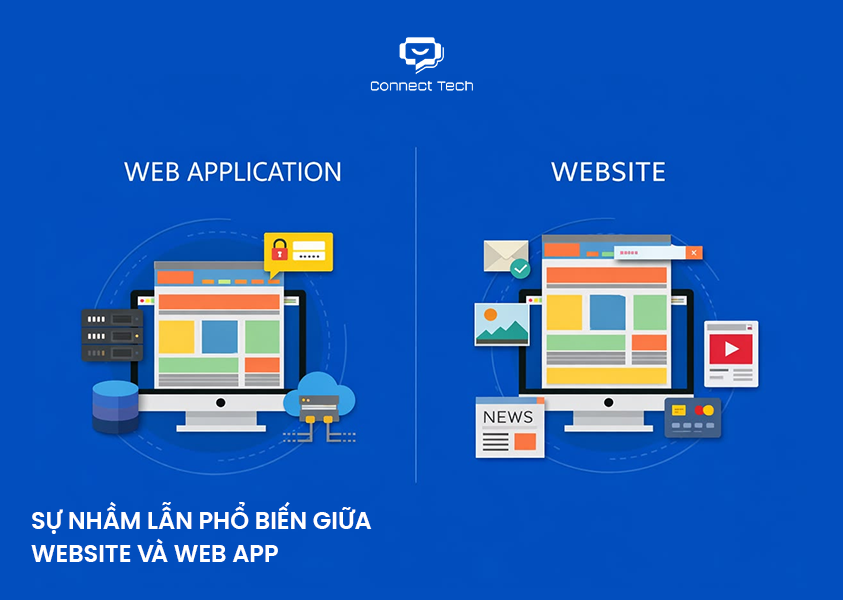
The confusion between a website and a web app often stems from the fact that both operate on browsers and have similar interfaces. For ordinary users, the distinction is not clear because the initial access experience is quite similar.
Some common reasons include:
- Both websites and web apps are accessed via a URL
- Both have interfaces and content pages
- Many modern websites have additional basic interactive functions
- Some platforms combine both a website and a web app in the same system
For example, an e-commerce website has a product introduction part which is a website, but the account management, shopping cart, and payment areas operate like a web app.
Understanding the difference between a website and a web app correctly helps businesses determine the right development direction. If the goal is to build brand presence and attract customers, a website is the right platform. If the goal is to provide online services or build an operating platform, a web app is the choice to be considered.
II. Detailed Comparison Between Website and Web App
To choose the right platform, it is necessary to put the website and web app on the same scale, from usage goals to their roles in business strategy. The table below helps clarify the core differences between a website and a web app according to the most important criteria:
|
|
|
|
|
|
|
|
|
|
|
|
|
|
|
|
|
|
|
|
|
|
|
|
|
|
|
|
|
|
|
|
|
|
|
|
|
|
|
|
|
|
|
|
From a strategic perspective, websites and web apps do not compete directly but complement each other. A website helps attract and convert users at the early stage of the journey, while a web app takes on the role of providing core value and maintaining long-term engagement.
III. Pros and Cons of a Website
When comparing a website and a web app, a website remains the popular choice for most businesses in the early stages. However, each platform has its own limits that need to be clearly recognized before investing.

1. Pros of a Website
- Easy to deploy and cost-effective: Websites can be built quickly using CMS platforms. Development and maintenance costs are usually lower than those of a web app.
- Effective SEO and marketing optimization: A website is suitable for content strategies, advertising, and branding. It is the core platform for attracting organic traffic.
- Suitable for most business models: For businesses that need to introduce products, services, or create campaign landing pages, a website is a sufficient and flexible solution.
2. Cons of a Website
- Limited business processing capability: A website mainly displays content. When complex features like data management or intensive logic processing are needed, a website struggles to meet the demand.
- Shallow user interaction: The level of personalization and interaction is usually basic, making it difficult to create an experience like a real application.
- Limits when expanding into a service platform: If the development direction is toward a SaaS system or an operating platform, a website will quickly hit an architectural ceiling.
In short, a website is a reasonable choice when the goal is digital presence and marketing. But if the focus is on functionality and operation, a higher-level solution like a web app should be considered.
IV. Pros and Cons of a Web App
Compared to a website, a web app is designed to handle functions and directly serve operational activities or provide services. This is the right platform when a business needs to build a deep interactive experience and create long-term usage value.

1. Pros of a Web App
- Ability to handle business logic and provide full functionality: Web apps allow users to log in, create data, perform transactions, and use complex features. This helps businesses digitize processes and provide online services effectively.
- High user experience and deep personalization: Unlike a website that mainly displays content, a web app can be personalized for each account. Each user has their own data, history, and experience.
- Can become the core product of the business: In many SaaS models or digital platforms, the web app is the actual product that customers use daily. This is the platform that generates direct value and revenue, not just supporting marketing like a website.
- Flexible scalability and integration: Web apps can integrate with other systems like CRM, payments, data management, or internal systems. This helps businesses expand and develop their digital ecosystem.
2. Cons of a Web App
- Higher development cost than a website: Web apps require system architecture design, backend and frontend development, and security assurance. The cost and deployment time are higher than those of a website.
- Requires a technical team and continuous maintenance: Web apps need to be updated, bug-fixed, and performance-optimized regularly. This requires long-term technical resources.
- Longer deployment time: Compared to a website that can be finished quickly, a web app usually needs many stages such as requirements analysis, development, testing, and optimization before being put into use.
In short, a web app is suitable when the goal is to build a functional platform or a digital product. While a website helps a business establish a presence and attract customers, a web app helps the business operate and create practical usage value.
V. When to Choose a Website? When to Choose a Web App?
Choosing between a website and a web app should not start with technology, but with business goals. Each choice suits a different stage of development and type of need. Making the right choice from the start helps avoid wasting costs and limits the need to rebuild the system later.
1. Cases Where You Should Develop a Website

A website is the right choice when the main goal is to build a digital presence and support marketing. Cases where you should prioritize website development include:
- Businesses needing to introduce the company, products, or services.
- Needing to build brand credibility in the online environment.
- Implementing SEO strategies to attract potential customers.
- Running advertisements and driving traffic to landing pages.
- Having a limited budget and needing fast deployment.
In the early stages, a website acts as a central platform for customers to learn and make decisions. This is the foundational step before developing more complex systems like web apps.
2. Cases Where You Should Develop a Web App

A web app is suitable when a business needs to provide functions, online services, or build an operating platform. Cases where you should develop a web app include:
- Needing a login system and user account management.
- Providing online services such as booking, order management, or online learning.
- Building a SaaS platform or a technology product.
- Needing an internal management system like a CRM or dashboard.
- Wanting to personalize the experience for each user.
In these cases, a web app is not just a supporting tool, but a part that directly creates value for users and the business.
3. Factors to Consider Before Deciding
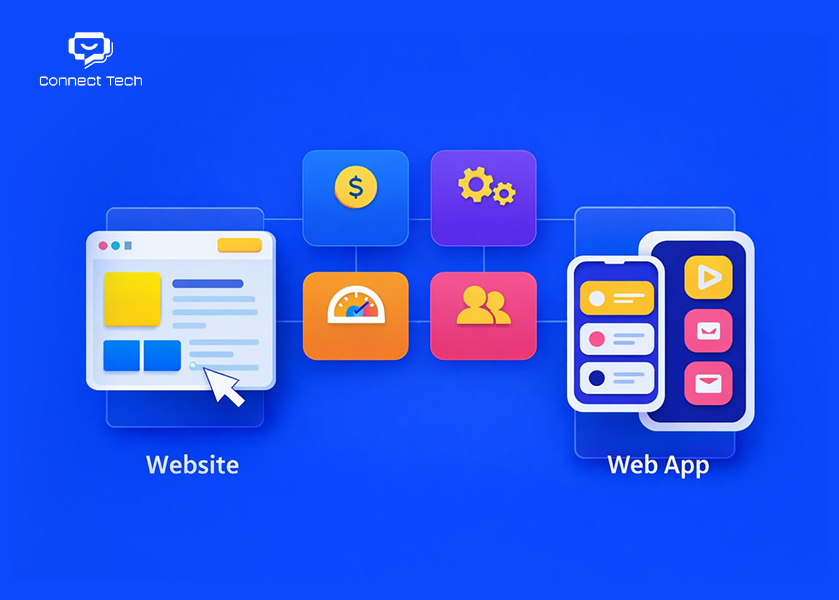
Before choosing between a website and a web app, businesses need to evaluate the following factors:
- Business Goals: If the goal is marketing and branding, a website is enough. If the goal is to provide functions and services, a web app is the right choice.
- Investment Budget: A website has lower costs and faster deployment. A web app requires a higher budget due to technical complexity.
- Functional Complexity: If you only need to display content and collect information, a website is a reasonable choice. If you need to process data and business logic, a web app is necessary.
- Long-term Development Plan: If the business aims to develop a digital platform or technology product, consider a web app from the start to avoid future limitations.
Websites and web apps serve two different roles. A website helps attract and build trust, while a web app helps provide functionality and create practical usage value. The right decision depends on the goals, budget, and development strategy of the business.
VI. Conclusion
Websites and web apps are not two alternative choices, but two tools serving two different goals in a digital strategy. A website is suitable for building brand presence, implementing SEO, and creating a conversion platform. A web app is suitable when a business needs to handle business logic, provide functions, and develop a service platform.
If your business needs to build a professional website, optimize SEO, and design with a conversion-oriented approach, the team at Connect Tech can accompany you from strategic consulting to technical implementation.
Website design services at Connect Tech focus on three core factors: SEO-standard structure, an interface optimized for user experience, and long-term scalability according to business directions.
Contact Connect Tech for a free consultation, an evaluation of your current website, and a solution direction suitable for your business growth goals.
Related Article:

Table of Contents