Loading Table of Contents...
What is the 5W1H model in Marketing? The secret to effective strategic thinking
Quick Summary
Collapse
The 5W1H model helps marketers analyze the market, determine goals and build effective marketing strategies through 6 questions: What, Why, Who, Where, When, How.
The 5W1H model is a thinking method based on 6 questions: What, Why, Who, Where, When, How. With a logical and easy-to-apply approach, 5W1H helps marketers analyze the market, define goals and build more effective strategies. This article will explain what 5W1H is in Marketing, the meaning of each element, the benefits it brings and how to apply it in practice through illustrative examples.
I. What is the 5W1H model?
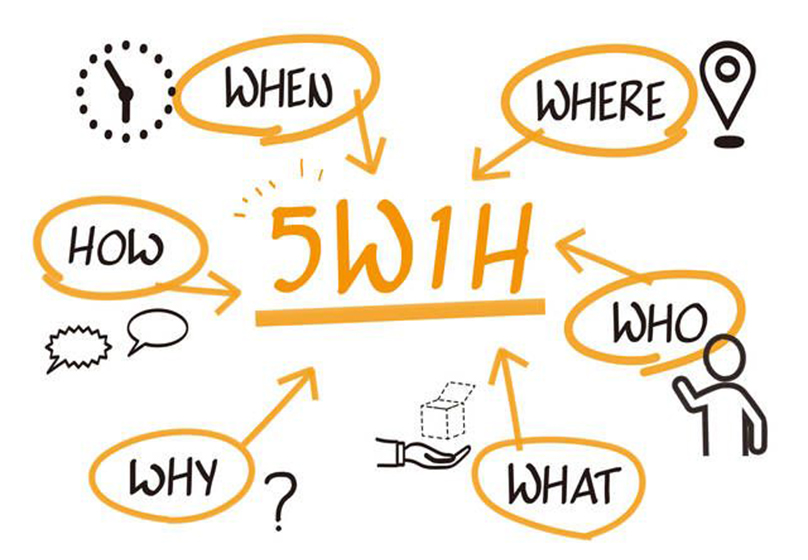
The 5W1H model is a thinking method based on 6 core questions:
- What?
- When?
- Where?
- Why?
- Who?
- How?
Initially, this idea was mentioned by writer Rudyard Kipling in his work Just So Stories (1902). It has since evolved into an analytical and decision-making tool for managers and strategists in business, communications, and many other fields.
The main role of the 5W1H model:
- Helps analyze the problem comprehensively, avoiding missing important information.
- Identify the root cause, thereby finding the right solution.
- Support planning, building strategies and making more effective decisions.
II. The meaning of each component in the 5W1H model in Marketing
To understand what the 5W1H model is, we need to analyze each element in this thinking framework. Each component raises important questions that help businesses orient how to build and implement effective Marketing strategies.
1. What?
“What” helps to clearly identify the problem, event, product or service that the business wants to focus on. In Marketing, this is the step of identifying outstanding products, core values or messages to convey. When clarifying “what”, businesses will avoid spreading resources and focus on what customers care about.
2. When?
“When” is related to the implementation time. A product launch, advertising or event campaign can be ineffective if the timing is wrong. Determining the right “when” will help brands take advantage of the golden moment to reach customers, ensure progress and optimize schedules.

3. Where?
“Where” refers to the location or channel of implementation. In a Marketing strategy, it can be a supermarket, a traditional store, an e-commerce platform or a digital channel such as Facebook, Google, TikTok. Choosing the right marketing channel helps brands easily reach target customers, save budget and improve efficiency.
4. Why?
“Why” clarifies the goals and reasons behind a strategy. Businesses need to know why they need to implement a campaign, why customers should choose the product, or why they need to invest resources in a specific communication channel. When clearly answering “why”, the campaign will have the right direction and increase the success rate.
5. Who?
“Who” is used to identify related subjects: target customers, staff, partners and investors. In Marketing, “Who” is the group of customers that the business needs to conquer. Understanding who they are will help the campaign target and create effective coordination between all stakeholders.
6. How?
“How” answers the question of how the business will implement the strategy. It can be a communication plan, customer care process, SEO solution or multi-channel advertising campaign. Clearly defining “how” helps turn ideas into specific actions, effective implementation, cost optimization and achieving the set goals.

III. Benefits of applying the 5W1H model in Marketing
When applying the 5W1H model to Marketing activities, it will help businesses improve the effectiveness of campaign implementation. Specifically, this method brings the following outstanding benefits:
- Comprehensive analysis: Helps to view the problem from many perspectives, from "what" to "why" and "how", avoiding missing details.
- Make accurate decisions: Each step has a clear basis, helping the marketing campaign to be effective and reduce risks.
- Optimize the work process: Clearly define what needs to be done, who is responsible and the implementation time, ensuring progress.
- Improve communication within the team: Unify understanding, easy exchange and coordination between departments.
- Easy information management: Six questions like a checklist, help businesses remember, organize and present ideas logically and convincingly.
IV. Practical application of the 5W1H model
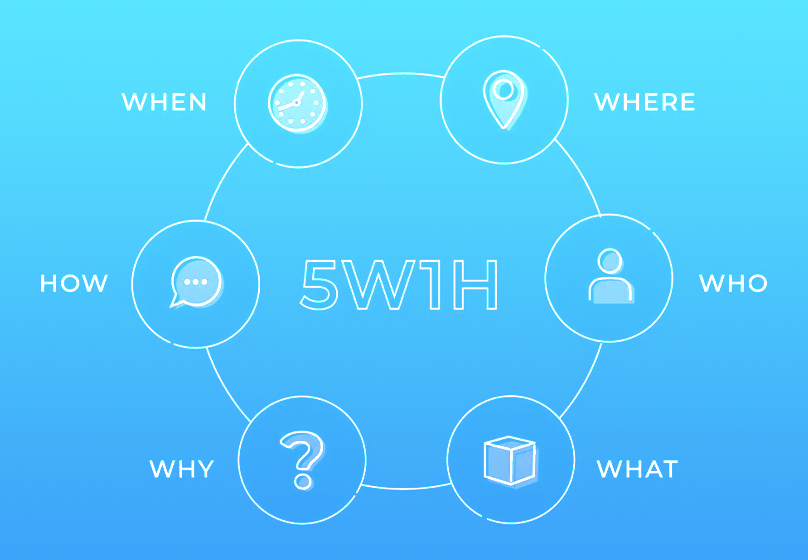
In reality, the 5W1H model is not just a theory but can be flexibly applied to many aspects of Marketing. From market research, strategy building to campaign implementation, 5W1H provides businesses with a clear and effective approach:
- Define target customers (Who): businesses know clearly the target group they want to reach.
- Define products/services (What): clarify core values and differences.
- Determine implementation time (When): choose the right season, holiday or period to launch the campaign.
- Determine communication channels (Where): choose online platforms (Facebook, TikTok, Google Ads) or offline (events, fairs) to optimize efficiency.
- Define the reason for doing it (Why): define clear goals, for example, increase sales, build a brand, or expand market share.
- Determine how to do it (How): choose a promotion method, optimize costs, measure results.
Read more: What is Marketing Service? Popular types of marketing services today

V. Example of 5W1H in building a Marketing strategy
This is a specific illustration of 5W1H for the Cosmetics (Skincare) industry to help you understand how to apply the 5W1H model into Marketing practice:
1. What?
- Business products: facial cleanser, serum, sunscreen, mask.
- On the market: many famous brands such as L'Oreal, Innisfree, La Roche-Posay.
- Popular products: vitamin C serum, oil-control sunscreen, moisturizing mask.
2. When?
- Time: before the hot season (March-June) when the demand for sunscreen increases sharply.
- Campaign: recognition stage (1-2 months), explosion (3-5 months), maintenance (6 months or more).
- Expected results: after 3-4 months, the main keyword is in the top 10, and in 6 months, it reaches the top 3.
3. Where?
- Customers focus on: big cities (Hanoi, Ho Chi Minh City), e-commerce platforms (Shopee, Lazada).
- SEO channels: Google, TikTok SEO, YouTube (cosmetic reviews).
- Best selling places: cosmetics stores, genuine websites, e-commerce platforms.
- Competitors: hand-carried cosmetics shops, international brands promoting online advertising.

4. Why?
- Highlights: safe, genuine products, with inspection certificates.
- Reasons for choosing SEO: customers often search for product information before buying → SEO easily reaches customers with real needs.
Read more: What is SEO in Sales? How to Optimize Sales SEO to Boost Revenue Effectively
5. Who?
- Target customers: women aged 18–35, office workers, students.
- Indirect customers: men buying as gifts, parents buying for their children.
- Competitors: Korean, Japanese, and domestic Vietnamese brands.
6. How?
- Reach customers: SEO keywords "sunscreen for oily skin", "acne treatment serum", "skincare routine for sensitive skin"
- Get to the top of Google: build a skincare blog, review detailed products, optimize product schema.
- Attract customers: TikTok video content, "top list" articles, skin care instructions.
- Brand expansion: cooperate with beauty bloggers, organize online skincare workshops.
- Conversion: add CTA buy now, discount voucher, free shipping.
- Customer retention: give away samples, loyalty cards, suggest additional products.
- Differentiation: focus on customer experience (fast delivery, free skin consultation).

VI. Conclusion
The 5W1H model is simple but brings great power in analysis, planning and decision making. Six basic questions help to see the problem from many angles, limit missing information and determine the right direction.
To maximize its value, 5W1H should be combined with other tools such as SWOT, AIDA or market data analysis. This complementarity creates a comprehensive view, helping businesses plan more solid and sustainable strategies.
In short, 5W1H is the essential thinking foundation for any individual or organization that wants to work scientifically, creatively and achieve goals faster.

Table of Contents