Loading Table of Contents...
What Is Anchor Text? A Beginner’s Guide to Using Anchor Text Effectively
Quick Summary
Collapse
What is Anchor Text and why is it important in SEO? This article provides a detailed guide on how to use Anchor Text effectively, complete classifications, check tools, and optimization strategies to improve website rankings.
Have you ever wondered why some text in an article is clickable and usually takes you to another page? That’s called Anchor Text—a small element with powerful influence in SEO.
Whether you're new to blogging or optimizing a sales website, understanding what Anchor Text is, how to use it properly, and avoiding common mistakes is essential. Connect Tech will help you master this concept in a simple and practical way.
I. What is Anchor Text? A simple, easy-to-understand definition
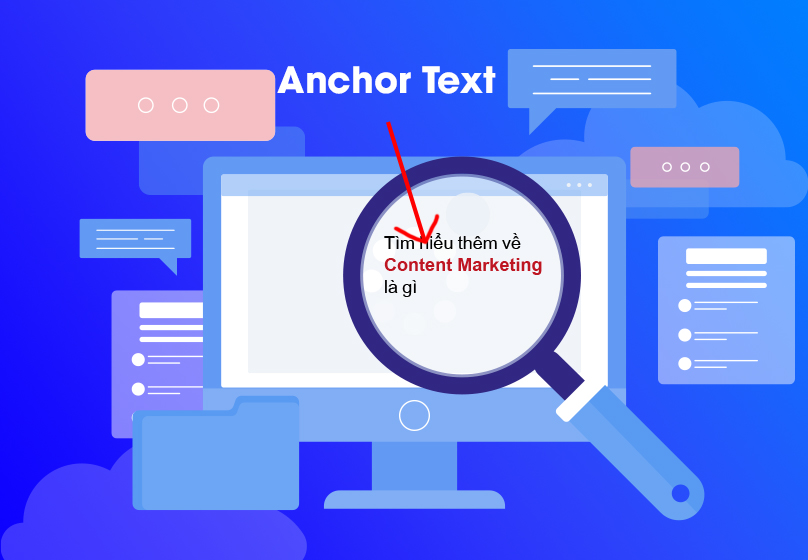
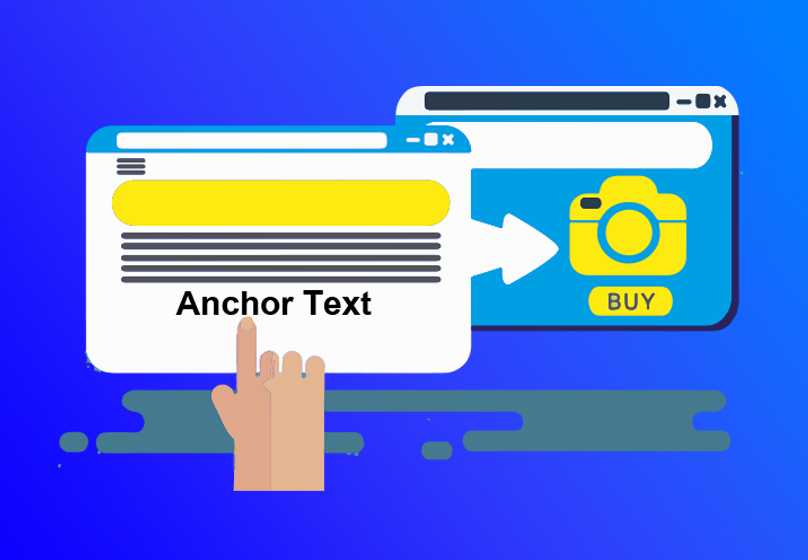
Anchor Text is the clickable part of a hyperlink. When you click on that text, you are directed to another webpage or resource. It’s how writers guide readers and an important signal that helps Google understand the destination page’s content.
Example illustration:
Suppose you're reading an article about marketing and you see the line:
👉 “Learn more about what Content Marketing is.”
→ The phrase “what Content Marketing is” is the Anchor Text.
Behind it is a hidden link (URL), and the Anchor Text serves as a translation for both readers and Google about the content of that link.
II. Distinguishing Anchor Text from other link types
Don't confuse Anchor Text with other link types. Here's a comparison:
|
|
|
|
|
|
|
|
|
|
|
|
|
|
|
|
|
|
|
|
|
|
|
|
|
III. The Role of Anchor Text in SEO
Though just a short clickable snippet, Anchor Text plays a foundational role in connecting content within a website and helping search engines understand page relationships. Used correctly, Anchor Text contributes to higher rankings, improves user experience, and drives conversions.
1. Helps search engines understand the linked page’s topic
Each time you add an Anchor Text to your article, you're sending a “small hint” to Google about the content of the destination page. Specifically, Anchor Text acts like a label—telling Google what the linked page is about.
2. Helps users navigate and discover content easily
A well-written Anchor Text tells readers what to expect when they click. Instead of vague phrases like “click here,” specific Anchor Text provides a smoother experience, especially when users are seeking in-depth information.
3. Directly affects keyword rankings
Anchor Text is one of the factors Google uses to assess how relevant a page is to a specific keyword. If multiple sites link to you using relevant Anchor Text, Google gains more evidence that your content is trustworthy and aligned with that topic.
However, overusing the same Anchor Text (like repeating an exact keyword) may lead Google to suspect manipulation. Thus, optimization isn't just about using Anchor Text but diversifying it in a natural, reasonable way.

4. Increases time on site and boosts conversion rate
Anchor Text is also a great navigation tool to keep readers engaged and encourage them to continue exploring your website. When content is connected seamlessly, users can find the information they need without bouncing off the page.
IV. Common Types of Anchor Text in SEO
Anchor Text is essential when building links (internal or backlinks) for your website. But not everyone understands the different types and how to use them effectively—to stay friendly with Google and improve user experience. Here are 10 common types of Anchor Text widely used in SEO—you should flexibly combine them to create a sustainable linking strategy.
1. Branded Anchor Text
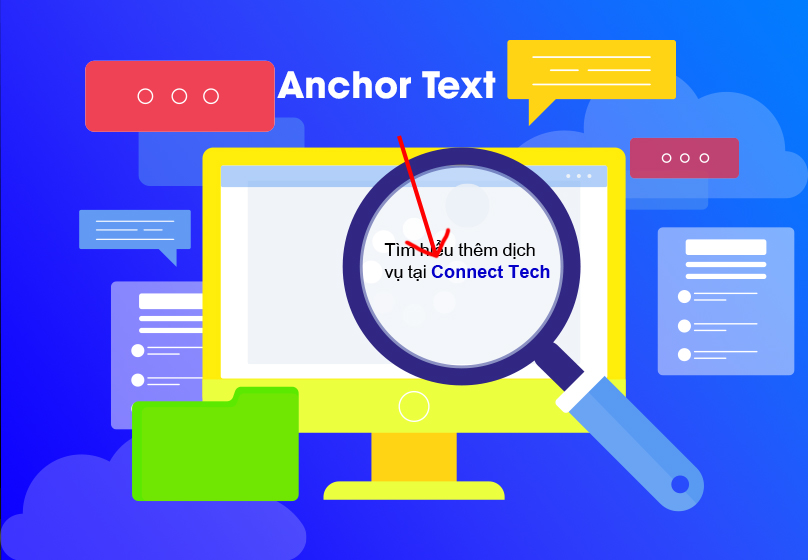
This simply uses your brand name as the anchor. It's the safest type, great for building trust and brand recognition.
Example: “Connect Tech” linking to the company homepage.
2. Exact Match Anchor
This is when you use the exact target keyword as the anchor.
Example: “professional website design.”
Though effective, overuse may be considered spammy by Google.
3. Generic Anchor Text
These are general phrases like: “learn more,” “click here,” “details here.” They don’t contain keywords but are good for natural user navigation.
4. Naked URL
Instead of embedding the link in text, you show the full URL.
Example: https://connecttech.vn.
Often used in resource descriptions or signatures.
5. Partial Match Anchor
You combine the main keyword with modifiers or change the structure slightly to fit the context.
Example: “effective SEO services” instead of just “SEO services.”
6. Topical Anchor Text
This type doesn’t contain specific keywords but still relates to the topic.
Example: “marketing solutions” when the article is about holistic SEO.
7. Synonym-Based Anchor
Instead of using the exact keyword, you use a synonym or alternative phrase.
Example: “web hosting services” instead of “hosting.”
8. Image Anchor
When an image contains a link, Google uses the alt attribute of the image as Anchor Text. So don’t skip optimizing alt tags.

9. No Anchor Trick
This is when a link is embedded but not shown as visible text, commonly found in images, buttons, or HTML. Use carefully to avoid being mistaken for hidden links.
10. Brand + Keyword Combination Anchor
You use both your brand and the keyword, e.g., “SEO services at Connect Tech.” This approach boosts both relevance and brand awareness.
V. How to Use Anchor Text Effectively
Adding an anchor is not just about inserting a link into a sentence. To sustainably optimize SEO and avoid Google penalties, follow these 5 principles:
1. Place in the right context; links must match content
Anchors should be placed where they relate to the content of the destination page. Don’t force them or link to irrelevant pages—it may confuse readers and be flagged by Google.
2. Be short, clear, and natural
The simpler the anchor, the better. Use short, easy-to-understand phrases that help readers visualize the linked content.
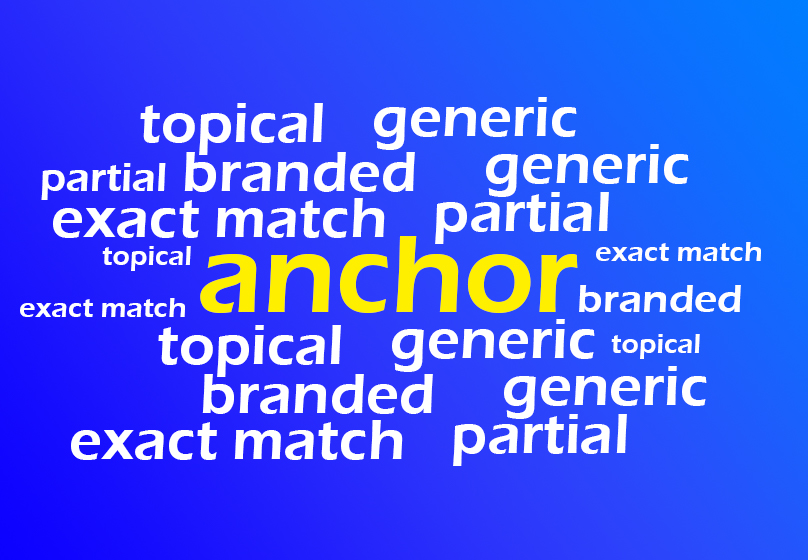
3. Mix various types of anchors
Don’t repeat the same type. Combine exact match, branded, generic, partial, topical, etc., to make your link profile diverse and natural.
4. Distribute evenly across the article
Don’t cram links at the beginning or end. Spread them across the introduction, main content, and conclusion to increase indexing chances and improve readability.
5. Avoid over-optimization
Though Anchor Text is important, overusing exact-match keywords or placing links in every paragraph may signal manipulation to Google. The result? Your site may lose ranking.
VI. Conclusion
Using Anchor Text wisely not only improves keyword rankings but also shows respect to users by guiding them to the right place at the right time. Like any SEO tool, it must be used in the right amount and context, and always with naturalness in mind.
Instead of adding links purely for SEO, think of Anchor Text as storytelling. Tell it clearly, coherently, and with purpose. And if you’re looking for a team that knows how to tell that story effectively from technical setup to user experience, Connect Tech is ready to partner with you.

Table of Contents