Loading Table of Contents...
Complete SEO-Friendly Custom Corporate Website Design
Complete corporate website design with professional UX/UI, SEO optimization, and conversion-focused solutions. Explore Connect Tech’s pricing and services.
With a complete corporate website design service, businesses can build an online platform that aligns with their business goals and long-term growth strategy. Connect Tech provides comprehensive information about corporate website types, essential structures, evaluation criteria, design costs, and how to choose the right development partner. Explore the guide below to build a website that fits your business objectives and growth direction.
Why Does a Business Need a Corporate Website?
When customers research a business, the website is often one of the most important touchpoints. Before making a phone call, requesting a quotation, or signing a contract, customers may visit the website to find out who the company is, what products or services it provides, which projects it has completed, and whether it is trustworthy.
Therefore, corporate website design should not be viewed simply as creating an attractive interface. A website needs to address branding, information, Marketing, SEO, and conversion at the same time.
Build a Professional Image and Strengthen Brand Credibility
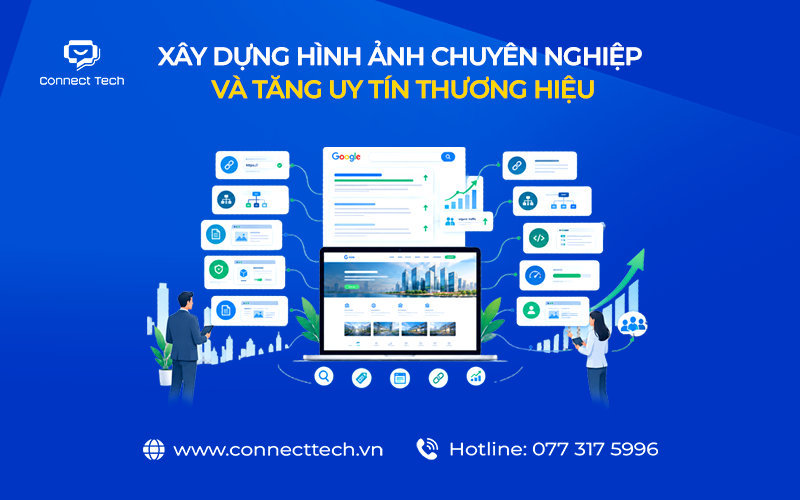
A well-planned corporate website design solution allows businesses to take control of their brand image instead of relying entirely on third-party platforms.
Through the website, businesses can present:
-
Company history and development journey.
-
Vision, mission, and core values.
-
Products and services.
-
Capabilities and competitive advantages.
-
Completed projects.
-
Customers and partners.
-
Certifications, awards, or achievements.
-
Official contact information.
For B2B, manufacturing, construction, real estate, technology, and professional service businesses in particular, a website also helps customers evaluate the company's professionalism before entering direct discussions.
Introduce the Business and Its Products or Services 24/7
Unlike brochures or sales materials that are typically used during a specific meeting, a website can provide information continuously. Customers can learn about a business at any time using a phone, computer, or tablet.
A website also helps businesses reach customers beyond their traditional geographic markets. When optimized for SEO, product pages, service pages, and expert content can reach people who are actively searching for solutions on Google.
Support SEO and Attract Customers from Google
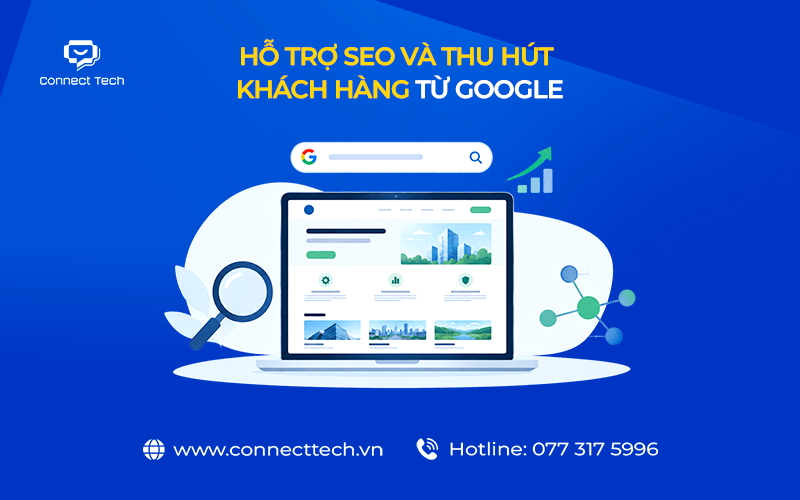
A website is an important foundation for businesses that want to develop SEO over the long term. Therefore, designing an SEO-friendly corporate website from the beginning creates a strong foundation for content development and organic search:
-
Clear URL structure.
-
Logical website architecture.
-
Service pages.
-
Product pages.
-
Blog and expert content.
-
Internal links.
-
Sitemap.
-
Structured Data.
-
Speed and user experience optimization.
Google also continues to confirm in its 2026 documentation that fundamental SEO principles remain relevant to appearing in AI-powered search experiences such as AI Overviews and AI Mode. Google also emphasizes the value of unique, helpful content rather than separate tactics referred to as “AEO” or “GEO.”
Therefore, businesses should not wait until the website is completed before thinking about SEO. An SEO-friendly structure should be considered from the website planning stage.
Support Marketing and Sales Activities
An effective corporate website design project should not focus solely on the interface. It also needs to consider how the website connects with Marketing and sales activities.
For example:
Google Ads → Website → Landing Page → Form → Lead → Sales
Or:
SEO → Website → Content → CTA → Lead
A website can also integrate:
-
Registration forms.
-
Hotline.
-
Zalo.
-
Messenger.
-
Live chat.
-
Google Maps.
-
Google Analytics.
-
Google Search Console.
-
CRM.
-
Email marketing.
-
Other management systems.
This transforms the website from an informational channel into an integrated component of the company's Marketing and sales system.
Take Ownership and Control of Digital Assets
When investing in corporate website design, the ownership and management rights of digital assets should be clearly defined from the beginning.
Important assets that should be clearly identified include:
-
Domain name.
-
Hosting or server.
-
Source code.
-
Database.
-
Administrator accounts.
-
Google Analytics account.
-
Google Search Console.
-
Design files, if applicable.
-
Content and images.
-
Third-party service accounts.
These issues should be clarified in the contract from the outset to avoid a situation where the website is operational but the business does not actually have control over its own digital assets.
5 Common Types of Corporate Websites
Not every business needs the same type of website. Identifying the right website type from the beginning helps businesses avoid investing in too few or unnecessary features. For example, a real estate corporate website needs to prioritize project systems, property information, images, filters, and consultation forms, while a manufacturing website typically prioritizes company capabilities and product catalogs.
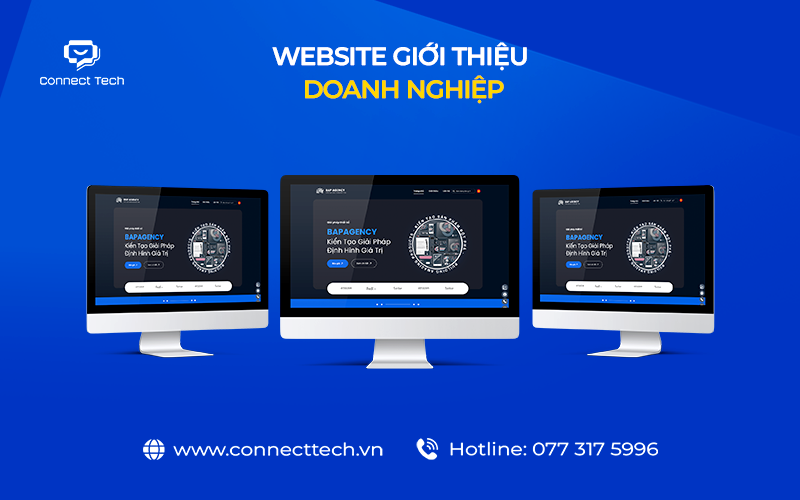
Corporate Introduction Website
This is also a common choice for businesses looking for corporate website design services to build their image and showcase their capabilities online. For small business website design, the structure can be streamlined based on the actual number of products, services, and business requirements.
A typical website may include:
-
Home.
-
About Us.
-
Products.
-
Services.
-
Projects.
-
Customers.
-
Partners.
-
News.
-
Careers.
-
Contact.
Suitable for small and medium-sized businesses, service companies, manufacturers, B2B businesses, and organizations that need to establish a professional online presence.
B2B Corporate Website
For B2B businesses, corporate website design for manufacturers often needs to prioritize manufacturing capabilities, processes, products, certifications, and project portfolios.
Important content may include:
-
Manufacturing capabilities.
-
Product catalog.
-
Solutions.
-
Completed projects.
-
Case studies.
-
Certifications.
-
Partners.
-
Customers.
-
Catalogues.
-
Request-for-quotation forms.
Instead of trying to sell products directly through the website, the primary goal is often to build trust and generate leads for the sales team.
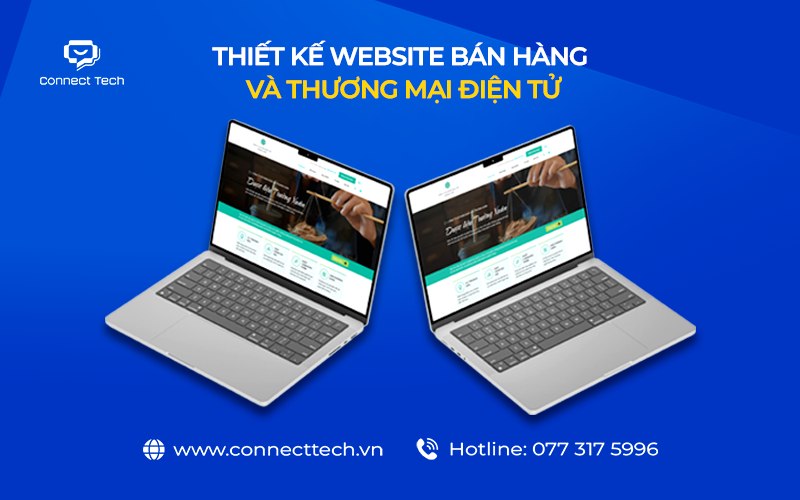
E-commerce and Online Store Website Design
When a corporate website includes e-commerce functionality, the system needs additional components to support product discovery, selection, and payment.
In addition to the basic components of a corporate website, the system may require:
-
Product categories.
-
Filters.
-
Search.
-
Shopping cart.
-
Checkout.
-
Order management.
-
Customer accounts.
-
Discount codes.
-
Inventory management.
-
Shipping integration.
For businesses with large-scale operations, the website can also be expanded into a corporate inventory management website that connects product, inventory, and order data.
Corporate Website
For large corporations or established brands, corporate website design is often more deeply invested in brand identity, user experience, and content systems.
The main focus typically includes:
-
Brand identity.
-
Storytelling.
-
UX/UI.
-
Content systems.
-
Corporate capabilities.
-
Shareholder or investor relations, when necessary.
-
Recruitment.
-
Partners.
-
Brand systems.
What Should a Corporate Website Structure Include?
An effective corporate website needs a clear structure so users can easily find information and search engines can understand the relationships between different types of content.
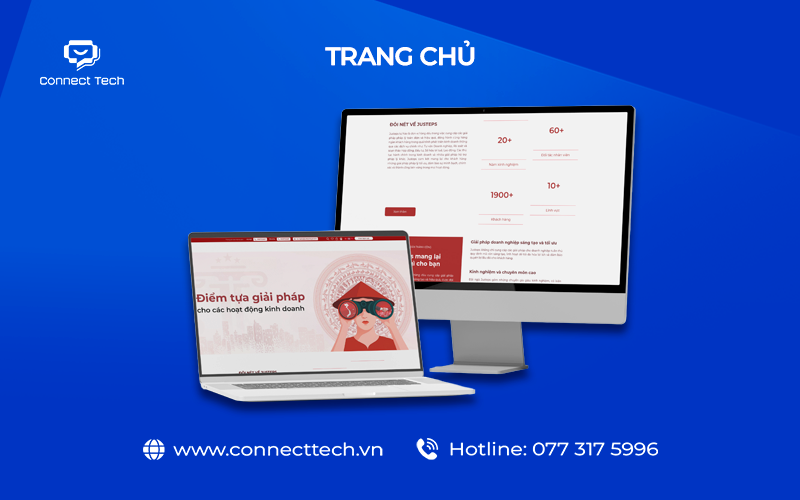
Homepage
The homepage should quickly answer four questions:
Who is the business? What does it provide? What makes it different? What should the customer do next?
Common elements include:
-
Main message.
-
USP.
-
Products/services.
-
Short introduction.
-
Capabilities.
-
Projects.
-
Customers.
-
Feedback.
-
CTA.
-
Contact information.
Businesses can refer to corporate website design examples by industry to understand how content can be arranged, but they should not rely entirely on a pre-built interface.
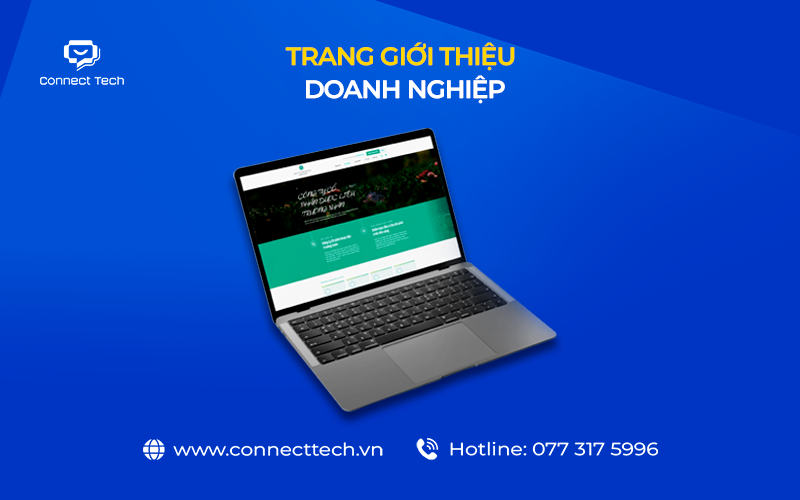
About Us Page
This is where the business story and credibility are established.
It may include:
-
Company overview.
-
Company history.
-
Vision.
-
Mission.
-
Core values.
-
Team.
-
Capabilities.
-
Certifications.
-
Achievements.
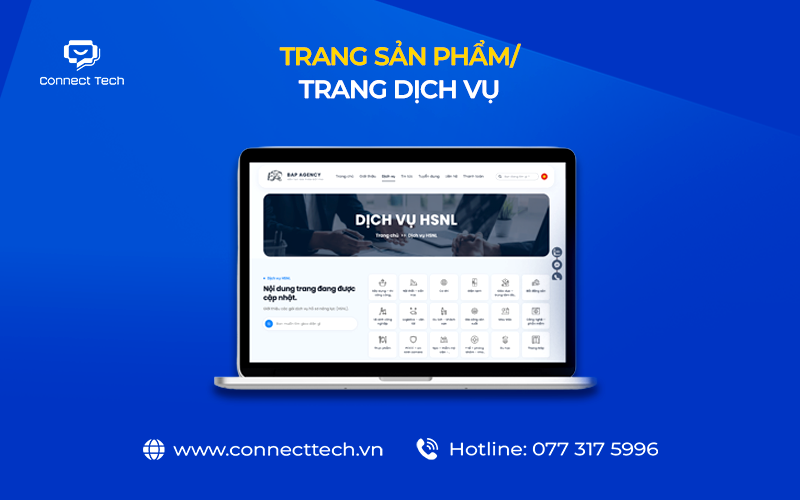
Product / Service Pages
Each important product or service should have its own page if the business has a long-term SEO and Marketing strategy.
A service page should answer:
-
What is this service?
-
What problem does it solve?
-
Who is it suitable for?
-
What does the service include?
-
What is the implementation process?
-
Why should customers choose the business?
-
How can customers get in touch?
Projects / Portfolio Page
This is one of the areas with strong conversion potential.
Instead of simply displaying images, each project should tell readers:
-
Who the customer is.
-
What the initial challenge was.
-
The solution.
-
Technology used.
-
Scope of implementation.
-
Results.
Customers / Partners Page
Customer and partner logos help strengthen trust signals, especially for B2B businesses.
With customer permission, the page can combine:
-
Logos.
-
Reviews.
-
Images.
-
Video testimonials.
-
Case studies.
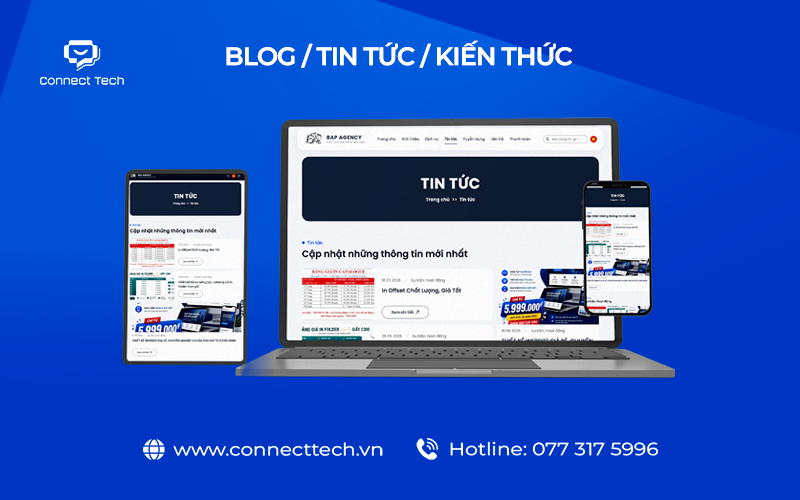
Blog / News / Knowledge
A blog is not simply there to “have articles.”
It can become a platform for:
-
SEO.
-
Thought leadership.
-
Expert content.
-
Sales support.
-
Customer education.
The blog structure should be planned around topic clusters instead of publishing random articles.
Careers Page
For businesses that are expanding their teams, a careers page can showcase:
-
Company culture.
-
Working environment.
-
Job openings.
-
Benefits.
-
Application process.
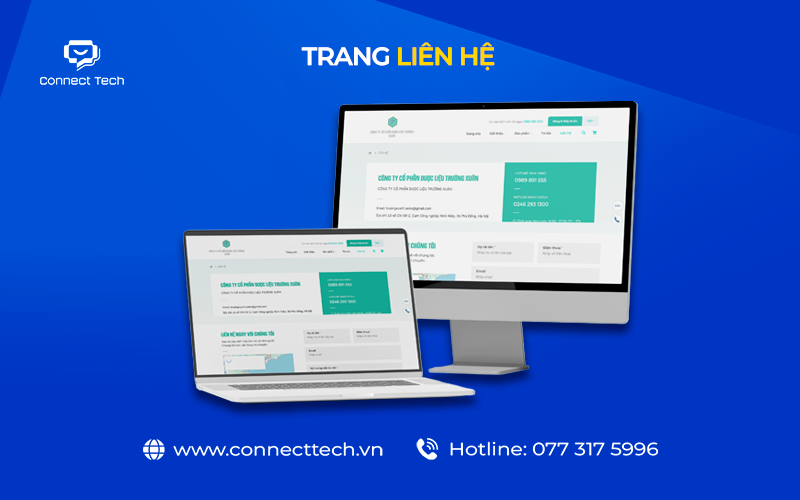
Contact Page
It should include:
-
Address.
-
Hotline.
-
Email.
-
Google Maps.
-
Contact form.
-
Zalo or other appropriate support channels.
CTAs should appear in places where users are likely to make a decision, rather than simply placing a “Contact” button at the bottom of the page.
Legal Pages
Depending on the website type and business activities, the website may need:
-
Privacy Policy.
-
Terms of Use.
-
Cookie Policy.
-
Shipping Policy.
-
Return Policy.
-
Payment Policy.
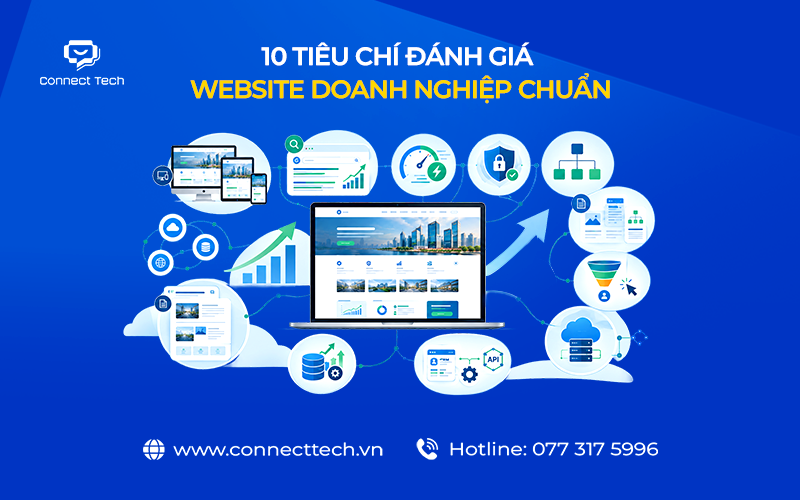
10 Criteria for Evaluating a Professional Corporate Website
A professional corporate website should be evaluated across multiple factors, from design and user experience to SEO, security, and long-term scalability:
-
Aligned with business objectives: Clearly define whether the website is intended for brand building, lead generation, e-commerce, sales support, recruitment, or customer service.
-
Consistent with the brand: Colors, typography, imagery, layout, and design style should align with the company's visual identity and positioning.
-
Easy-to-use UX/UI: Clear navigation, easy-to-find information, understandable content, and optimized actions such as viewing services, contacting the business, or submitting an inquiry.
-
Responsive across devices: The website should display and function properly on desktops, laptops, tablets, and smartphones, with particular attention to mobile experience.
-
Good page speed: Optimize images, CSS, JavaScript, fonts, hosting, caching, and factors related to Core Web Vitals such as LCP, INP, and CLS.
-
SEO-friendly structure: Ensure URLs, headings, sitemap, robots.txt, canonical tags, internal links, structured data, metadata, and images are properly structured for SEO.
-
Clear and valuable content: The website should help customers quickly understand who the business is, what it provides, what problems it solves, what makes it different, and why they should choose it.
-
Conversion optimization: Strategically place CTAs such as phone calls, forms, Zalo messages, consultation requests, quotation requests, or purchases according to the customer journey.
-
Secure and easy to manage: Ensure HTTPS/SSL, backups, permissions, administrator account protection, third-party component control, and an easy-to-use CMS. Depending on the scale, the system can be deployed on the cloud to improve scalability and infrastructure flexibility.
-
Scalable for the future: The website should be ready for expanding products, languages, users, CRM, APIs, membership systems, SEO, and Marketing platforms.
Corporate Website Design Pricing
Connect Tech offers 3 corporate website design packages, with investment starting from VND 6 million, suitable for needs ranging from corporate introductions to e-commerce and professional online sales systems.
| Website Design Package | Suitable For | Key Features | Starting Price |
|---|---|---|---|
| Small Business Website Package | Businesses looking for affordable corporate website design | SEO-friendly UI/UX, responsive design, SSL, contact integration, Zalo, Google Maps | VND 6,000,000 |
| Online Sales Package | Businesses selling products online | SEO-friendly UI/UX, responsive design, SSL, shopping cart, contact integration, Zalo, Google Maps | VND 10,000,000 |
| Professional Online Sales Package | Businesses that need an advanced e-commerce website | SEO-friendly UI/UX, responsive design, SSL, shopping cart, online payment, AI/Zalo OA integration | VND 15,000,000 |
Why Should Businesses Choose Connect Tech for Complete Website Design?
If a business simply needs a website to establish an online presence, many solutions can meet that requirement. However, if the website is considered a long-term asset supporting branding, SEO, and Marketing, the choice of development partner should be based on actual capabilities and the ability to provide ongoing support.
Website Solutions Tailored to Each Industry
Connect Tech currently states that it has delivered 136+ websites, worked with 225+ customers, and completed projects across more than 50 industries. Its portfolio covers sectors including real estate, interior design, construction, automotive, import and export, businesses and organizations, and many other fields.
Experience across multiple industries provides the team with a foundation for understanding that every website requires a different approach.
A manufacturing website should not be developed in the same way as a restaurant website.
A B2B website should also not have the same customer journey as a retail website.
Therefore, the process should start with the business challenge rather than with a pre-built website template.
Take Control of Website Management and Updates
A corporate website should not only look good at the time of delivery but also remain easy to use throughout its operation.
During implementation, businesses can also work with web designers to refine the brand identity, layout, and user experience to match the brand.
Depending on the project, the system can support:
-
Content management.
-
Product/service management.
-
Image management.
-
SEO management.
-
User permissions.
-
Information updates.
-
Feature expansion.
The goal is to reduce dependence on technical teams for routine management changes.
A Website Ready to Grow with the Business
A website does not reach the end of its lifecycle immediately after going live.
After launch, businesses may still need:
-
Content updates.
-
Backups.
-
Security.
-
Upgrades.
-
Speed optimization.
-
SEO.
-
Content development.
-
New feature development.
-
Conversion optimization.
Connect Tech currently states that its support policies include continuous data backup, warranty and maintenance, as well as free consultation on its service page.
This approach treats a website as a platform that needs to be continuously operated and improved rather than as a product that is delivered only once.
Ongoing Technical Support
When a website becomes a business channel, technical issues can directly affect the customer experience.
Connect Tech currently states that it provides 24/7 support alongside backup and warranty/maintenance policies.
When evaluating support policies, businesses should specifically consider:
-
Request submission channels.
-
Scope of support.
-
Types of issues covered.
-
Response time.
-
Warranty policy.
-
Maintenance terms.
Corporate Website Design Projects Developed by Connect Tech
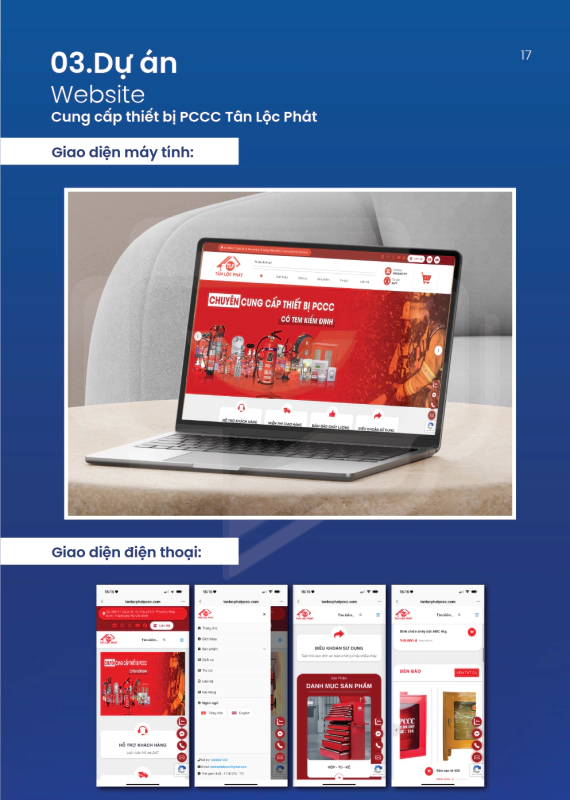
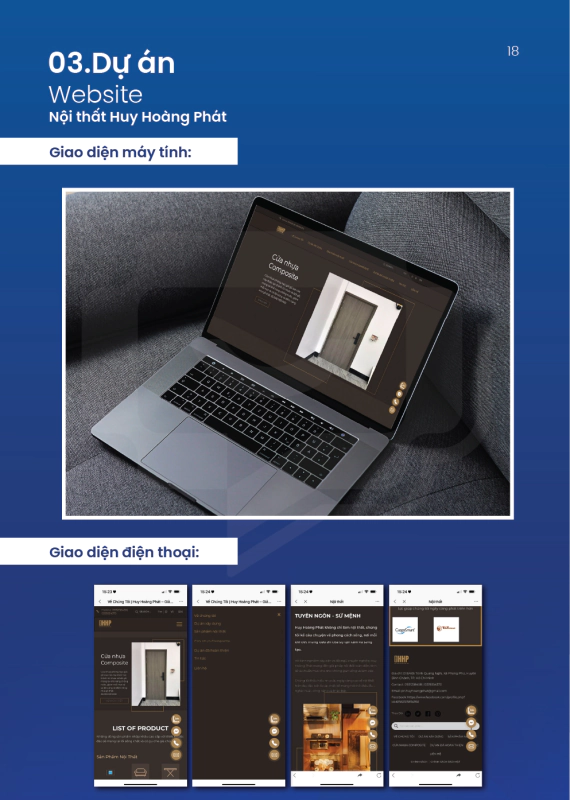
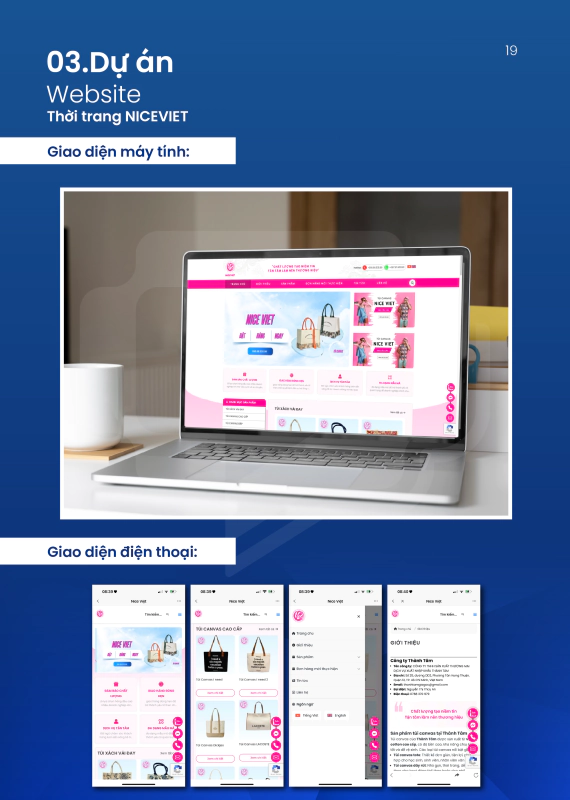
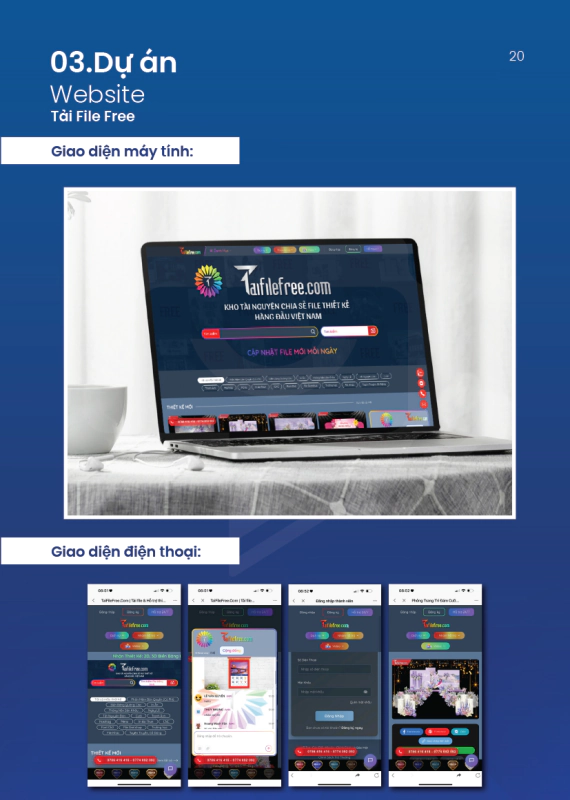
With experience developing websites across multiple industries, Connect Tech builds solutions based on each business's specific characteristics, objectives, and customer journey. Below are several representative projects that have been completed.
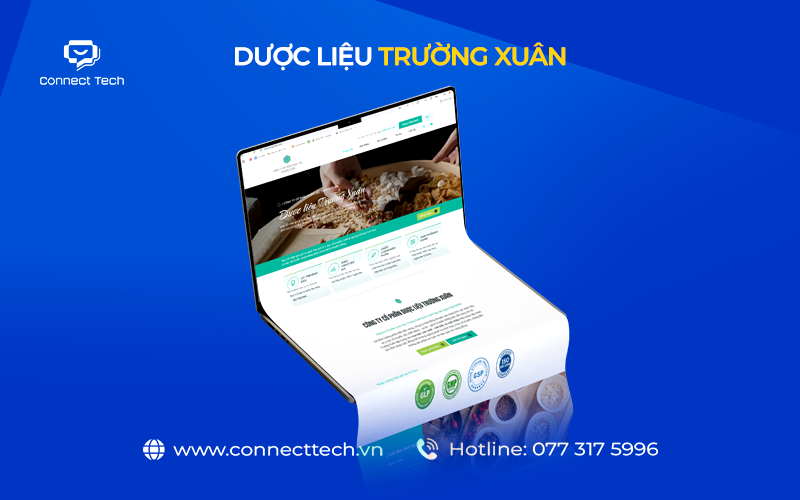
Trường Xuân Herbal Medicine
Industry: Healthcare & Wellness – Natural Herbal Medicine
Connect Tech developed an e-commerce website for Trường Xuân Herbal Medicine with a trustworthy UI/UX, a transparent herbal product information system, and a Technical SEO foundation suited to the healthcare industry.
Key solutions:
-
UI/UX design tailored to the healthcare industry.
-
Herbal medicine information management and lookup system.
-
Display of product ingredients, benefits, usage instructions, and origins.
-
Technical SEO optimization and content foundation aligned with E-E-A-T.
BAP Agency
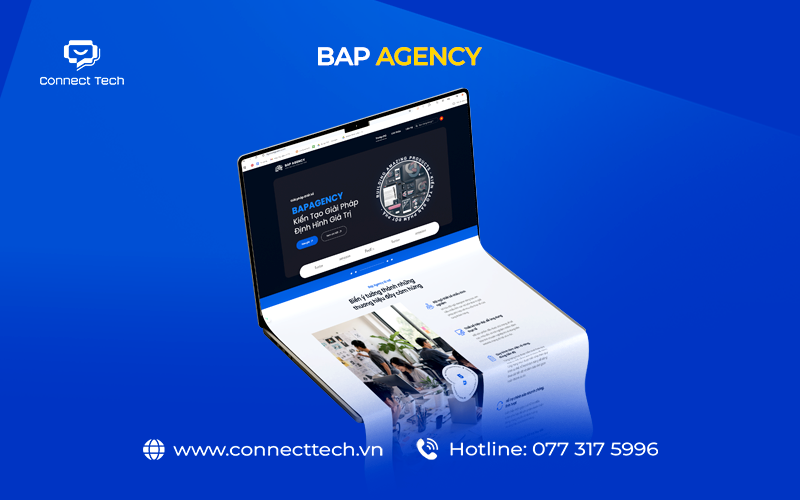
Industry: Media & Advertising – Digital Agency
Connect Tech developed the BAP Agency website with a Creative Portfolio approach, focusing on showcasing the capabilities and key projects of a Digital Agency while maintaining performance and B2B lead-generation capabilities.
Key solutions:
-
Creative UI/UX design with micro-interactions.
-
Optimization of large image, video, and media assets.
-
Visually engaging portfolio and case study presentation.
-
CTA and B2B conversion funnel optimization.
-
Technical SEO foundation.
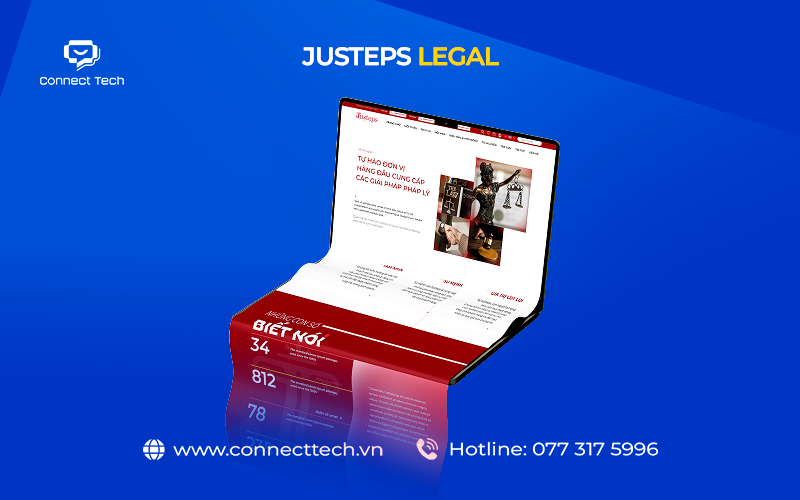
JUSTEPS LEGAL
Industry: Legal – Legal Consulting & Corporate Law
Connect Tech developed the JUSTEPS LEGAL website on the PHP Laravel platform, focusing on legal service discovery, performance, security, and optimizing the process for customers to submit consultation requests.
Key solutions:
-
Custom website development on PHP Laravel.
-
Legal service categorization based on different customer needs.
-
Minimalist UI/UX design that creates a professional and trustworthy impression.
-
Consultation request intake and categorization forms.
-
Performance, security, and Technical SEO optimization.
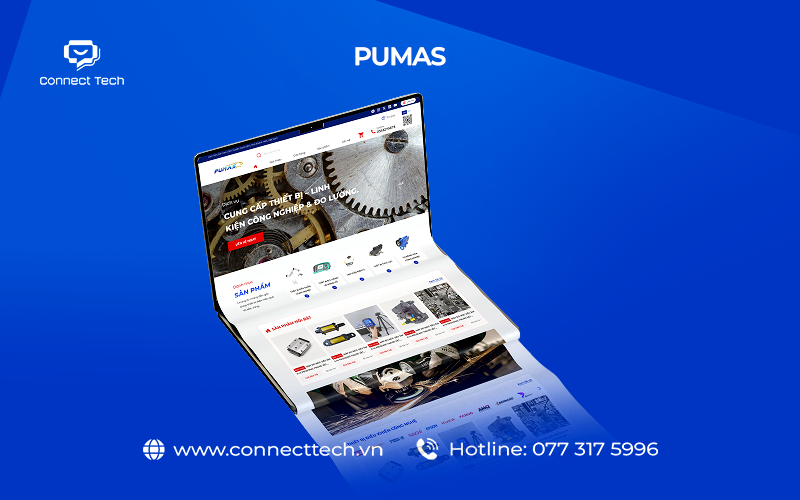
PUMAS
Industry: Industrial – Automation
The PUMAS website was developed by Connect Tech as a B2B platform, focusing on organizing technical equipment catalogs, supporting product discovery, and enabling business customers to submit quotation requests.
Key solutions:
-
B2B website development on PHP Laravel.
-
Multi-level technical equipment catalog system.
-
Integration of “Contact for Price” and quotation request flows.
-
QR code scanning to receive quotation information.
-
Interface design tailored to the technical industry.
-
Technical SEO optimization for specialized product categories.
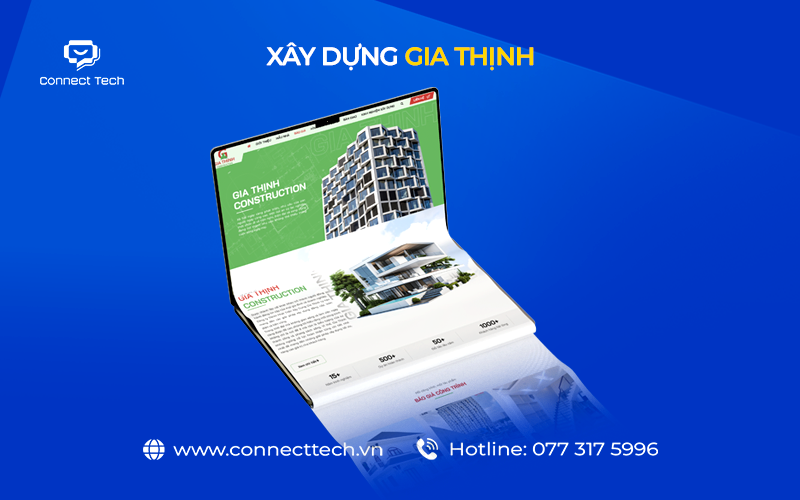
Gia Thịnh Construction
Industry: Construction – Residential Architecture
The Gia Thịnh Construction website was designed to help customers evaluate the company's capabilities through 3D renderings and actual construction images, thereby increasing trust before contacting the business for consultation.
Key solutions:
-
Custom website design on PHP Laravel.
-
Presentation of 3D renderings and actual construction images.
-
Classification of projects by house type and architectural style.
-
Image optimization for large media volumes.
-
Automatic data backup and 24/7 technical support.
-
Long-term source code warranty policy.
FAQ About Corporate Website Design
How Long Does Corporate Website Design Take?
Corporate website design typically takes 7–30 working days, depending on the project's scale and complexity:
-
Basic corporate website: approximately 7–10 working days.
-
Custom-designed corporate website: approximately 15–20 working days.
-
Large corporate website with multiple features: approximately 20–30 working days.
-
Multilingual website with CRM/API integration or custom systems: may take 30–60 working days or longer.
These timeframes are for reference only. Actual delivery time depends on the number of pages, feature scope, speed of content delivery, and the business's response time.
Should a Business Choose a Template or Custom Website Design?
If a business only needs a basic website and has a limited budget, a template or pre-built website can be a suitable option.
However, if the website plays an important role in branding, Marketing, or lead generation, custom design gives the business greater control over:
-
Brand identity.
-
UX/UI.
-
Content structure.
-
Customer journey.
-
Conversion.
-
Scalability.
There is no single option that is best for every business. The decision should be based on the business's objectives and budget.
Does a Corporate Website Need to Be SEO-Friendly from the Beginning?
Yes.
SEO should be considered from the:
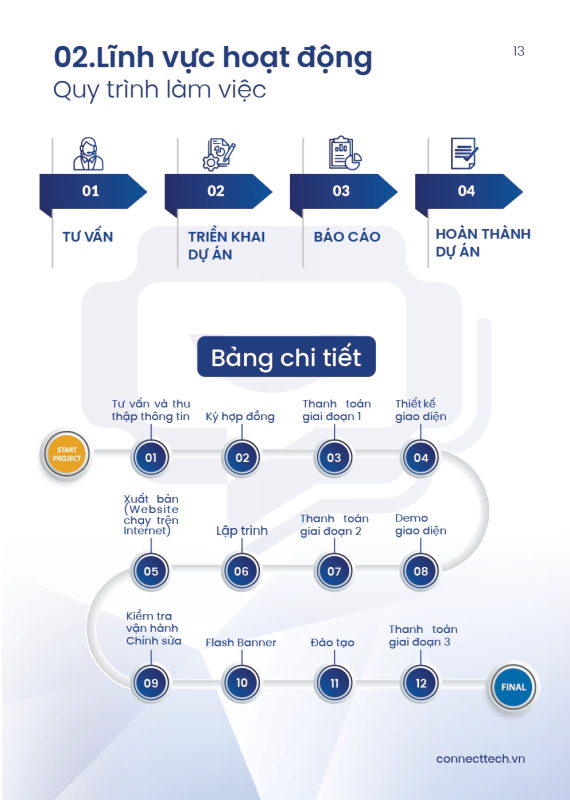
Strategy → Sitemap → Information Architecture → UX/UI → Development → Content → Technical SEO
If the website is developed without considering SEO from the beginning, the business may later need to change its URL structure, content, headings, or website architecture after implementation.
This can take additional time and may affect the organic search development plan.
Does Connect Tech Provide Website Maintenance and Upgrades After Launch?
Yes. Connect Tech currently states that it provides warranty, maintenance, and data backup policies on its website design service page, along with 24/7 service support.
Corporate website design is not simply about creating an attractive interface. It is about building a platform that supports the brand, customers, SEO, and Marketing activities over the long term. An effective website needs a clear structure, appropriate UX/UI, strong performance, a solid SEO foundation, and the ability to be managed and expanded.
If your business is planning to build a new website or upgrade an existing one, choose a solution based on your actual goals and requirements rather than simply comparing prices. Contact Connect Tech for advice on a corporate website design solution tailored to your business.
Table of Contents
Related news

Complete SEO-Friendly Custom Corporate Website Design
Complete corporate website design with professional UX/UI, SEO optimization, and conversion-focused solutions. Explore Connect Tech’s pricing and services.
Professional & Affordable Real Estate Website Design to Increase Closing Rates
Professional, affordable real estate website design optimized for UX/UI, SEO, speed, and functionality — helping businesses build credibility, generate leads, and increase conversion rates.
Why Does a Website Have No Traffic? Causes & Effective Solutions
Why does your website have no traffic? Connect Tech analyzes the five most common causes and provides practical solutions to help your website generate sustainable organic traffic. Contact us for expert consultation today!
Website Lead Generation: How Many Leads Per Month? Calculation Formula
How many leads should your website generate each month? Connect Tech explains the lead calculation formula, industry benchmarks, and proven strategies to optimize your website for sustainable lead generation and higher conversions.
When Should You Upgrade Your Website?
Wondering when to upgrade your website? Connect Tech highlights 7 key signs, the benefits, and website upgrade costs to help businesses optimize performance, improve user experience, and retain more customers.
Does Your Website Need CRM Integration? A Complete Guide
Does your website need CRM integration? Connect Tech explains the benefits, the right time to integrate CRM, and the best implementation approach to help businesses improve customer management and sales performance.