Loading Table of Contents...
Are Website Templates Really Cost-Effective for Businesses?
Website templates are currently a popular choice for millions of small and medium-sized businesses thanks to their low cost and fast deployment time. However, through the practical implementation of many projects, Connect Tech has found that many businesses have to rebuild their websites after only 1–2 years of operation. So, do website templates truly help save costs in the long run, or are they only cost-effective in the initial stage?
What Is a Website Template? Why Do Many Businesses Choose It?
A website template is a pre-designed website layout. Users simply need to purchase or download the template, then customize the content, images, and brand colors to launch the website.Today, there are hundreds of thousands of templates available on platforms such as ThemeForest, Envato, WordPress, Wix, and Squarespace. Not every business chooses templates simply to minimize costs. In reality, many startups and small businesses prefer templates because of the practical advantages below.
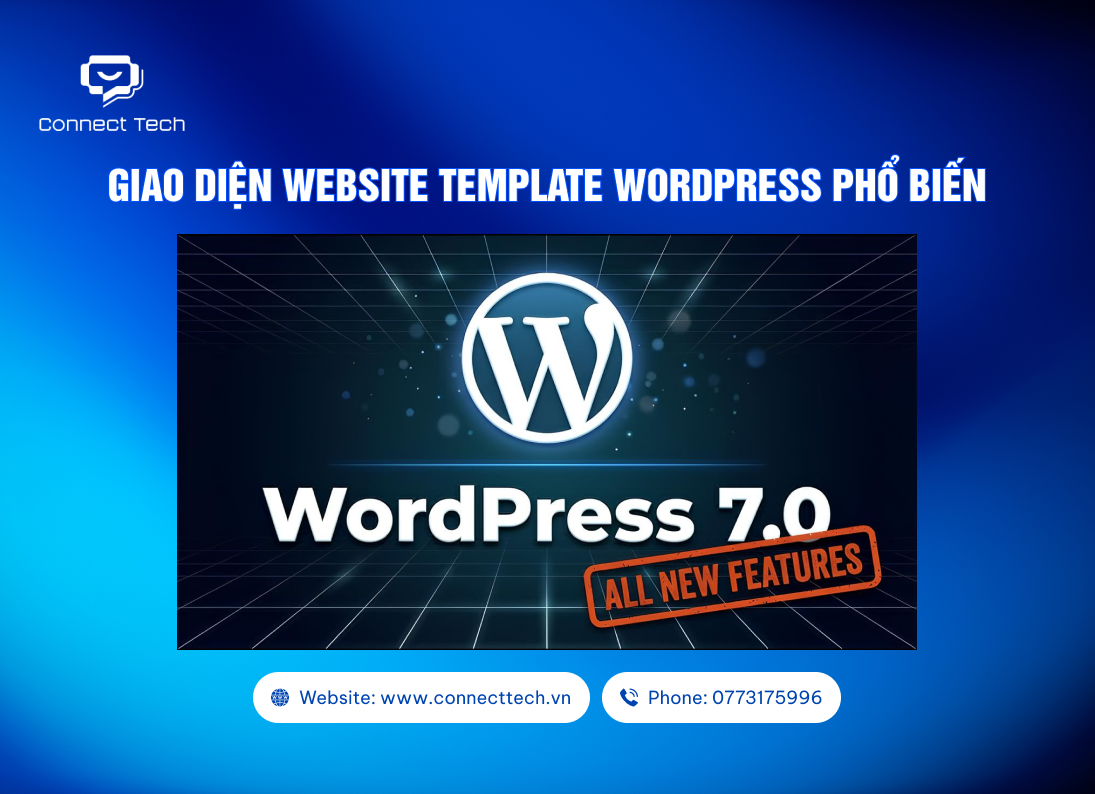
Popular WordPress website template interface
Advantage 1: A Wide Range of Ready-to-Use Designs
Instead of spending weeks designing and reviewing a custom interface from scratch, businesses can quickly choose a suitable template and launch their website within a short period of time. For campaigns that need to go live urgently, this is a major advantage. Some of Connect Tech’s clients, for example, needed websites ready within just a few days to launch product advertising campaigns, and templates successfully met those short-term goals.
Advantage 2: Lower Initial Costs
A high-quality WordPress template usually costs between 500,000 and 2,000,000 VND. Compared to custom website design services ranging from 15 to 50 million VND or more, templates are a suitable option for businesses with limited budgets. If the goal is simply to build a company introduction website or a basic landing page, templates can perform effectively.
Advantage 3: Faster Completion Time
Most templates today come with demo data and pre-built layouts. After installation, businesses only need to replace the logo, adjust the brand colors, and update the content before the website becomes operational. For businesses that prioritize speed, this is definitely a strong advantage.
The Limitations of Website Templates That Are Rarely Mentioned
Besides the benefits of affordability and speed, templates also come with limitations that businesses often only realize after using them for some time. Based on practical project experience, Connect Tech has found these to be the most common issues.
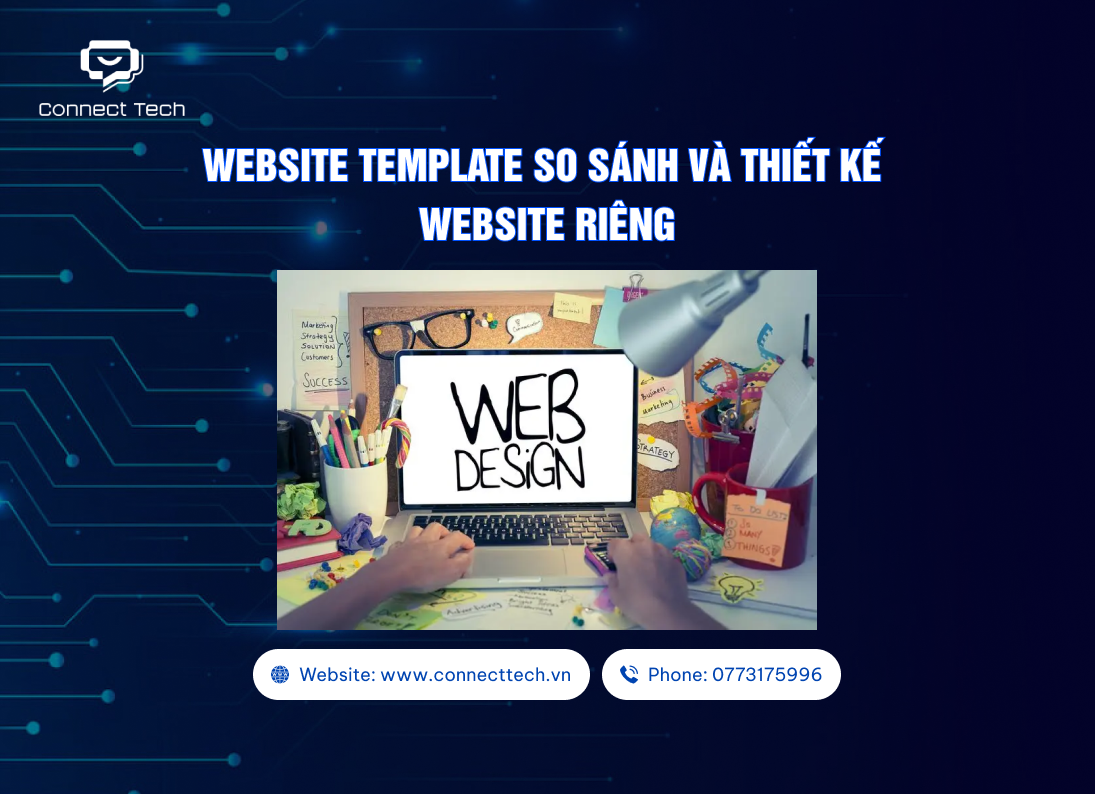
Website Templates Compared to Custom Website Design
Disadvantage 1: Repetitive Designs and Weak Brand Identity
A single template may be sold to thousands of users. This means many websites within the same industry can end up having very similar layouts and user experiences. Although colors and images can be changed, the overall structure and interface feel are still difficult to differentiate significantly. In the long run, this can negatively affect brand recognition.
Disadvantage 2: Limited Flexibility for Real Business Needs
Website templates work well for standard features. However, when businesses require more specialized functions such as:
-
Advanced product filtering
-
Complex booking systems
-
Custom checkout pages
-
Internal management systems
making deep modifications to the template’s core code can easily create errors or conflicts during future updates.
Disadvantage 3: Difficult CRM and Advanced API Integrations
As businesses grow, websites often need to connect with systems such as CRM platforms, warehouse management software, accounting tools, or third-party APIs. Popular platforms like HubSpot and Salesforce can integrate with WordPress, but implementing them on top of templates is often inflexible when complex data processing is required. As a result, the system can become bloated, difficult to maintain, and more expensive to manage technically over time.
Disadvantage 4: Difficult to Upgrade the Platform in the Future
This is one of the biggest surprises for many businesses: template-based websites are often difficult to upgrade directly to more modern platforms such as Next.js or Laravel.
When businesses eventually need:
-
Faster page loading performance
-
Better technical SEO
-
More advanced web app systems
-
Long-term scalability
Connect Tech has handled many projects that initially aimed to “upgrade” old template-based websites. However, after evaluation, rebuilding the entire system from scratch often turned out to be the more cost-effective and sustainable solution.
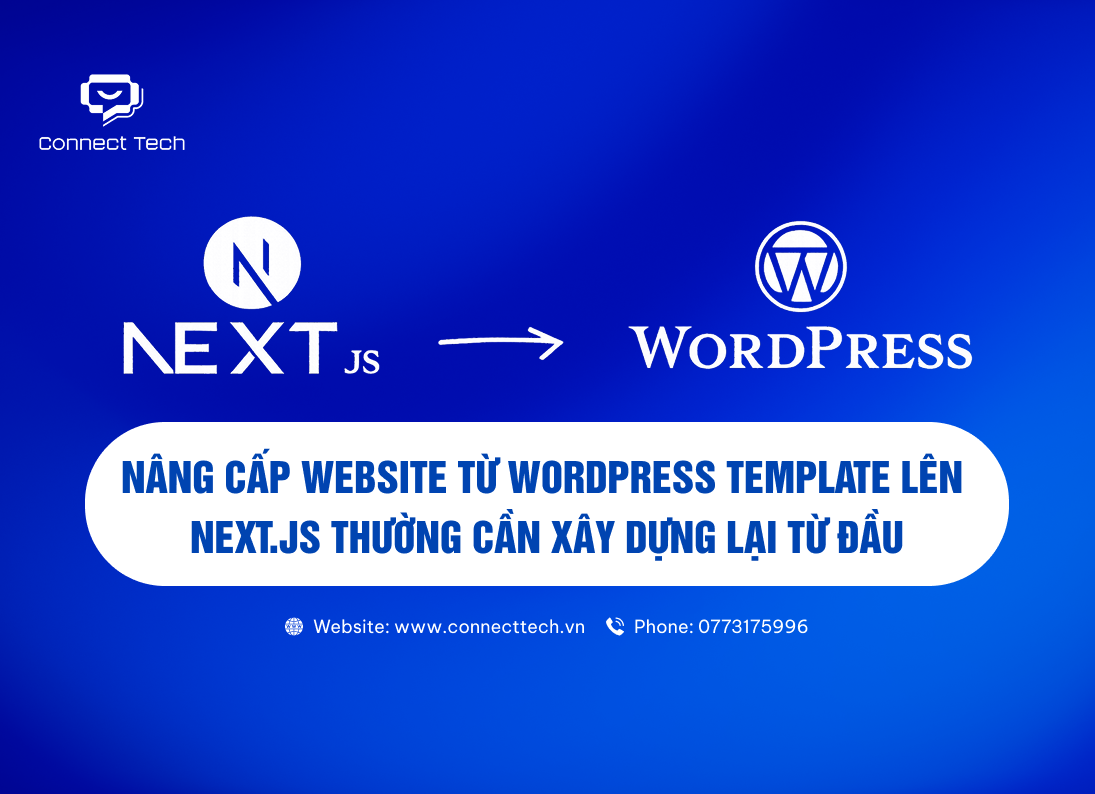
Upgrading a WordPress template website to Next.js often requires rebuilding from the ground up
Comparison Table: Website Templates vs Custom Website Design
|
Criteria |
Website Template |
Custom Design |
|---|---|---|
|
Initial cost |
Low (500K – 2 million VND) |
Higher (15 – 50 million+ VND) |
|
Deployment time |
1–3 days |
3–8 weeks |
|
Brand identity |
Limited |
Fully customized branding |
|
Feature customization |
Restricted |
Flexible based on business needs |
|
CRM / API integration |
Difficult to scale |
Easier structured integration |
|
Platform upgrades |
Often requires rebuilding |
Can scale gradually |
|
3-year maintenance cost |
May increase over time |
More stable if built correctly |
|
Best suited for |
Startups, MVPs, landing pages |
Businesses with long-term goals |
Conclusion
Website templates are not a bad choice. For businesses that need fast deployment and want to optimize their initial budget, templates remain a practical solution.
However, if a business aims for long-term brand development, requires advanced functionality, or wants to build a scalable digital platform for the future, investing in a custom website from the beginning is often more effective and cost-efficient in the long run.
See more related articles:
Why Are Cheap Websites Always “Expensive” Later?
Table of Contents
Related news
Are Website Templates Really Cost-Effective for Businesses?
Website templates are currently a popular choice for millions of small and medium-sized businesses thanks to their low cost and fast deployment time. However, through the practical implementation of many projects, Connect Tech has found that many businesses have to rebuild their websites after only 1–2 years of operation. So, do website templates truly help save costs in the long run, or are they only cost-effective in the initial stage?

Why Are Cheap Websites Always “Expensive” Later?
You just received a website quote of only 3 to 5 million VND and feel satisfied? Read this before signing the contract. Not to refuse a cheap website, but to know exactly how much more you will have to pay in the next 1 to 3 years.

Hidden Website Development Costs You Need to Know
Hidden website development costs are something many businesses only realize after the project has been completed and the website begins operating. Connect Tech has compiled the most common additional expenses to help you proactively plan your budget from the very beginning, avoiding unexpected financial surprises later on.

When Should a Business Build a Website?
Building a website at the right time can create a significant competitive advantage for a business. Connect Tech highlights the 3 most common business groups and explains when they should build a website, the specific benefits, and the risks of continuing to delay the investment.
How Does the Website Development Process at an Agency Work?
The professional website development process at an agency is a key factor that determines the quality, timeline, and success of an entire digital project. At Connect Tech, with more than 9 years of experience accompanying hundreds of domestic and international businesses.

Why Do 80% of Websites Have No Visitors? What Mistakes Are You Making
Is your website getting no visitors because it loads slowly, has a poor design, or unclear content? Connect Tech points out the causes and optimization solutions to help your website attract customers effectivel